All Articles
The Journal
Your Ultimate Guide to Hawaiian Island Hopping Cruises
February 13, 202622 min readhawaii cruiseisland hopping hawaii
Discover the best Hawaiian island hopping cruises. This guide covers itineraries, ships, costs, and insider tips for your multi-island adventure.

If you've ever dreamt of seeing Oahu's famous surf, Maui's stunning coast, Kauaʻi's lush canyons, and the Big Island's volcanic wonders all in one trip, an island-hopping cruise is hands-down the easiest way to do it. It completely takes the hassle of inter-island flights out of the equation.
Think of your ship as a floating resort that sails you to a new paradise while you sleep. You wake up, and a brand-new Hawaiian island is waiting right outside your window.
Why a Cruise Is the Smart Way to See Hawaii
The real beauty of a Hawaiian cruise is simple: you unpack just once. That’s it. You get to experience the completely unique vibe of four different islands without ever having to think about airport transfers, security lines, or the constant cycle of checking in and out of hotels. Everything—your room, your meals, your transportation—is all rolled into one seamless experience.
This incredible convenience is why demand for these trips has absolutely skyrocketed. Hawaii is one of the fastest-growing destinations for travelers worldwide, with search interest jumping a massive 2,935% between 2018 and 2024. That kind of growth puts it ahead of many traditional vacation hotspots. A huge part of this boom comes from cruise-and-stay packages, which let you tack on a few extra days on land after your cruise to dive even deeper into one of the islands. You can learn more about these emerging travel trends and how they might shape your own travel plans.
Getting the Most Out of Island Hopping by Sea
Choosing a cruise isn't just about saving time—it’s about getting more out of every single vacation day. Here’s what makes this way of traveling so compelling:
- See It All, Stress-Free: One day you can be gazing up at the dramatic cliffs of the Nāpali Coast, and the next you're exploring the otherworldly landscapes of Kīlauea volcano or lounging on Waikīkī Beach, all on the same trip.
- A Smarter Way to Budget: When you bundle your accommodation, food, and transport into one price, it often works out to be a much better value than piecing together a land-based island-hopping vacation on your own. For example, a 7-night land-based trip could easily cost over $500 per person in inter-island flights alone, a cost that's completely eliminated with a cruise.
- The Best of Both Worlds: You get all the fun amenities of the ship—pools, fantastic food, live entertainment—plus the incredible cultural and natural adventures waiting for you in every port.
You can think of a Hawaiian cruise as the master key to the entire island chain. It unlocks access to a huge range of adventures without the logistical nightmare, transforming what could be a complicated trip into a genuinely relaxing journey through paradise.
This guide is here to walk you through all of it. We'll cover everything from picking the right kind of ship to planning the perfect itinerary, so you can book this dream vacation feeling completely confident.
Choosing Your Cruise Style: Large Ships vs. Small Vessels
Picking the right Hawaiian cruise is a bit like deciding between a bustling, all-inclusive resort and a quiet, boutique eco-lodge. Both are fantastic, but they deliver entirely different experiences. Your ship is more than just how you get from island to island; it's your home base for the entire adventure, and getting this choice right is the key to a perfect trip.
Fundamentally, it all boils down to size. You've got the massive, feature-packed cruise liners on one end of the spectrum and the nimble, intimate expedition ships on the other. Each offers a completely unique way to experience the magic of the Hawaiian islands.
The Floating Resort Experience of Large Ships
Think of a large cruise ship as a city at sea. These vessels, like Norwegian Cruise Line's Pride of America, are designed to be destinations in and of themselves, loaded with enough entertainment, dining, and activities to keep everyone happy. This is often the perfect fit for families or anyone who loves having a world of options just steps from their cabin door.
Onboard, the list of amenities can feel endless:
- Dining Variety: From quick-and-easy buffets to elegant specialty restaurants, you could genuinely eat somewhere different every single night. For instance, you might have sushi at one venue, classic Italian at another, and a Brazilian steakhouse the next.
- Broadway-Caliber Shows: Expect full-scale musical productions, live bands, and comedy clubs to fill your evenings.
- Family-Focused Fun: Sprawling pool decks, waterslides, and dedicated kids' clubs are standard, making them a hit with younger travelers.
These big ships are a major force in Hawaiian tourism. In early 2024, the Pride of America alone was responsible for 123,676 travelers flying into the state just to board its weekly sailings to Maui, Kauai, and the Big Island. That really shows how central it is to the dedicated island-hopping cruise market, which is a different model than ships that just stop by on a longer journey from the mainland. If you're curious, you can dig into Hawaii's cruise visitor statistics to see the broader impact.
This decision tree gives you a quick visual on the core choice: a streamlined, all-in-one cruise versus the self-managed logistics of island hopping with flights.
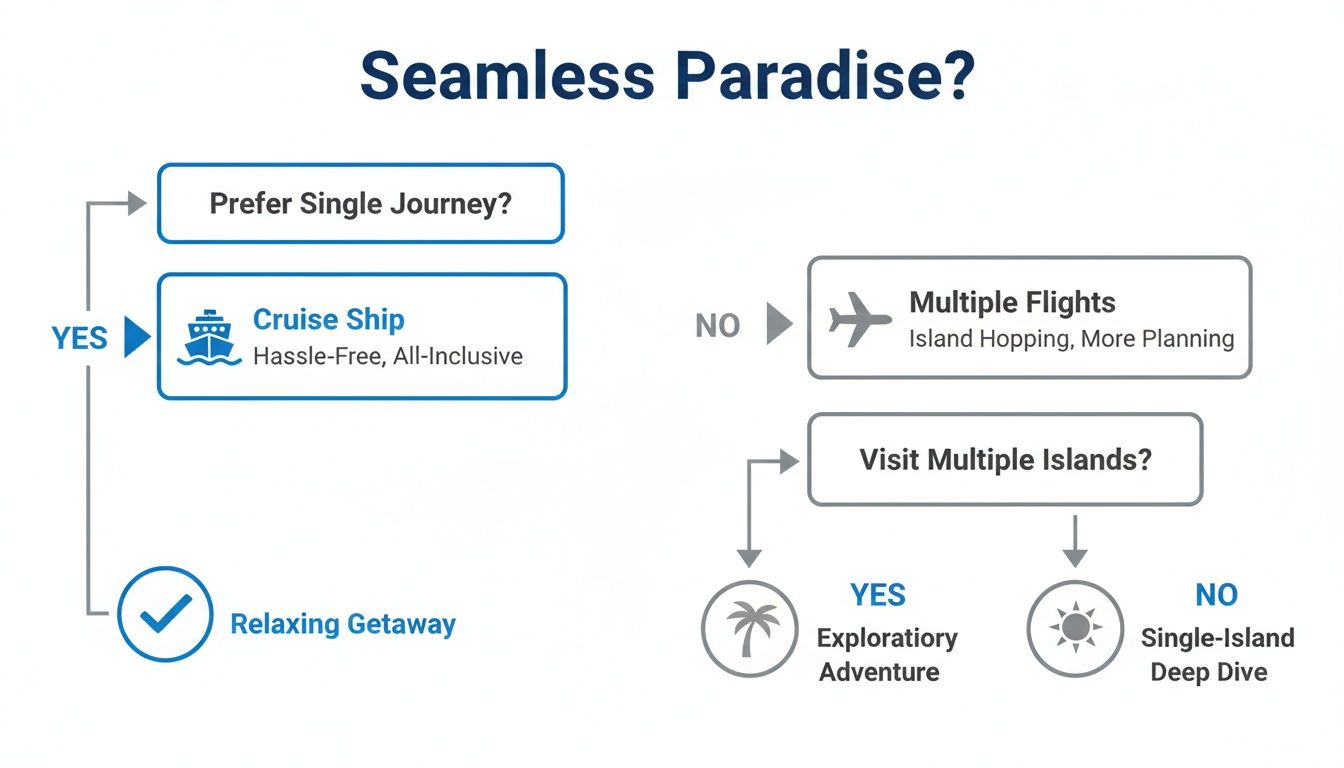
As the chart makes clear, if your goal is a seamless vacation where you only have to unpack once, a cruise is the most direct route to paradise.
The Intimate Adventure of Small Vessels
Now, if the thought of a floating city sounds a little overwhelming, a small-ship cruise could be exactly what you're looking for. Companies like UnCruise Adventures operate on a totally different philosophy, one that’s all about in-depth exploration and connecting with the natural world.
Picture your ship as a nimble expedition basecamp. With fewer than 100 passengers, a real sense of community builds quickly, and you get access to places the mega-ships can't even dream of reaching.
A small-ship cruise trades the casino and theater for zodiac boats and kayaks. It's less about the onboard spectacle and more about immersing yourself in Hawaii’s wild, untouched beauty.
Here, the entire experience revolves around adventure and discovery:
- Expert-Led Excursions: Activities like guided rainforest hikes, snorkeling with marine biologists, and sea kayaking are typically included and led by passionate naturalists. Instead of a large bus tour, you might find yourself in a group of 10 people identifying native birds with an ornithologist.
- Flexible Itineraries: The captain has the freedom to change course on a whim for a pod of spinner dolphins or a breaching humpback whale.
- Secluded Access: These smaller vessels can slip into shallow coves and remote bays, giving you a front-row seat to Hawaii's hidden gems.
This table offers a side-by-side comparison to help you quickly identify the best cruise style for your Hawaiian island hopping adventure.
Comparing Large vs Small Ship Hawaiian Cruises
| Feature | Large Ship Cruises (e.g., NCL Pride of America) | Small Ship Cruises (e.g., UnCruise) |
|---|---|---|
| Atmosphere | Energetic and resort-like; a "floating city" feel. | Intimate and casual; feels like a private expedition. |
| Passenger Count | 2,000+ | Typically under 100. |
| Onboard Amenities | Pools, spas, casinos, theaters, multiple restaurants. | Lounge, bar, library, and adventure gear (kayaks, etc.). |
| Itinerary Focus | Visits major ports with many shore excursion options. | Focuses on remote coves, wildlife, and nature. |
| Activities | Onboard entertainment, shopping, diverse dining. | Guided hiking, snorkeling, kayaking, wildlife viewing. |
| Pacing | Structured, with set port times and show schedules. | Flexible and often spontaneous (e.g., whale sightings). |
| Best For | Families, groups, and travelers who love variety and entertainment. | Adventurous travelers, nature lovers, and those seeking quiet. |
Ultimately, choosing between a large or small ship for your Hawaiian island hopping cruise is all about your personal travel style. Do you want a vacation packed with amenities and entertainment, or a quiet, adventure-focused exploration of the islands' natural wonders? Answering that question will set the course for an unforgettable journey.
Crafting Your Perfect Itinerary: 7, 10, or 14 Days in Paradise
How long should your Hawaiian cruise be? That's the big question, and the answer really dictates the kind of trip you'll have. The length of your cruise sets the whole rhythm of the adventure, from a quick highlights reel to a deep, immersive dive into island life.
Let's break down what you can realistically expect from the most common cruise lengths. Think of it as choosing your travel speed—there’s a pace that’s just right for everyone.
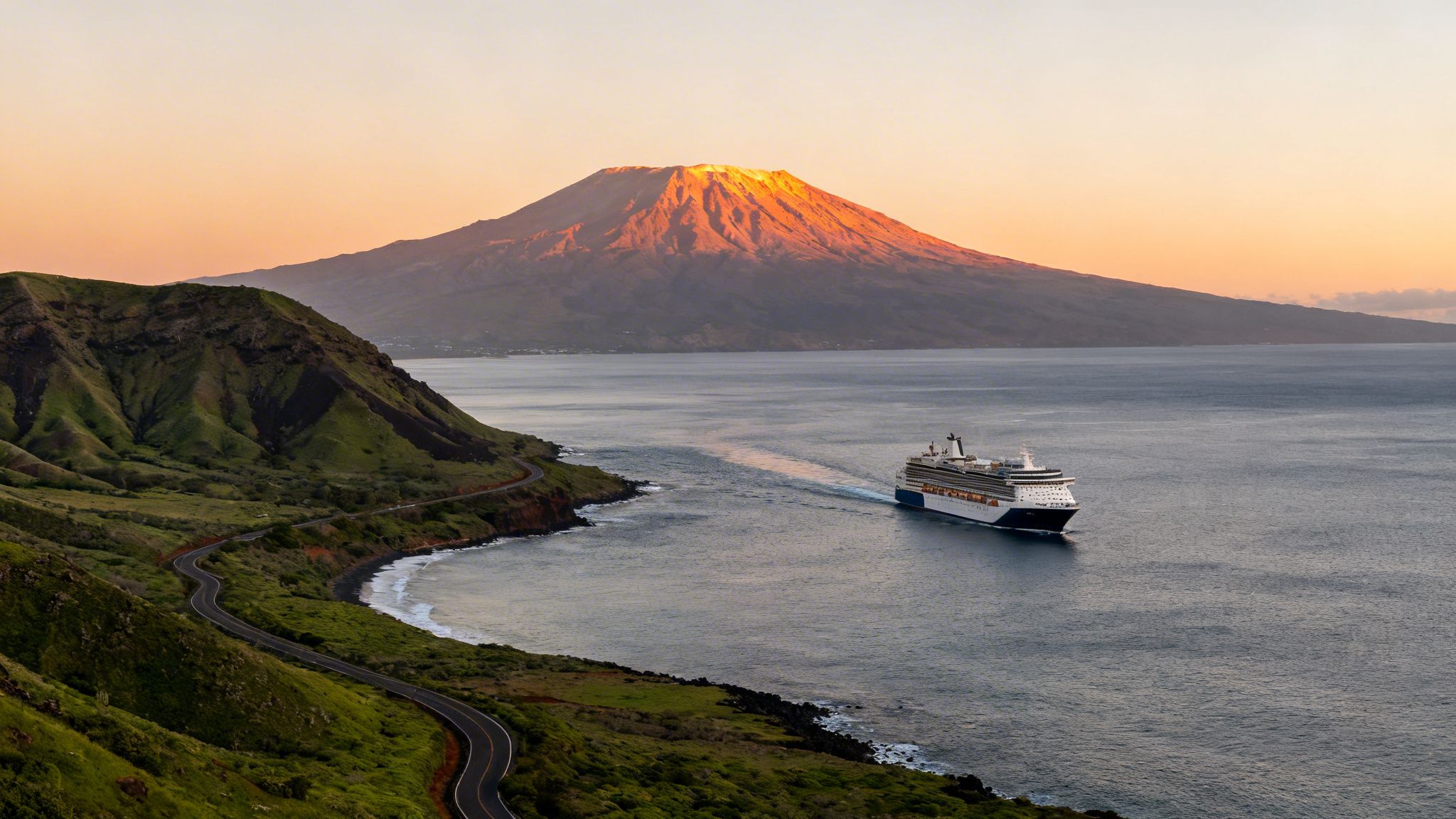
A shorter trip gives you a fantastic taste of what makes each island special, while a longer one lets you truly settle in and savor the experience.
The Classic 7-Day Island Hopper
This is, without a doubt, the most popular way to see the islands by sea. It's a fast-paced, high-energy tour that packs the four major islands into one incredible week. If you're a first-timer or short on vacation days, the 7-day cruise is your best bet for seeing the "greatest hits."
Norwegian's Pride of America really owns this space, offering a whirlwind itinerary that’s all about maximizing your time ashore.
Here’s what a typical week looks like:
- Day 1 & 2: You'll set sail from Honolulu, Oahu, and head straight for an overnight stay in Kahului, Maui. This means you can do a luau on night one and drive part of the Road to Hana on day two.
- Day 3: Wake up in Hilo on the Big Island.
- Day 4: Hop over to the other side of the Big Island to visit Kailua-Kona.
- Day 5 & 6: Settle in for another overnight stay, this time in Nawiliwili, Kauai. This allows for a full-day boat tour of the Nāpali Coast without feeling rushed.
- Day 7: Cruise back to Honolulu, Oahu.
With this kind of schedule, you can be at a luau on Maui one night, exploring the dramatic landscapes of Hawaii Volcanoes National Park from Hilo the next, and then wake up ready for the stunning canyons of Kauai. It's non-stop, but you'll come home with a lifetime of memories.
The 10-Day Immersive Journey
Adding just three more days completely changes the game. A 10-day cruise allows you to slow down, breathe, and really soak it all in. These longer trips often feature extended port stays, letting you tackle adventures that are simply out of reach on a shorter schedule.
This is for the traveler who wants to get beyond the main tourist spots. Imagine having enough time to drive the entire Road to Hana without constantly looking at your watch, or being able to watch the sunrise from Haleakalā—an experience that requires a very early start and is much less stressful with an overnight in Maui.
These longer itineraries shift the focus from simply "seeing" the islands to truly "experiencing" them. That extra time gives you the freedom for spontaneous discoveries and finding those local spots that aren't in every guidebook.
An extra day on the Big Island, for example, could mean touring a Kona coffee farm in the morning and then going for a once-in-a-lifetime night snorkel with manta rays—two iconic activities that are tough to squeeze into a single day.
The 14-Day West Coast and Hawaii Combo
For those who believe the journey is just as important as the destination, the 14-day round-trip from the U.S. West Coast is a fantastic choice. These cruises, usually sailing from hubs like Los Angeles, San Francisco, or Vancouver, blend the excitement of island hopping with the classic, relaxing days at sea.
One of the biggest perks? You skip the flight to Honolulu. Your vacation starts the second you step onto the ship. Those days crossing the Pacific are perfect for unwinding, exploring all the ship has to offer, and getting into the aloha spirit before you even see land.
A 14-day voyage often follows this pattern:
- Days 1-4: Depart from a West Coast port and enjoy the open ocean. Use this time to book spa appointments, make specialty dining reservations, and plan your shore days.
- Day 5: Your first Hawaiian port of call in Hilo, Big Island.
- Day 6: Arrive in Honolulu, Oahu.
- Day 7: Explore Nawiliwili, Kauai.
- Day 8: Visit Kahului, Maui.
- Days 9-13: A peaceful return journey across the Pacific with more sea days.
- Day 14: Arrive back at your departure port.
This unhurried pace makes it a favorite for travelers who want to avoid airports altogether. By figuring out your ideal travel style, you can pick an itinerary that makes your Hawaiian dream trip a reality.
Your Guide to Key Hawaiian Ports and Activities
Every stop on a Hawaiian island-hopping cruise is like stepping into a whole new world. Each island has its own distinct personality and a fresh set of adventures waiting for you. Don't think of your itinerary as just a list of places; see it as a passport to four unique versions of paradise. The key to making the most of your time ashore is having a smart plan, so every port day becomes a highlight of your trip.
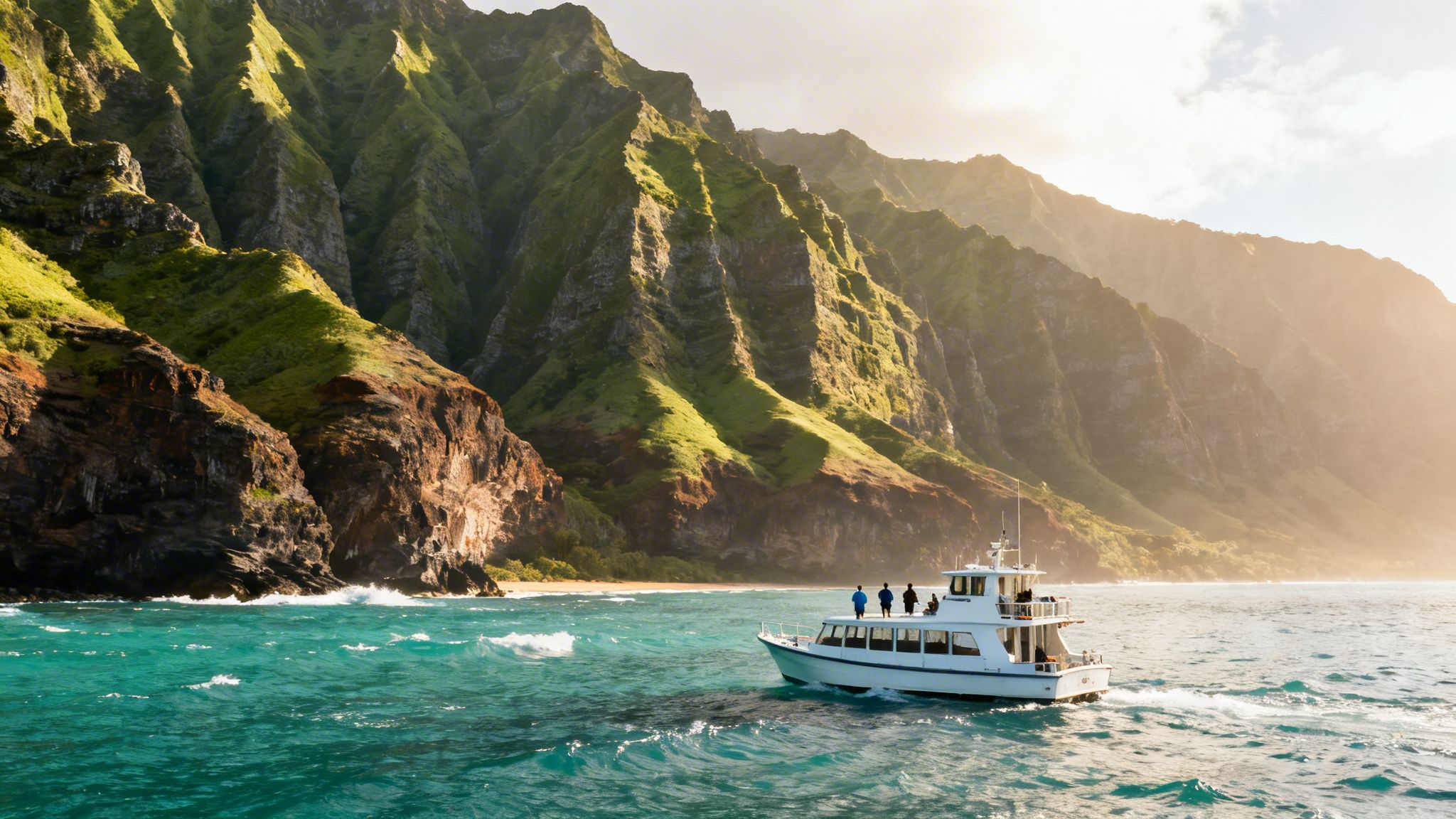
Think of this guide as your cheat sheet for turning each port call into an unforgettable experience. We'll cover everything from the must-see historical sites to the hidden natural wonders that will take your breath away. Let's dive into what you can't miss on each island.
Oahu: The Gathering Place
Your cruise will almost certainly start or end in Honolulu, the lively heart of Hawaii. This port is a fantastic mix of urban energy and quiet history, offering two core experiences you absolutely have to check out.
First up is Pearl Harbor. It's a deeply moving place that really requires a bit of planning. To get out to the USS Arizona Memorial, you need to take a timed boat shuttle. The tickets are free, but they are incredibly popular and get snapped up fast. Actionable Tip: Go to Recreation.gov eight weeks before your visit to reserve your spot online. This is the best way to guarantee your entry.
Then, there's Waikiki Beach, that famous crescent of sand with the iconic Diamond Head crater watching over it. It's more than just a place to sunbathe—this is where modern surfing took off, so why not take a lesson? Or you can just enjoy the world-class shopping and dining right off the sand.
Maui: The Valley Isle
Maui's ports, usually Kahului or the historic town of Lahaina, open the door to some of Hawaii's most stunning natural shows. The island is really known for two things: incredible mountains and amazing marine life.
If you're there in the winter (roughly mid-December to mid-May), you're in for a treat. Maui becomes one of the world's best spots for whale watching as humpback whales flock to its warm, protected waters. Booking a catamaran tour is an absolute must to see these gentle giants up close.
A day on Maui is a powerful lesson in contrasts. You can start your morning at sea level, watching whales breach the waves, and end it 10,000 feet up, standing above the clouds on the summit of Haleakalā volcano for a sunrise or sunset you'll never forget.
A trip up Haleakalā for sunrise requires a reservation, and definitely bring a warm jacket—it gets surprisingly cold up there. Actionable Tip: Reserve your sunrise viewing spot at Haleakalā National Park's official page on Recreation.gov up to 60 days in advance. They sell out fast. Many people choose a guided van tour, which handles the tricky driving and lets you just soak in the otherworldly scenery.
The Big Island: The Orchid Isle
At twice the size of all the other islands combined, the Big Island gives you two totally different port experiences. You'll either dock in Hilo on the lush, rainy east side or Kona on the sunny, dry west coast. Each side offers a unique look at volcanic and agricultural wonders.
From Hilo, the main event is Hawaii Volcanoes National Park, home to Kīlauea, one of the most active volcanoes on the planet. Actionable Tip: Before you go, check the park's official website (nps.gov/havo) for the "What's Happening with the Volcanoes?" section. It provides real-time updates on lava flows and air quality.
When your ship pulls into the sunny Kona side, the vibe shifts to coffee and coastlines. This region grows world-famous Kona coffee, and taking a tour of a local plantation is a great way to see the journey from bean to cup. If you're looking for water adventures, there are some incredible boat tours Big Island Hawaii offers, from snorkeling in Kealakekua Bay to searching for dolphins.
When you spend money on these tours, local coffee, and meals, it directly supports the community. Island-hopping cruises spread this economic benefit across the state. To put it in perspective, Hawaii Island alone saw 146,002 visitors spend $279.1 million in a single month. It just goes to show how every shore excursion helps the local businesses that make each island so special, as you can see from these recent tourism economic reports.
Kauai: The Garden Isle
The moment you dock at Nawiliwili Harbor on Kauai, you're surrounded by the island's famous green and dramatic landscapes. Known as the "Garden Isle," Kauai is all about towering sea cliffs and deep, colorful canyons.
The undisputed star of the show here is the Nāpali Coast, a breathtakingly rugged stretch of coastline you can't reach by car. A boat or helicopter tour is the only way to truly see its sheer green cliffs and cascading waterfalls, and it's worth every single penny.
Just as impressive is Waimea Canyon, often called the "Grand Canyon of the Pacific." It's a spectacular sight, stretching 14 miles long and over 3,600 feet deep with stunning red and green canyon walls. Actionable Tip: Rent a car for the day. This gives you the freedom to drive to the Puʻu Hinahina Lookout (for the best canyon views) and the Kalalau Lookout (for a peek at the Nāpali Coast) on your own schedule, often for less than a guided bus tour. If that sounds like a plan, check out our guide on how to find great discount car rentals for your days in port.
Budgeting for Your Cruise and Finding Major Savings
Figuring out the real cost of a Hawaiian island-hopping cruise is the first step to a truly relaxing vacation. That initial price you see advertised? That's just the starting point. To build a realistic budget, you have to look at the whole picture—from the unavoidable fees to what you'll spend each day on and off the ship.
Think of the cruise fare as your basic admission ticket. The total cost, however, also includes things like your "backstage passes" (shore excursions), the "concession stand" (onboard drinks and specialty dining), and your "commute to the venue" (flights to Hawaii). When you account for everything upfront, you can stop worrying about surprise bills and just enjoy the ride.
Deconstructing Your Cruise Costs
The final price tag on your vacation is pieced together from several key parts. Some are fixed, but many depend entirely on your travel style. Knowing what these are helps you decide where to save and where you might want to go all out.
Here’s a breakdown of what to expect:
- Base Cruise Fare: This is the main ticket price. It covers your cabin, most meals in the main dining areas and buffets, and standard onboard entertainment.
- Taxes, Fees, and Port Expenses: These are the mandatory charges added to every booking. They cover government taxes and the fees each Hawaiian port charges the ship to dock.
- Flights to Hawaii: Unless you're lucky enough to sail from the West Coast, you'll need to budget for round-trip flights to your starting port, which is usually Honolulu.
- Onboard Gratuities: Most big cruise lines automatically add a daily tip to your onboard account for the hard-working crew. This usually runs between $18 to $25 per person, per day.
- Shore Excursions: These are the tours and activities you do on each island. They can range from practically nothing for a self-guided hike to several hundred dollars for a helicopter tour or a private boat trip.
- Onboard Spending: This is your "fun money" for all the extras—specialty restaurants, cocktails, spa treatments, casino games, and souvenirs.
Unlocking Significant Savings on Your Cruise
Alright, now for the good part: how to slash those costs without cheapening the experience. A few smart moves can make a massive difference in your final bill, leaving you with more cash for the things you really want to do. It all comes down to planning ahead and knowing where the real value is.
One of the best ways to save is by booking during the shoulder seasons—think April, May, September, and October. The weather is still gorgeous, the islands are less crowded, and cruise lines often drop their prices to fill cabins. Booking way ahead of time, usually 9-12 months out, is another great tactic to lock in lower fares on the specific cabin you want.
Think of your cruise budget like a puzzle. The pieces are your fare, flights, and daily expenses. By finding the right pieces—like a shoulder season deal or an early booking discount—you can make the entire picture come together for a much lower price.
Here are a few more pro tips for saving money:
- Be Flexible with Your Dates: If you can shift your travel by just a week or two outside of a major holiday, the savings can be huge. For example, a cruise in the first week of May can be hundreds of dollars cheaper than the last week of April, which may coincide with spring break.
- Book Excursions Independently: While booking tours through the ship is super convenient, you can often find the same (or even better) experiences with local guides for a fraction of the price. Use sites like Viator or GetYourGuide to compare prices and read reviews from other cruisers.
- Watch for Onboard Deals: Keep an eye out for "port day" specials on spa services or happy hour drink promotions. Actionable Tip: On the first day of your cruise, check your daily planner for a schedule of happy hours; many bars will have 2-for-1 deals at specific times.
By getting a handle on these costs and using a few clever strategies, you can plan an incredible Hawaiian cruise that fits your budget perfectly. For even more tips on nabbing a great price, check out our guide to the best cruise discount websites.
Essential Planning Tips for a Flawless Voyage
Alright, you’ve picked your cruise style and have an idea of your dream itinerary. Now comes the part that separates a good trip from an absolutely incredible one: the planning. Think of this as your pre-departure checklist, where we’ll nail down the logistics to make sure your Hawaiian island-hopping adventure goes off without a hitch.
Timing is everything in Hawaii. While it’s gorgeous year-round, some months just hit that perfect sweet spot of sunny skies, fewer people, and better prices. For travelers in the know, these "shoulder seasons" are the best-kept secret.
The ideal time to sail is typically April, May, September, and October. You’ll neatly sidestep the peak summer vacation rush and the wetter winter season, giving you perfect weather for both lounging on the beach and tackling those island trails.
Secure the Best Cabins and Fares
Once you’ve zeroed in on your travel window, booking at the right moment is key. For Hawaii cruises, the magic number is usually 9 to 12 months in advance. This is when you'll find the best selection of cabins and often catch early-bird discounts before the prices start creeping up.
If you wait too long, you risk getting stuck with a less-than-ideal cabin location or paying a hefty premium. Booking early also gives you plenty of breathing room to plan flights and shore excursions without that last-minute scramble. And don't forget, flights are a huge part of your budget; our guide on how to find cheap flights has some great pointers.
Think of booking your cruise like trying to get a table at that new, wildly popular restaurant. The best seats are always snapped up by those who plan ahead, leaving the latecomers with whatever is left.
Your Essential Hawaii Packing List
Packing for Hawaii is all about versatility. You're preparing for a tropical paradise, sure, but conditions can change in a flash, especially when you go from sea level up to volcanic peaks.
Here’s a quick rundown of what you absolutely should have in your suitcase:
- Reef-Safe Sunscreen: This is a big one. Help protect Hawaii's fragile coral reefs by choosing sunscreens without oxybenzone and octinoxate. Look for brands like Thinksport or Kokua Sun Care.
- Light Rain Jacket: A sudden tropical shower is just part of the island experience. A small, packable rain jacket will be your best friend, keeping you dry without weighing you down.
- Proper Footwear: Flip-flops are great for the pool deck, but you'll need more. Pack sturdy walking shoes for exploring port towns and hiking boots if you plan to tackle volcanic trails. A pair of water shoes is also a great idea for rocky beaches or snorkeling.
- Layering Options: A trip up to Haleakalā or Volcanoes National Park means a significant temperature drop. A fleece or a light jacket is a must for these high-altitude excursions.
- Reusable Water Bottle: Staying hydrated in the tropical sun is non-negotiable. A reusable bottle is great for the environment and easy to refill on the ship or before heading out for the day.
- Binoculars: If you're traveling during whale watching season (December to May), you will be so glad you brought these. A good pair of binoculars makes all the difference in getting an up-close view of the incredible wildlife.
Common Questions About Hawaiian Cruises, Answered
Planning a trip to paradise always brings up a few questions. To help you get your sea legs before you even pack, here are the answers to some of the most common queries we get about island-hopping cruises in Hawaii.
What Is the Best Month to Take a Hawaiian Cruise?
If you're looking for that sweet spot of great weather, fewer people, and better prices, aim for the "shoulder seasons." The best months to cruise Hawaii are typically April, May, September, and October. You’ll get to enjoy all the beauty of the islands with a bit more breathing room than you would during the busy summer and winter holiday rushes.
Do I Need a Passport for a Hawaiian Cruise?
Good news for U.S. travelers: if your cruise starts and ends in a U.S. port (like Honolulu or a city on the West Coast) and only sails between the Hawaiian islands, you do not need a passport. A valid government-issued photo ID, like your driver's license, is all you'll need to board.
Now, the important exception: a passport becomes mandatory the moment your itinerary includes a stop in any foreign country. For example, some longer cruises might stop in Ensenada, Mexico, on the way back to California, requiring a passport. Always confirm the specific requirements for your cruise before you leave home.
Can You See Active Volcanoes from the Cruise Ship?
Absolutely—and it’s a highlight you won't soon forget! Many cruises that visit the Big Island, especially Norwegian's Pride of America, schedule a scenic sail-by of Kīlauea. As dusk falls, you can often see the mesmerizing glow of lava against the night sky, all from the comfort of your ship's deck. It's a truly spectacular sight.
Seeing the volcanic landscape from the ocean gives you a perspective you simply can't get on land. It’s a powerful, humbling display of nature's force and one of the things that makes cruising here so special.
Are Shore Excursions Included in the Cruise Price?
Shore excursions are almost always an extra expense, so it’s important to factor them into your overall budget. They are not typically included in the base cruise fare. You generally have two ways to book your adventures:
- Book through the cruise line: This is the easiest and most worry-free option. They guarantee you'll make it back to the ship on time. This is a good choice for time-intensive tours, like driving the Road to Hana.
- Book independently with local guides: This can often lead to more unique, small-group experiences and can sometimes be a bit more budget-friendly. This is a great option for shorter activities near the port, like a snorkel tour or a visit to a coffee farm.
Our advice? Do a little research ahead of time to see which tours and activities are must-dos for you.
Ready to turn your dream Hawaiian cruise into a reality without overpaying? As a member of Approved Experiences Traveler, you can unlock exclusive, members-only pricing on cruises, flights, and hotels, saving you hundreds—or even thousands—on your next vacation. Discover how much you can save on your island getaway today.
Want the wider view?
Ten categories. One report. Every quarter. The Approved List tracks what's rising and what's fading: data-backed signals, not opinions.
Free to join · Delivered by email