All Articles
The Journal
Florida Keys Vacation Rentals: Your 2026 Island Guide
July 11, 202614 min readkey west rentalsflorida keys guide
Find the best Florida Keys vacation rentals for 2026. Our island guide offers tips to choose your ideal key, understand booking, and manage group travel.

You're probably in the same place most Florida Keys planners hit sooner or later. One tab has a canal-front house. Another has a condo that works for the grandparents. A third has a bigger place, but it won't allow the dog, the dock is shared, and the check-in dates don't line up with everyone's flights.
A key issue with shopping for Florida Keys vacation rentals like you're booking a simple weekend hotel. The trip usually isn't simple. It involves group size, island geography, parking, boating access, stay length, and local rules that can invalidate what looks like a perfect booking.
The Keys reward planners who think operationally. If you match the right island to the right traveler, choose inventory that fits how your group will live, and verify legality before you pay, the trip gets much easier. If you don't, you end up solving preventable problems from your phone after arrival.
The Florida Keys Vacation Planner's Dilemma
The hardest Florida Keys trip to organize usually isn't the most luxurious one. It's the family trip.
One person is coordinating siblings, in-laws, kids, maybe a grandparent with mobility needs, and at least one relative who wants a private bathroom but doesn't want to pay like they do. Add fishing plans, airport arrivals, grocery runs, and different bed preferences, and the lodging search becomes a logistics project.

Why standard booking platforms break down
Most platforms work well when you need one unit for one household. They work poorly when you need one large home, or a cluster of nearby homes, with coordinated dates and clear cost sharing.
That gap is especially obvious for bigger reunions. Coverage of the Keys often skips the actual coordination burden for 8 to 10 person multi-generational groups, even though demand clearly exists for large-format inventory such as sleep-24 waterfront homes that aren't usually consolidated into one clean booking workflow, as seen in this video example of a large waterfront Florida Keys property.
The issue isn't that the Keys lack inventory. The issue is that the inventory is fragmented.
A practical example: a family organizer may find one large Marathon house that sleeps most of the group, but not all. Then they need a second nearby unit for cousins or grandparents. Now they're comparing cancellation terms across separate listings, collecting money from multiple households, and hoping both reservations remain stable.
Practical rule: If your group needs more than one payment source, more than one arrival window, or more than one kitchen, you're not booking lodging anymore. You're managing travel infrastructure.
What actually works
The better approach starts before you fall in love with property photos. Build the stay around operating needs.
Use this short planning screen first:
- Group structure: Decide whether you need one house, two nearby homes, or a home-plus-condo setup.
- Arrival pattern: Note who's flying into Florida on different days and who needs early access to a bedroom or refrigerator.
- Water access: Separate “wants a view” from “needs a dock” because those are not the same inventory category.
- Shared spaces: Identify whether your group needs one central gathering room or would function better with separate quiet zones.
- Payment reality: Choose lodging that can support one payer, split reimbursement, or multiple coordinated reservations without confusion.
Families usually waste time searching by aesthetics first. The planners who get the best outcome start with constraints, then search for fit.
That shift matters more in the Keys than in many beach markets because inventory varies sharply by island, by licensing status, and by whether the property was designed for weeklong vacations, long stays, or larger groups who need the house to function like a base of operations.
Choosing Your Key An Island by Island Breakdown
The Florida Keys aren't one destination in practice. They're a chain of different operating environments. Pick the wrong island and even a great rental can feel inconvenient. Pick the right one and the trip runs smoothly.
Florida Keys Region Guide
| Key/Region | Vibe | Best For | Typical Rentals |
|---|---|---|---|
| Key Largo | Dive-focused, accessible, laid-back | Divers, weekenders, travelers driving from the mainland | Condos, canal homes, smaller private houses |
| Islamorada | Upscale, fishing-oriented, polished | Anglers, couples, travelers who want waterfront dining and quieter luxury | Villas, boutique-style homes, higher-end waterfront rentals |
| Marathon | Central, practical, family-friendly | Multi-generational groups, boaters, families wanting a middle base | Larger homes, canal properties, pool homes, weekly rentals |
| Lower Keys including Big Pine | Residential, quieter, nature-forward | Return visitors, birders, travelers who want fewer crowds | Detached homes, low-key cottages, longer-stay friendly inventory |
| Key West | Dense, walkable, social, high-demand | First-time visitors, nightlife travelers, culture-focused trips | Historic homes, condos, guesthouses, tighter urban inventory |
Key Largo and Islamorada
Key Largo works best when access matters more than nightlife. It's the easiest entry point if you're driving from South Florida, and that can simplify arrival day for groups with coolers, dive gear, or kids who don't travel light. Rentals here often suit travelers who want water time during the day and low-friction evenings.
Islamorada attracts a different traveler. People choose it for boating, sportfishing energy, and a more polished waterfront atmosphere. The trade-off is usually inventory pressure. If your priority is a specific dock setup or a higher-end waterfront home, expect to be selective and move quickly when a suitable property appears.
Marathon and the Lower Keys
Marathon is often the most operationally efficient choice for families. It sits in a position that makes day planning easier, especially when one part of the group wants boating and another wants a slower schedule. It also tends to make sense for organizers who need parking, multiple bedrooms, and room to spread out without feeling isolated.
The Lower Keys, including Big Pine, suit travelers who don't need constant restaurant density or nightlife. This part of the chain feels more residential. That can be a major advantage if your group values quiet mornings, nature access, and less churn around the property.
A quiet island is often better for a long stay than a famous one. The trip feels longer in a good way when daily movement is simple.
Key West as a distinct booking market
Key West is its own category. It's less about “finding a beach house” and more about deciding whether you want walkability, nightlife, dining, and historic character enough to accept tighter inventory and different space trade-offs.
That high-demand profile shows up in the market data. Key West reported average annual Airbnb revenue of $91,062 per property, with guests typically booking about 85 days in advance, according to AirROI's Key West market dataset. For travelers, the operational lesson is simple: if Key West is the goal, don't browse casually and assume the right inventory will still be there later.
A good way to choose among islands is to ask one blunt question: what part of the day matters most to your group?
- Morning water access usually points toward canal or dock-oriented areas.
- Dinner and nightlife without driving usually points toward Key West.
- Balanced family logistics often favor Marathon.
- Long-stay calm often fits the Lower Keys better than the busiest hubs.
The right island reduces friction before you've even unpacked.
Decoding Rental Types From Weekly Condos to Private Estates
Once you know where to stay, the next decision is what kind of inventory solves the trip. At this stage, many travelers make an expensive mistake. They book the most attractive listing instead of the most functional one.

Weekly condos for structured stays
A weekly condo works well when your trip is compact, your group is small, and you want shared amenities to carry part of the experience. Pools, gyms, easier maintenance, and more predictable layouts can make condo inventory a strong fit for snowbirds, couples, and remote workers who don't need a private yard or a dock.
The catch is privacy. Shared walls, parking rules, elevator access, and HOA-style operating conditions can matter more than the photos suggest. If two households are traveling together and one keeps early hours while the other treats vacation like a late-night event, condo living can create friction fast.
Private homes for family control
Private homes usually provide the best control over how the trip runs. You get a kitchen that belongs to your group, more room for groceries, more flexibility around pool time, and often a better setup for children, gear, and family meals.
They're also the clearest answer for trips that involve:
- Boating plans: You may need a private dock or at least straightforward water access.
- Multiple generations: Separate sleeping zones help grandparents, parents, and kids coexist.
- Food logistics: One large kitchen almost always beats restaurant dependence for longer stays.
- Pet travel: A detached home often handles this more smoothly than condo inventory.
Luxury estates and service-rich alternatives
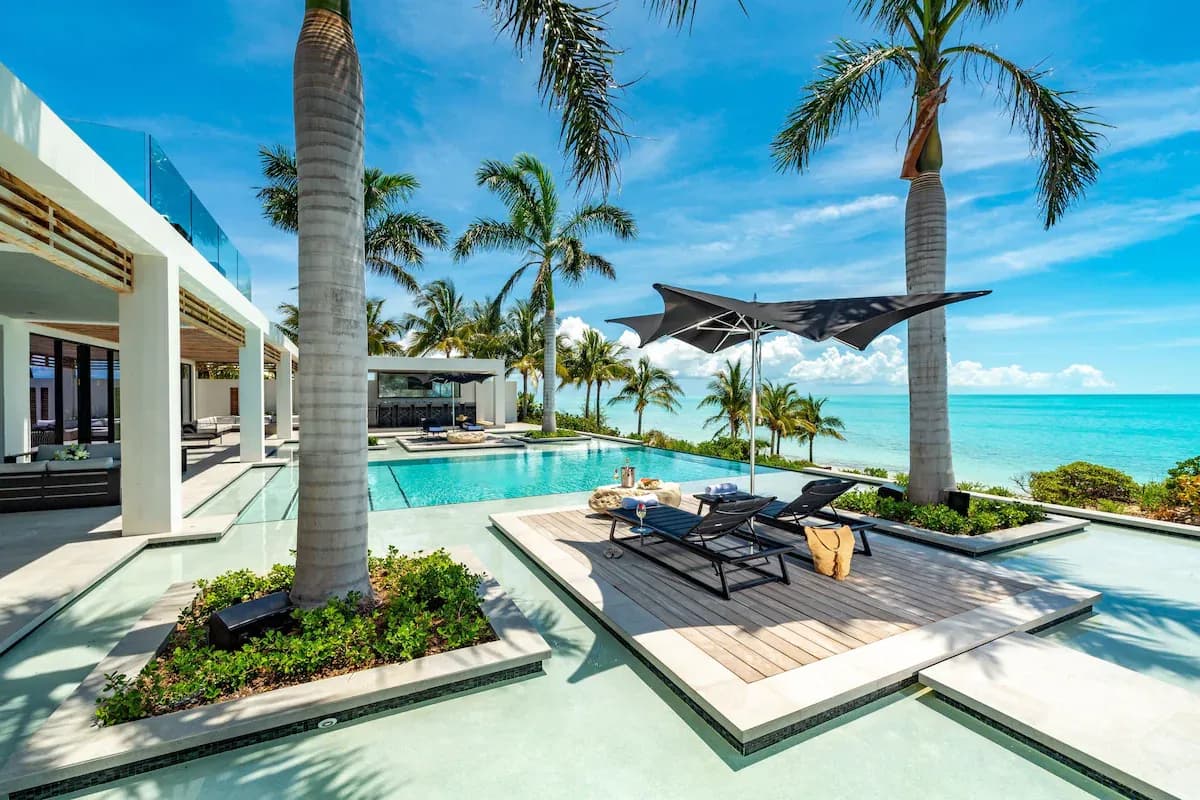
Luxury estates solve a different problem. They're not just larger houses. They're for groups that need scale, privacy, and amenities on site because the property is part of the trip itself. Think outdoor living that supports all-day use, multiple entertaining areas, and enough separation that the home doesn't feel crowded.
At the other end, boutique hotels and resorts still make sense for travelers who want housekeeping and on-site dining. They function differently. You trade space and kitchen control for service density.
Don't compare rental types by appearance. Compare them by how many daily decisions they remove.
A simple decision framework helps:
- If you'll cook often, choose a home or condo with a real kitchen layout.
- If your group includes different sleep schedules, prioritize bedroom separation over decorative upgrades.
- If someone needs to work, confirm the unit has a viable workspace, not just a dining chair near a window.
- If the trip centers on the water, verify dockage or access details before anything else.
For travelers comparing inventory across platforms, it helps to understand where beach-house style supply tends to cluster and how platforms differ. This overview of the best platforms for beach house rentals is useful because the platform choice often affects filtering quality almost as much as the property itself.
Navigating Florida Keys Booking Rules and Logistics
A rental can look perfect online and still be wrong for your stay. In the Keys, legality and logistics matter as much as location.
The 28-day rule that many listings blur
One of the biggest blind spots in Florida Keys vacation planning is stay length compliance. Monroe County requires permits for tenancies under 28 days, and there's still a major clarity gap around which listings are legally exempt for extended stays, which puts long-stay retirees and snowbirds at risk if they assume every listing is interchangeable. Monroe County's Special Vacation Rental Program page is the place to verify the framework before you book.
That matters most for travelers planning one to three months in the Keys. Many listings are marketed as vacation rentals without clearly stating whether they're set up for short stays under permit rules or for longer exempt occupancy.
Questions to ask before you pay
Don't rely on listing language alone. Ask direct operational questions in writing.
- Legal status: Is this property licensed or otherwise compliant for my exact stay length?
- Minimum stay: Does the booking term match county rules and any local property restrictions?
- Guest count: Is the occupancy setup valid for the full traveling party, including children?
- Parking reality: How many vehicles fit on site, and are trailers or boats treated differently?
- Point of contact: Who handles issues locally if the lock fails, water stops, or access instructions are wrong?

Getting there without creating arrival-day chaos
Transportation planning changes the quality of the first and last day.
Flying into Key West can reduce drive time if your rental is in the Lower Keys or Key West itself. Flying into Miami and driving can be more flexible when the group is scattered, carrying more gear, or staying farther up the chain. For many travelers, a car isn't optional. It's part of how the trip functions, especially if you're handling groceries, marina runs, multiple households, or airport pickups.
If you're sorting vehicle logistics at the same time as the rental, this guide to car rental booking strategy is useful because the car decision affects airport choice, baggage handling, and how many people can move together on arrival.
Insurance is another overlooked step. If you're booking out a property or operating one as an owner, it's smart to secure your short-term rental investment with coverage built for the actual risk profile of vacation use rather than assuming a standard policy is enough.
The most expensive booking mistake in the Keys usually isn't the nightly rate. It's discovering too late that the property doesn't legally or practically fit your trip.
Mastering Rental Pricing and Seasonal Timing
In the Keys, timing drives value as much as the property itself. Travelers who understand the seasonal rhythm usually get better inventory alignment, not just a lower headline rate.
What the pricing bands actually tell you
For renovated 3 to 5 bedroom pool homes, peak season from December through April runs at $700 to $1,200+ per night, shoulder season sits around $450 to $700, and late summer to fall can drop to $300 to $450, with overall occupancy averaging 65% to 80%, according to the 2026 Florida Keys vacation rental investment outlook.
Those ranges tell you more than “winter costs more.” They show where flexibility matters.
If your group can travel just outside the hottest demand window, you may keep access to the same general house category while changing the economics dramatically. If your dates are locked to holidays or school calendars, your advantage comes from booking discipline and fast decision-making, not waiting for the market to soften.
The features that move the rate
Not every expensive listing is expensive for the same reason. In the Keys, the biggest pricing drivers are usually operational features, not cosmetic ones.
A few examples:
- Private pool: This consistently changes the usability of the property for family groups.
- Waterfront positioning: Open-water exposure, canal access, and dock utility are not interchangeable.
- Bedroom count with common space quality: Extra bedrooms help, but the house still needs to function during waking hours.
- Renovation level: Updated kitchens, baths, and outdoor living areas affect real comfort on longer stays.
For travelers, the lesson is to pay for the features that change behavior. Don't pay a premium for finishes your group won't use. Do pay for layout, access, and outdoor utility if those are central to the trip.
How to use timing strategically
A practical booking approach looks like this:
- Fix your absolute requirements first. If you need a dock, pool, and certain island zone, accept that those filters narrow your window.
- Stay flexible on exact dates when possible. A small shift can move you from peak compression into a more manageable period.
- Price the full stay pattern. A longer booking can look expensive nightly but still reduce restaurant, activity, and regrouping costs.
- Compare management quality, not just rate. A cheaper listing with weak communication often creates hidden trip costs.
Travelers who want to better understand how inventory pricing works across the vacation rental category can get useful context from this guide to short-term rental management. It's helpful because pricing quality usually reflects operations quality.
If you're trying to think more strategically about rate access overall, this article on vacation rental pricing advantages and booking discounts offers a solid framework for evaluating when retail pricing is working against you, especially on longer stays.
Consolidating Your Keys Trip for Maximum Value
The best Florida Keys vacations usually aren't the ones with the flashiest listing. They're the ones where the planning system held up.
What consolidated planning solves
Large-group Keys travel breaks when one person has to manually coordinate too many moving parts. One house for cousins, another for grandparents, a rental car issue, separate flights, different payment timelines, and no central place to track anything. That's the pattern that creates avoidable stress.
A consolidated travel infrastructure solves a different class of problem than a listing site. It helps you manage access across flights, cars, vacation homes, and activities without forcing you to rebuild the trip from disconnected systems every time.
That matters in a market where the underlying economics remain strong. In the Florida Keys, the 2026 outlook projects professionally managed property ROI at 8% to 12%, supported by supply constraints and tourism demand that generates $3.5 billion annually in Monroe County, as noted in the earlier market outlook.
Why this matters for different traveler types
For a multi-generational family organizer, consolidation means fewer handoffs. You need one operating view of lodging, transport, and timing, especially when the group won't fit neatly into one reservation.
For snowbirds and long-stay retirees, the advantage is clarity. You're not just hunting for a nice unit. You're trying to find compliant inventory that works for a one to three month pattern without wasting time on listings that were built around short-stay turnover.
For timeshare owners, the issue is different again. A rigid annual week may no longer match how the household travels. Exchanging or redirecting that travel value into a Florida Keys stay can be more useful than forcing another year of underused inventory.
The value isn't only the stay
A strong travel platform compounds usefulness over time because it doesn't reset to zero after each trip. You can use one system across vacation homes, flights, cars, cruises, and other travel categories instead of rebuilding your search process every season.
That kind of continuity is what frequent travelers need. Not more tabs. Better operating efficiency.
Good trip planning reduces decisions before departure. Great trip planning also preserves value for the next booking.
The Florida Keys reward people who plan like operators. Choose the island for your specific trip. Match the rental type to how the group will live. Verify legal fit before sending payment. And if the trip involves multiple households, longer stays, or cross-category bookings, consolidate the moving parts early.
If you want that kind of consolidated travel infrastructure, Approved Experiences Traveler gives members access to over 1,000,000 hotels, 700+ airlines, 44+ cruise lines with 30,000+ itineraries, 30,000+ car rental locations, 500,000+ vacation homes, 5,500+ tour packages, and 150,000+ activities in one platform. Approved Traveler supports up to 10 household members, includes Reward Credits on bookings, and is backed by a 110% Best Value Guarantee. Travelers who need more hands-on logistical support can step up to Lux Traveler, which adds the Approved Lux 24/7 Personal Assistant for travel and household coordination.
Want the wider view?
Ten categories. One report. Every quarter. The Approved List tracks what's rising and what's fading: data-backed signals, not opinions.
Free to join · Delivered by email