←All Articles
The Journal
10 Beaches in the United States for Smart Trips
September 23, 202618 min readU.S. beach vacationsfamily beach travel
Explore 10 beaches in the united states by region, with family, long-stay, accessibility, activity, lodging, and itinerary planning notes.

The safest advice about beaches in the United States is usually the least useful. A pretty shoreline doesn't tell you whether you need a kitchen, a car, a cruise buffer night, or a place that can hold a large group without turning the trip into a logistics problem. This guide ranks beach destinations by how they function as travel systems, not by scenery alone, so you can match the coast to the kind of trip you're really running.
That matters in a country where beach access is uneven, monitored, and often operationally complex. The EPA says 68% of coastal and Great Lakes program beaches were monitored for pathogens or indicators in 2021, 33% had at least one advisory or closing, and those program beaches were open and safe for swimming 92% of the time EPA beach report. It also matters because shoreline access isn't automatically public, and in many places you need to plan around local rules, tide lines, and managed access points rather than assume the coast is continuous. For families, snowbirds, remote workers, and cruise travelers, the question is what inventory you can consolidate, hotels, vacation homes, cars, activities, and flights, before you ever leave home. If you also travel with gear, Motor Sportsland's camping advice for beach trips is worth a look before you build an RV-based plan.
1. Maui, Hawaii
Maui works best when the trip needs to behave like a controlled base camp, not a string of disconnected day plans. The island gives extended-stay travelers a rare combination of warm-water swimming, snorkeling access, and enough property variety to keep a large household from fracturing into separate booking silos.
Why it fits long stays and bigger groups
For a 7-night or longer trip, a vacation home with a kitchen changes the math immediately. You can front-load grocery runs, cut down on restaurant dependence, and keep breakfast, beach snacks, and late dinners under one roof, which is exactly what large families need when the group spans kids, parents, and in-laws. A car isn't optional here, it's the transport layer that lets one group snorkel while another heads to dinner or a sunrise drive.
Practical rule: Anchor the itinerary around one fixed event, then build the rest of the week around it. On Maui, that anchor is usually sunrise or an early-morning excursion, not a loose “see what happens” day.
Haleakalā sunrise belongs in the planning calendar early because it gives the trip structure and prevents the week from becoming a soft blur of beach time and missed reservations. Maui also suits travelers who want everything consolidated, beach days, snorkel outings, and group dinners all pulled into one operational flow rather than split across multiple tabs.
The island's mix of black-sand beaches, golden stretches, and offshore snorkeling also makes it a strong match for households that need variety without changing hotels. If you're coordinating a 10-day stay or longer, this is the kind of destination where Reward Credits can start to matter as a future-trip asset rather than a one-off perk.
For direct flight planning and access questions, this Hawaii flight guide is the right companion before you lock in the trip.
The best Maui checklist is simple, sleeping capacity, kitchen space, car rental timing, snorkel reservations, and one 24/7 support layer if the trip has multiple moving parts.
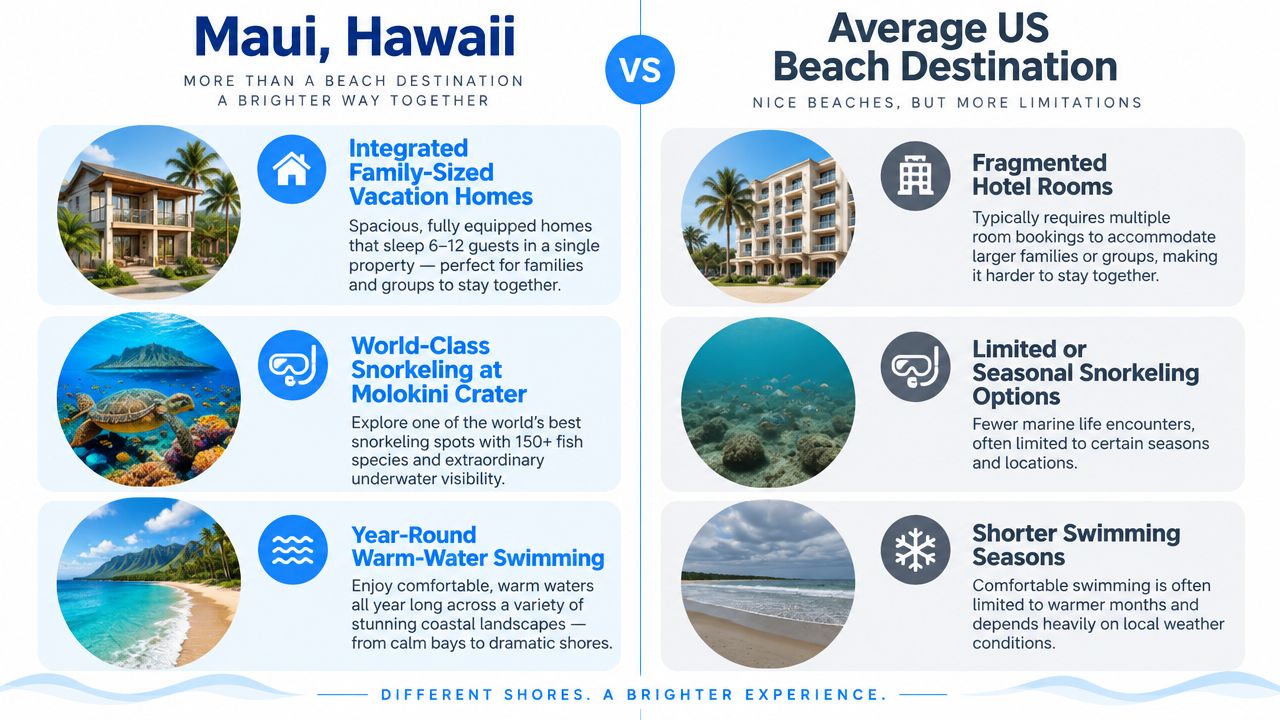
A video overview helps show why Maui keeps working for mixed-age households.
2. Outer Banks, North Carolina
The Outer Banks are a better fit for family coordination than for polished convenience. The stretch runs about 200 miles, and that scale creates room for reunion-style vacation homes, dispersed arrival times, and activities that don't require everyone to like the same beach day.
Beach-house clusters here matter because they let one booking hold the whole group. A single property that sleeps 8 to 16 people can reduce the number of handoffs you have to manage, especially when you're coordinating grandparents, cousins, and different arrival windows. The destination also gives you enough room to spread out without losing the sense that everyone is still on the same trip.
The operational advantage
The Outer Banks work well for multi-family reunions because the housing inventory is built around shared-use homes rather than just hotel rooms. That means one kitchen, one living area, one pool if you pick that type of property, and fewer decisions about where everyone eats or gathers after the beach.
Use this rule of thumb: If the trip depends on shared meals and evening downtime, prioritize a house with a pool and game room over a standalone hotel block.
There's also a financial logic to booking Sunday through Thursday arrivals when you can. Even without turning the trip into a spreadsheet exercise, shifting the stay window can improve the rate structure and make a week-long reunion easier to justify. If relatives book separately, member-share style coordination keeps the family from losing visibility across individual reservations.
The best itinerary here is a slow one, one beach morning, one lighthouse stop, one shared dinner, then another day built around horses or wave watching. That kind of pace works because the Outer Banks are more about continuity than compression.
This guide to East Coast beach towns is useful if you want to compare nearby alternatives before choosing where the whole household lands.
3. Destin, Florida
Destin is one of the strongest long-stay beach bases in the United States for travelers who want the trip to run like a seasonal residence. It fits snowbirds, remote workers, and family groups that want a warm-weather corridor with enough housing depth to support 4-week to 12-week planning.
The appeal here isn't just the water color, it's the housing shape. Gulf-view homes with dedicated workspaces make it easier to keep the trip productive, especially if one adult is still working while everyone else treats the beach like a second home. That matters when the itinerary has to support both routine and leisure at the same time.
Why Destin works for extended residence
A winter base camp in Destin can function like a soft landing for retirees or long-stay households that don't want a timeshare commitment. If you're staying for several weeks, the most useful inventory is the kind that reduces churn, a real kitchen, enough bedrooms, and a work area that doesn't force someone to take calls from a dining chair.
Planning note: Schedule property tours and lease conversations in the shoulder season if you want more room to negotiate the stay around your actual calendar.
For remote workers, the question is less “Is it a beach?” and more “Can I hold meetings, receive groceries, and get to the shoreline without wasting half the day?” Destin answers yes if you choose the right housing. For family groups, it also makes healthcare, dining, and errands easier to coordinate than a more fragmented resort setup.
This Florida condo rental guide fits naturally with Destin planning if you want a more residential-style stay instead of a short holiday booking.
The useful checklist is straightforward, workspace, multi-month inventory, grocery access, car access, and enough room to let the beach trip become daily life instead of a rotating series of compromises.
4. Kiawah Island, South Carolina
Kiawah Island is a clean fit for travelers who want golf, beach, and resort logistics in one controlled environment. It works especially well for multi-generational trips, because the island's upscale structure reduces the amount of outside coordination you need to keep the group together.
The practical value is consolidation. When a destination combines vacation homes, resort services, and activity access, you spend less time stitching together separate bookings. That's useful for families with different activity preferences, one person wants golf, another wants beach time, and someone else needs a quieter property for work calls or early mornings.
The right trip shape here
Kiawah is strongest when the trip includes planning lead time. Golf weekends, group dinners, and higher-demand vacation homes are easier to manage when you book months ahead, not weeks. If you're running a multi-family stay, the island's structure supports both privacy and overlap, so people can break into smaller groups without leaving the same general base.
A home with private pool access or golf-course proximity can lower the day-to-day recreation load. That means fewer off-property logistics and more predictable group movement. It also gives remote workers or older family members a quieter rhythm while the rest of the group cycles through golf or beach time.
Practical rule: If three generations are traveling together, pick one property that solves breakfast, shade, and evening gathering space first. Everything else is secondary.
Kiawah fits especially well for spring trips where the plan is to alternate beach mornings with golf or easy resort activity. It isn't the strongest choice for nightlife, and that's the point. The destination rewards travelers who want an organized, low-friction stay rather than a scattered resort hunt.
5. Cancún and Caribbean Riviera Maya, Mexico
The Mexican Caribbean is the smart move when the trip needs both convenience and variety. Cancún, Playa del Carmen, and Tulum let travelers choose between all-inclusive structure and vacation-home flexibility, which is useful when the group has mixed expectations.
This corridor works because it can absorb different trip styles at once. A family can start with a 5-day all-inclusive stay, then move into a 3-day vacation home to get more control over meals, outings, or quiet time. That blend is especially effective for travelers who want beach access but don't want every meal, transfer, or activity pre-decided for them.
A mixed-format itinerary makes sense here
The best operational advantage is inventory variety. Resorts handle simplicity, while local vacation-home clusters give you more room and more autonomy. If you're pairing the region with a cruise or a larger international itinerary, that mix can make the whole journey feel less rigid.
Early morning is the right time for Mayan site visits, both for heat management and for keeping the day from getting consumed by transport delays. Group transportation should be handled before arrival, because once a family is split between a resort, a cenote visit, and a dinner reservation, the trip becomes a coordination exercise very quickly.
The itinerary to favor is a split stay, a few days of high-convenience resort access, then a few days in a more residential zone for dinners, swim time, and lower-pressure pacing. That's the version of the Riviera Maya that works for mixed-age households and frequent travelers.
If you're using consolidated inventory, the main win is not savings hype, it's reducing the number of separate decisions your group has to make.
6. Santa Monica and the Southern California Coast
Southern California beaches are for travelers who need the coast to behave like a live-work corridor. Santa Monica, Manhattan Beach, Hermosa Beach, and Malibu are all strong options for remote workers and frequent travelers who want condo-style housing, good mobility, and enough urban density to keep the trip flexible.
The point here is not just beach access, it's infrastructure. A 4-week to 8-week rotation works well when the housing has a desk, the neighborhood supports errands without a full-day drive, and the car booking is simple enough to manage from one platform. That makes Southern California especially useful for people who keep one foot in work and one foot in leisure.
Why this coast is operationally efficient
This is one of the best regions for travelers who need repeatable routines. You can work in the morning, take a beach walk, handle a meeting block, then move into dinner or local activity without rebuilding the trip every day. That's a real advantage for digital nomads and project-based workers.
Use a residential lens: Choose the neighborhood first, then the beach. If nightlife matters, pick accordingly. If sleep and focus matter more, prioritize quieter streets and easier parking.
Families also benefit from the area's layered inventory. One household member can book a short local trip while others stay put, which makes it easier to split schedules without splitting the account itself. If you're cycling through multiple California stays per year, this coast also rewards repeated use because the structure never gets too complicated.
The itinerary that works best is a winter work rotation, condo, car, desk, and a beach that stays available as a daily habit rather than a big-ticket event. That's the kind of setup that reduces friction while still feeling like a real coastal stay.
7. Big Sur, California, with Cambria and San Simeon as the base
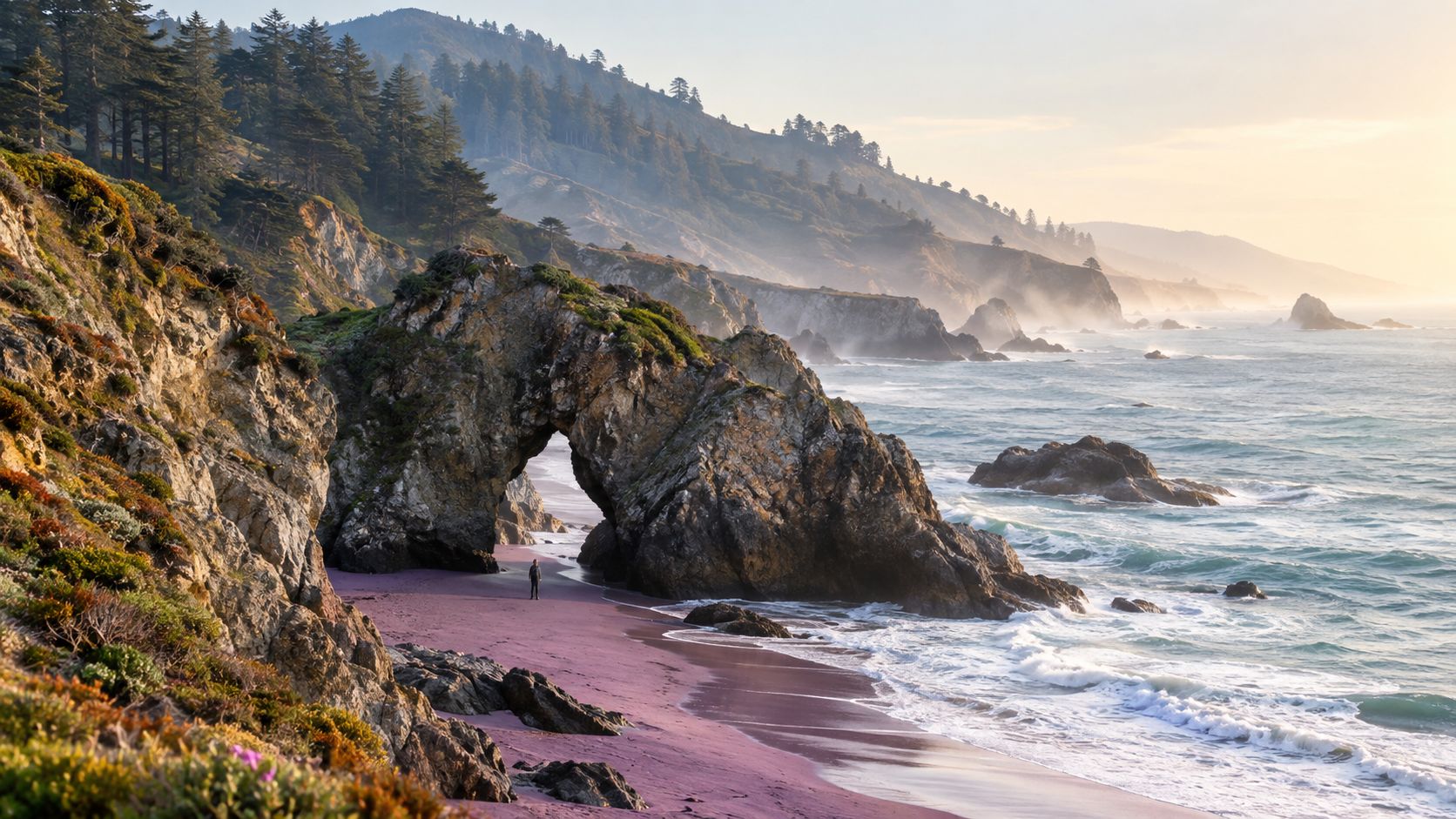
Big Sur is the nature-first choice on this list, but it's not the place to overcomplicate the overnight plan. Cambria and San Simeon work better as the lodging base because they give groups more practical access to kitchens, dining space, and a wider set of stays that fit 6 to 8 people.
The logic is simple. Big Sur itself is better for the day experience, while nearby towns make the trip livable. That matters when you're planning a retreat with different ages, different sleep schedules, or a remote-work component that still needs a functional desk and Wi-Fi.
Build the trip around the landscape, not the calendar
Five to seven days is enough to make the drive and the stay feel worthwhile without forcing too much motion. A kitchen matters here because restaurant logistics on a cliff-and-forest coast can get old fast, especially if you're traveling with a multi-generation group or trying to keep a retreat rhythm intact.
Best practice: Put Hearst Castle or any limited-ticket activity on the calendar before you arrive. Once you're on the coast, you want the day to stay open for scenic stops and quiet time.
Big Sur is strongest for households that want a reset without a packed activity grid. One morning can be cliffs, another can be redwoods, and another can be a slow coffee-and-view day. That makes it a strong answer for families that want to travel together but don't want every hour scheduled.
The useful checklist here is less about entertainment and more about fit, lodging density, kitchen space, access to reservations, drive time tolerance, and whether the group wants a retreat instead of a beach town.
8. Charleston, South Carolina
Charleston is the best cultural beach hub on the list because it lets you combine historic city time with nearby island access without changing the basic trip structure. The peninsula gives you architecture, food, and urban walkability, while Kiawah, Seabrook, and Edisto give you the beach layer.
That makes Charleston a strong choice for households that don't want to choose between city and coast. You can spend one night downtown, then move into an island stay, or reverse the sequence if the family wants the beach first and the dining second. The inventory mix is the primary advantage here.
A good Charleston trip uses contrast
This city works well for short rotations, repeated visits, and extended stays because there's always something different to pair with the beach. A restaurant-heavy weekend can sit beside a quieter island morning without feeling like a disconnected trip.
For planning, the main operational move is to reserve in advance. Popular restaurants need more lead time than most travelers expect, and consolidated activity planning helps keep everyone aligned when one household wants dinner downtown and another wants a beach night. If your family books multiple Charleston trips through the year, that repetition can support an ongoing travel rhythm without forcing every visit to be a new learning curve.
The destination is especially effective for travelers who value experience density. One trip can include downtown walking, island time, and relaxed dinners, which means the itinerary feels full without being frantic. That's a rare combination among beaches in the United States, and it's why Charleston works so well for multi-day travelers.
9. Fort Lauderdale, Florida
Fort Lauderdale is the cruise logistics beach on this list. It's a strong pre-cruise base for travelers who want neighborhood beach character without losing access to terminals and transit corridors.
The most useful feature is timing. Arriving one or two days before departure reduces the risk of a rushed embarkation day, and it gives the family time to absorb delays, adjust luggage, and sort out transit without turning the cruise into a sprint. For cruise enthusiasts, that buffer is often more valuable than another hour by the pool.
Why it's a smart pre-cruise choice
Fort Lauderdale lets you pair vacation-home stays with cruise access, which is the right move if you're traveling with family or combining two trip types at once. The beach is still part of the experience, but the primary function is operational: sleep nearby, transfer smoothly, board with less stress.
Use consolidated booking tools to compare the cruise and the lodging together, because separating those decisions can create unnecessary friction. Travel insurance also belongs in the conversation for peak sailing periods, not because the trip is fragile, but because the system has too many moving parts to ignore.
The best itinerary here is short and deliberate, one or two nights pre-cruise, a beach afternoon, a nearby dinner, then a calm departure day. That's exactly the kind of travel plan that rewards clarity over overplanning.
10. Miami Beach, Florida
Miami Beach is the strongest choice on this list for travelers who want the coast to function as a cultural and nightlife layer before or after a cruise. It pairs long Atlantic beaches with architecture, entertainment, and a dense restaurant scene, which makes it a good fit for people who want more than sand and sun.
The beach itself matters, but the neighborhood choice matters more. South Beach is the better fit for nightlife and entertainment-focused stays, while quieter residential areas are better if the goal is sleep, recovery, and a more controlled pace. That distinction matters a lot when the trip sits next to cruise logistics or a tight flight schedule.
A useful Miami Beach plan
Reserve restaurants and entertainment early if you're visiting on a weekend. The destination rewards travelers who treat it like a city with a beach, not a beach with some city around it. That means building in traffic buffers, especially if you're moving between the airport, a hotel, and the cruise terminal.
Miami Beach is ideal for travelers who want the trip to feel layered. One day can be a beach morning, another can be dinner and nightlife, and another can be a reset before boarding a ship or flying out. That flexibility makes it a strong finishing point for an itinerary that starts with structure and ends with energy.
For people who want their beach travel to connect into a broader regional plan, this is one of the easiest U.S. coastal bases to coordinate.
Top 10 Beach Destinations Comparison
| Destination | 🔄 Implementation Complexity | ⚡ Resource Requirements | ⭐ Expected Outcomes | 📊 Ideal Use Cases | Key Advantages & Tips 💡 |
|---|---|---|---|---|---|
| Maui, Hawaii | High, inter-island flights + peak-season planning | Moderate–High, multi-week homes, car rentals, advance tours | ⭐⭐⭐⭐⭐, world-class snorkeling, diverse beaches, family coordination | Multi-week family reunions; snorkeling; whale watching | Integrated family-sized homes; front-load Reward Credits; tip: reserve Haleakala sunrise 2–3 weeks ahead and coordinate car rental. |
| Outer Banks, NC | Medium, long lead times for summer inventory | Low–Moderate, drive-market accessibility, large homes | ⭐⭐⭐⭐, cost-effective large-home stays, strong surf culture | Multi-family summer reunions; surfing & nature trips | Wholesale vacation-home rates; tip: book oceanfront homes with pools and arrive Sun–Thu for better rates. |
| Destin, FL | Medium–High, multi-month winter bookings & hurricane planning | Moderate–High, long-stay inventory, workspaces for remote work | ⭐⭐⭐⭐⭐, stable warm water, ideal for extended stays | Snowbird/remote-work residencies; multi-month family stays | Year-round warm Gulf waters; tip: book 8–12 week winter stays and secure a dedicated workspace. |
| Kiawah Island, SC | High, coordinated golf packages & resort logistics | High, upscale resort pricing, golf access fees | ⭐⭐⭐⭐, premium golf + resort experience | Golf-focused multi-gen trips; upscale resort retreats | Consolidated golf-package access; tip: book tee times 3–6 months in advance and use assistant for coordination. |
| Cancún & Riviera Maya, Mexico | Medium, mix of all-inclusive and home logistics; peak-season lead time | Moderate, frequent flights, resort + home options | ⭐⭐⭐⭐, broad family options, cenotes, archaeological sites | All-inclusive family vacations; combined resort+home itineraries | Large all-inclusive corridor and cruise access; tip: combine 5–7 day resort + 3–4 day home stays and pre-book tours early. |
| Santa Monica & SoCal Coast, CA | Medium, competitive market, LA traffic considerations | Moderate, condo rentals with workspaces, car rental consolidation | ⭐⭐⭐⭐, strong for work-travel rotations and urban beach life | Remote-work rotations; short residential stays | Full-kitchen condos with desks; tip: select properties with dedicated workspaces and consolidate car rentals. |
| Big Sur, CA (Cambria/San Simeon) | Medium–High, Highway 1 driving logistics and limited lodging | Moderate, car suited for winding roads, full-kitchen homes | ⭐⭐⭐⭐, exceptional nature immersion, quieter retreats | Nature retreats; photography; short multi-gen getaways | Secluded coastal scenery; tip: base in Cambria, book 5–7 day stays and choose homes with full kitchens. |
| Charleston, SC | Medium, mix of downtown + island coordination | Moderate, combined hotel/home inventory, restaurant bookings | ⭐⭐⭐⭐, strong culinary & historic appeal with island access | City + island combos; culinary and history-focused trips | Consolidated city+island inventory; tip: reserve restaurants 4–6 weeks ahead and mix short rotations to earn credits. |
| Fort Lauderdale, FL | Low, straightforward pre-cruise logistics | Low–Moderate, proximity to cruise terminals, short-stay homes | ⭐⭐⭐, efficient pre-cruise staging and short family stays | Cruise pre-stays; short coastal stays | Close cruise-terminal access; tip: arrive 1–2 days before embarkation and book nearby vacation homes. |
| Miami Beach, FL | Medium–High, event-driven demand, traffic & parking | Moderate–High, entertainment-driven budgets, short-stay inventory | ⭐⭐⭐⭐, high entertainment and nightlife appeal | Nightlife/cultural visits; event weekends | High-density dining & nightlife; tip: reserve entertainment and restaurants well ahead and choose neighborhood by activity priority. |
Turn a Beach Shortlist Into a Bookable Operating Plan
Families should start with sleeping capacity, kitchens, transportation, shared booking authority, and activity timing. If the group includes grandparents, kids, and separate household units, the right beach isn't the prettiest one, it's the one that holds everyone without creating daily friction. That's why Maui, the Outer Banks, Kiawah Island, and Charleston all work better when the lodging inventory matches the family structure first.
Long-stay and remote-work travelers should confirm workspace, monthly inventory, car access, and a 4-week to 12-week itinerary before choosing a destination. Destin and Southern California are the easiest fits for that mode, while Big Sur needs a more retreat-style base and Maui needs more upfront coordination. If the trip only works when the internet is stable, the kitchen is usable, and the drive between errands and the beach is manageable, the stay has to be built around those facts, not around a postcard.
Cruise and frequent travelers should protect buffer nights, transfers, and activity reservations. Fort Lauderdale and Miami Beach are the clearest matches for that use case, because they let you connect lodging, beach time, and terminal access without compressing the schedule. When the trip involves ships, flights, and dinners in the same window, operational slack is not optional.
If you want to consolidate that kind of travel planning in one place, use Approved Traveler to access 1,000,000+ hotels, 700+ airlines, 500,000+ vacation homes, 30,000+ car-rental locations, 44+ cruise lines, 5,500+ tours, and 150,000+ activities on one platform. Members can earn Reward Credits that never expire, extend access to up to 10 household members, use Boomerang Member Share, apply the 110% Best Value Guarantee where it fits, and consider Lux Traveler when the Approved Lux 24/7 Personal Assistant would help coordinate complex travel logistics. Learn more at Approved Traveler, and if you're planning a beach trip that crosses flights, cars, and terminal timing, the same platform can help you run the itinerary with less fragmentation. For travelers managing connectivity on the road, you can also browse U.S. eSIM options from RedSim.
Approved Experiences Traveler gives you a practical way to consolidate beach trips that need hotels, vacation homes, flights, cars, cruises, and activities in one place. If you're comparing beaches in the United States for a family reunion, a long stay, or a cruise buffer trip, visit Approved Experiences Traveler and build the itinerary around the inventory first.
Want the wider view?
Ten categories. One report. Every quarter. The Approved List tracks what's rising and what's fading: data-backed signals, not opinions.
Free to join · Delivered by email