
←All Articles
The Journal
How Do E Gift Cards Work: A Simple 2026 Guide
October 4, 202611 min readreward creditstravel membership
Learn how do e gift cards work, from purchase to redemption, plus tips on choosing the best digital gift cards for any occasion.

You're organizing a family trip across several countries. One relative wants a hotel, another prefers a villa, someone else is comparing a cruise, and the final payment dates don't line up. An e-gift card can simplify part of that process, but only if you understand how the code is delivered, where it can be redeemed, which currency applies, and what happens to the unused balance.
The short answer to how do e gift cards work is straightforward: a sender selects a value, provides a recipient's email address or phone number, and receives a digital code or barcode. The recipient uses that credential online or presents it from a phone in person. Travel adds more operational detail, because the card may be connected to a specific marketplace, country, currency, booking type, or account.
Understanding Digital Gift Card Mechanics
An e-gift card is a digital certificate of value delivered through email, text message, or an app instead of on plastic. It commonly contains a code and may also include a barcode. Online, the recipient enters the code during checkout. In person, a cashier can scan the barcode or accept the card details from the customer's phone, as explained in this practical overview of gift cards versus e-gift cards.
Within a travel rewards ecosystem, the card represents value that has been moved from a member account into a redemption instrument. Reward Credits are converted into an e-gift card, the recipient receives the digital credential, and the card can then be applied to an eligible travel purchase. That's different from a general-purpose bank card. The e-gift card usually works only inside the issuing merchant, marketplace, or approved redemption network.
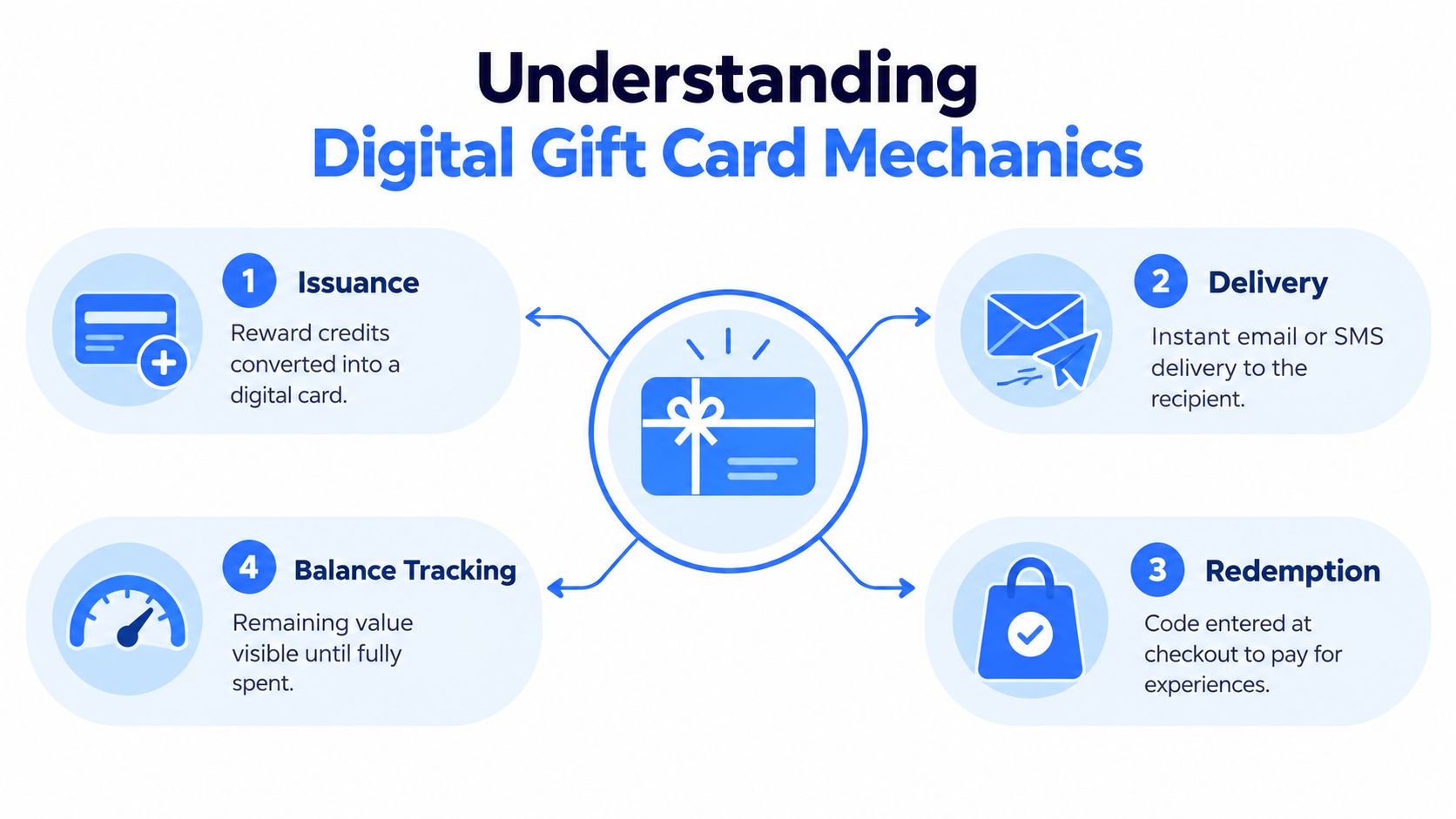
The four operating stages
-
Issuance: A member chooses an eligible redemption option and authorizes the conversion of Reward Credits into a digital card balance.
-
Delivery: The platform sends the card to the selected email address or phone number. Delivery may be immediate or scheduled, depending on the issuer.
-
Redemption: The recipient enters the card number and any required PIN during checkout, or presents the barcode when the booking channel supports in-person scanning.
-
Balance tracking: The system records each redemption and displays the remaining value until the balance is used or the card reaches its stated terms.
The key distinction is that the card isn't just an image in an email. It's a record held by the issuing system, linked to a balance and redemption rules. A useful general explanation of the underlying concept is available in what is a gift card ViralRef, but travel members should still read the specific terms attached to their own card.
Practical rule: Treat the code as payment information. Whoever controls the code may be able to use the balance.
Digital delivery removes printing and shipping from the process, which matters when a family organizer is coordinating bookings from different locations. It also makes the balance accessible from a phone while the organizer is comparing hotels, cruises, or vacation homes. The convenience is real, but it depends on accurate recipient details and a clear understanding of the supported redemption environment.
Issuance and Delivery Logistics
The issuance workflow begins with an eligible Reward Credits balance and a selected e-gift card option. The member reviews the available terms, confirms the recipient information, and submits the conversion. The system then creates a digital credential associated with the card balance rather than mailing a physical object.
That distinction matters for family travel. A parent in Canada, a sibling in the United Kingdom, and a relative in Mexico may all receive digital credentials without waiting for international delivery. The delivery channel is usually email, text message, or an app notification. Some digital gift card services also allow the sender to choose a design, add a message, and schedule delivery, as described in this guide to digital gift cards.
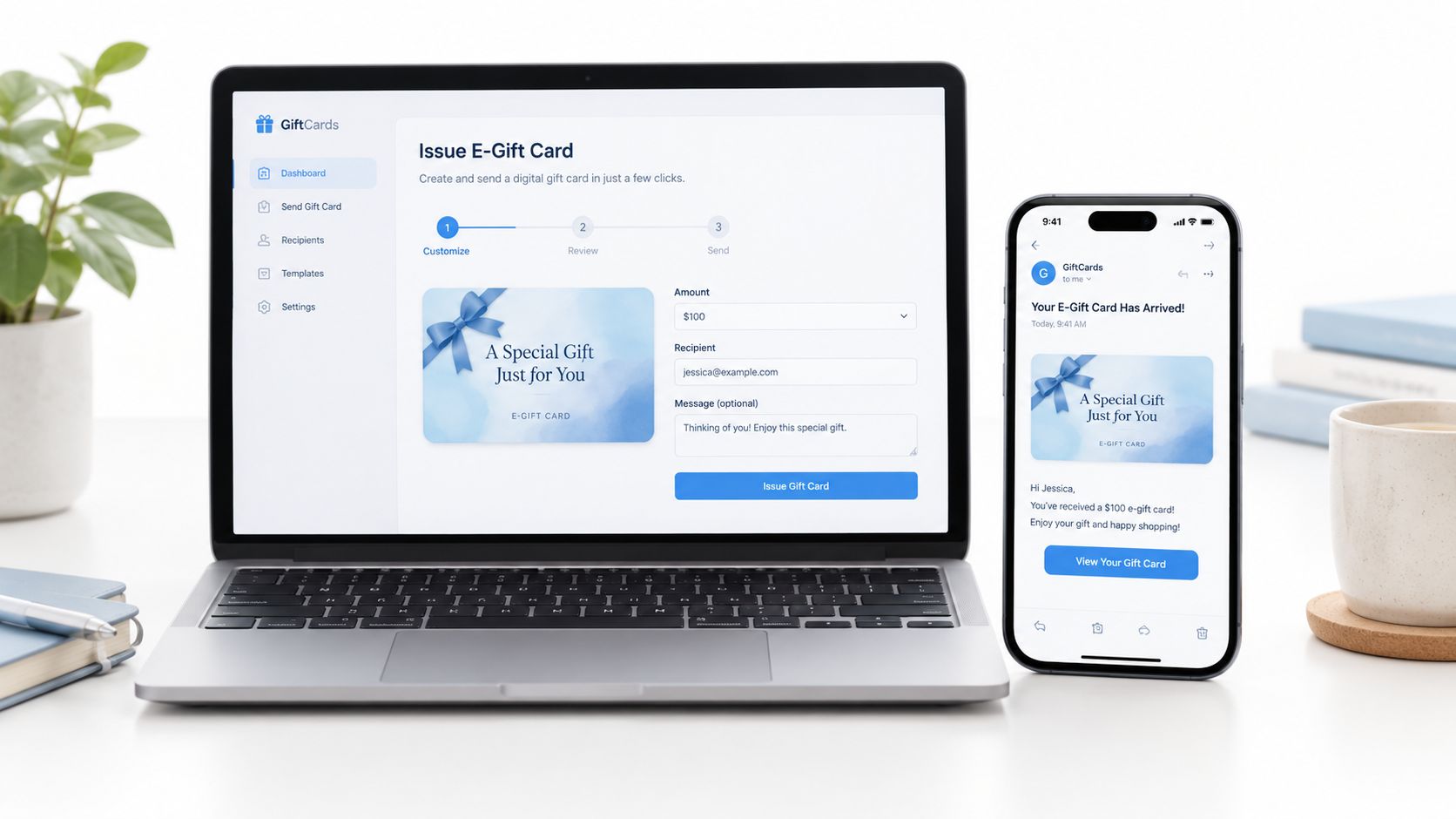
What the organizer should verify
Before converting credits, check the operational details instead of assuming that every card works everywhere:
- Recipient details: Confirm the email address or mobile number. A single typing error can send the credential to the wrong destination.
- Activation status: Determine whether the card activates immediately or only after the transaction is completed.
- Eligible inventory: Check whether the card applies to hotels, flights, cruises, vacation homes, activities, or only a defined subset of travel inventory.
- Currency and country: Confirm the issuing market and whether the card is restricted to purchases processed in that market.
- Account ownership: Establish whether the card remains attached to the member account or can be used independently by the recipient.
The travel inventory itself can create different checkout paths. A hotel booking may accept the card during the final payment step, while a cruise or vacation rental may require the balance to be applied through a travel desk or a specific booking interface. Reward Credits can be useful across a consolidated platform, but the card's terms still control the transaction.
The delivery message should contain the code, any PIN or security instructions, a balance-check method, and the terms that govern redemption. If the message doesn't arrive, check spam folders and confirm that the recipient's inbox or phone hasn't blocked the sender. Don't ask the sender to forward the code through a public group chat, because every additional copy increases exposure.
The most reliable process is to issue the card only after the booking plan is sufficiently clear. A family organizer who converts credits before checking country restrictions may end up with value that's inconvenient to use, even when the card itself remains valid.
Redemption Across Supported Markets
Cross-border redemption is where simple gift card explanations become incomplete. A card issued in one country may not function like cash in another country, even when the merchant operates internationally. The issuing market, transaction currency, merchant entity, and checkout system can all affect acceptance.
Digital gift cards now sit alongside physical cards rather than replacing them completely. A 2026 industry summary reports that 27% of consumers bought both digital and physical gift cards in 2025, while 36% bought physical-only and 13% bought digital-only. The figures indicate that buyers still choose formats according to the occasion and channel, rather than treating digital delivery as universally interchangeable with plastic. See the 2026 gift card industry statistics for that market context.
Two redemption methods
Direct checkout redemption is the simpler route. At payment, the organizer selects the gift card option, enters the code and PIN if required, and applies the available balance. The checkout then shows whether the card covers the full amount or whether another payment method is needed.
Account or assisted redemption uses the card through the travel platform's member account, booking workflow, or support channel. This can be more practical for complex itineraries, especially when one family trip includes several rooms, multiple destinations, or inventory supplied by different travel partners.
| Redemption route | Best suited to | What to verify |
|---|---|---|
| Direct checkout | A single eligible booking with a standard payment flow | Code format, PIN, currency, and partial payment rules |
| Account or assisted redemption | Multi-part travel planning and less standardized inventory | Account ownership, eligible suppliers, and how the balance is allocated |
For example, a member planning a Costa Rican villa shouldn't assume that a card issued for another market will be deducted automatically in Costa Rican currency. The platform may process the booking in a supported transaction currency, apply a conversion at checkout, or reject the card if the issuing and redemption markets don't align. The same question applies to a United Kingdom cruise. Confirm the currency treatment before committing the balance.
Residual value needs equal attention. If a card covers only part of a booking, the remaining charge may be paid by another accepted method. If the booking costs less than the card value, the unused balance may remain available, but that depends on the issuer's partial-redemption policy. Ask whether the residual amount stays in the original currency, whether it can be used on another market, and whether multiple cards can be combined.
Travel organizers can also review travel booking tools for coordinated planning before applying a card. The purpose is to match the payment method to the inventory and avoid forcing a cross-border transaction through a checkout path that doesn't support it.
The 110% Best Value Guarantee, where applicable to an eligible booking, should be assessed separately from the gift card balance. A card is a payment instrument. A guarantee is a pricing policy. They may interact during the same booking, but one doesn't automatically change the other's eligibility or terms.
Security Controls and Fraud Prevention
An e-gift card combines speed with a weakness that family organizers often underestimate: possession of the code may be enough to access the balance. Unlike a bank card, it may offer fewer recovery options when someone forwards the code, steals the email, or uses the card before the intended recipient.
The risk isn't theoretical. 57% of consumers reported experiencing gift card fraud in the past 12 months, according to the 2025 Fiserv prepaid consumer insights survey summary. A separate security analysis describes gift cards and prepaid cards as structurally vulnerable because they're designed for low-friction use with limited verification and consumer protection.
Protect the issuance channel
Use a personal account with a strong, unique password. Turn on two-factor authentication wherever the platform, email provider, or mobile wallet supports it. Don't send the code to a group email address used by several relatives, and don't paste it into a shared itinerary document.
Phishing messages often create urgency around a failed booking, a refund, or a travel confirmation. They may ask the recipient to “verify” the gift card number or send a replacement payment. Contact the issuer through its known website or account portal instead of using a phone number or link supplied in an unexpected message.
Protect redemption
At checkout, verify the merchant name, booking amount, destination, and currency before submitting the code. A suspicious error message is a reason to pause, not to repeat the code across several unfamiliar pages. If the balance has disappeared, record the transaction time and contact the issuer immediately with the card details and booking information.
A security check should protect the balance without creating unnecessary exposure. Verify through the platform, not through the message that delivered the code.
Mobile wallets can make retrieval easier, but they don't eliminate account risk. If an email account or insecure device is compromised, the stored credential may also be exposed. Remove old devices from account access, use screen protection, and avoid storing full card details in unencrypted notes.
For organizers managing travel payments across a household, travel expense management solutions can help separate booking records from sensitive payment credentials. Keep the itinerary widely accessible, but restrict the actual code to the person responsible for redemption.
Troubleshooting Common Policy Questions
Most e-gift card problems come from a policy mismatch rather than a broken code. The card may be valid but restricted to a country, merchant, currency, booking channel, or recipient account. Start with the terms attached to the card, then compare them with the booking you're trying to make.
Expiration and balance retention
Expiration is issuer- and region-specific. One published example says that EUR-issued gift cards expire 60 months after purchase, while other issuers allow digital cards to be used online or wherever card-not-present transactions are accepted. Those differences are documented in this electronic Visa gift card explanation.
Before a long-stay booking, record the issue date, expiration date, original currency, and current balance. Don't rely on an old email alone. Check the balance through the issuer's official portal, especially after a partial redemption or refund.
Partial redemption and multiple cards
Ask these questions before checkout:
- Can the card be split across bookings? Some systems preserve the remaining balance, while others require a full transaction or a defined redemption channel.
- Can cards be combined? A platform may accept one card but reject multiple credentials in the same payment flow.
- What happens after a refund? The refunded amount may return to the original card, or the issuer may apply a different process.
- Can another payment method cover the difference? Confirm this before applying the card to a booking that exceeds its balance.
For a family itinerary, apply the card to the booking with the clearest eligibility and keep a written record of the remaining value. Don't divide a balance among relatives until you know whether the issuer permits that arrangement.
Transferability
A card can be digitally delivered to someone else without being freely transferable between households. The terms may tie use to the original member, account, country, or named recipient. If a parent wants to use a card for a child's booking, confirm the rule before issuing it.
If the policy is unclear, don't test it with a live booking. Ask the issuer to confirm the permitted user, market, and redemption path in writing.
Maximizing Your E-Gift Card Strategy
The strongest strategy is operational rather than impulsive. Keep Reward Credits in the account while you're still comparing destinations, then convert them when the intended booking, currency, and recipient are clear. That preserves flexibility and reduces the chance of creating a card that doesn't match the final itinerary.
Use a simple planning record with four fields: card value, issuing market, intended booking, and expiration terms. For a multi-generational trip, assign one person to hold the credential and another to verify the booking details. This prevents several relatives from forwarding codes, attempting duplicate redemptions, or losing track of the residual balance.
The 110% Best Value Guarantee should be reviewed at the booking level, not assumed to apply automatically to every card-funded transaction. Compare the eligible public price, confirm the guarantee terms, and then determine how the e-gift card will be applied. That sequence keeps the pricing review separate from the payment decision.
Reward Credits can also support a broader travel operating model. Family members can consolidate booking activity, and unused travel value can remain available for later planning rather than being tied to one immediate trip. Timeshare owners may also evaluate V.O.I.C.E. as a separate way to manage unused timeshare inventory, while Boomerang Member Share can connect eligible family and friends to the same travel infrastructure.
For a wider comparison of travel membership structures, review this guide to best travel loyalty programs. The right choice depends on how often your household travels, how many people coordinate bookings, and whether you need access to hotels, flights, cruises, vacation homes, or several categories at once.
Approved Experiences Traveler provides access to consolidated travel inventory and lets members earn Reward Credits on eligible bookings for future travel and eGift card redemption. Visit Approved Experiences Traveler to review how the membership can fit your family's booking workflow, cross-border planning, and payment coordination.
Want the wider view?
Ten categories. One report. Every quarter. The Approved List tracks what's rising and what's fading: data-backed signals, not opinions.
Free to join · Delivered by email