All Articles
The Journal
Mastering Travel Expense Management Solutions
January 18, 202620 min readexpense management softwarecorporate travel
Discover how modern travel expense management solutions can cut costs, streamline approvals, and boost your company's financial control. Start optimizing today.

Let’s be honest: for years, managing business travel expenses was an absolute mess. It was a chaotic scramble of paper receipts, manual spreadsheet entries, and a painfully slow approval process that left both employees and finance teams frustrated.
This old way of doing things isn't just inconvenient—it's a massive, silent drain on your company's resources. A missed receipt for a client dinner, an out-of-policy hotel booked in a rush—each small error adds up, costing you both time and money.
What Are Travel Expense Management Solutions?
Think of your travel budget as a high-pressure water pipeline. Without a solid system to monitor it, you've got dozens of tiny, invisible leaks—an out-of-policy hotel booking here, a missed flight deal there, slow reimbursements causing employee friction. On their own, they might not seem like much. But add them all up, and you're looking at a serious financial hemorrhage.
This is where travel expense management solutions come in. They are the smart sensors and automatic seals for that pipeline. More than just a piece of software, they’re a complete strategic framework for getting a grip on every single stage of business travel, from the initial plan to the final reimbursement.
From Paper Chaos to Digital Clarity
Let’s talk about the stark difference between the old way and the new way. For instance, imagine a salesperson returns from a week-long trip. The old way involved them spending half a day sorting receipts and keying data into a spreadsheet. The new way? They've already submitted expenses daily from their phone, and the report is practically finished by the time they get home.
Manual VS Automated Travel Expense Management
The shift from manual to automated isn't just about going digital; it's a fundamental change in how a business operates. The table below breaks down just how different these two worlds are.
| Process | Manual Approach (The Leaky Pipeline) | Automated Solution (The Sealed System) |
|---|---|---|
| Receipts | Stuffed in wallets, lost, faded, and manually entered into spreadsheets. | Instantly captured with a phone camera; data is extracted automatically. |
| Approvals | A slow, multi-stage paper trail that can take weeks. | Automated workflows notify managers instantly for one-click approval on any device. |
| Policy | Relies on employees memorizing rules; hard to enforce until after the money is spent. | Policy rules are built-in, flagging or blocking out-of-policy spending before it happens. |
| Visibility | You only see the full picture at the end of the month, once all reports are in. | Real-time dashboards give you a live view of spending as it occurs. |
| Booking | Employees book on various consumer sites, making it impossible to track or get deals. | Integrated booking tools guide employees to preferred, in-policy options. |
What this table really shows is a move from reactive cleanup to proactive control. One is about plugging holes after the fact; the other is about preventing them from ever appearing.
Why This Matters Now More Than Ever
The need to clamp down on travel spending has never been more critical. After a historic slump in 2020 where spending hit a low of $661 billion, global business travel has come roaring back, hitting a staggering $1.57 trillion post-pandemic. You can see more on this explosive growth in these recent business travel statistics. With costs soaring, a smart system isn't a luxury—it's essential for survival.
By pulling everything from scattered receipts into a single, unified dashboard, these solutions give finance teams a live, real-time view of company spending. This visibility allows you to shift from just reacting to problems to actually building a proactive financial strategy, spotting savings opportunities, and forecasting budgets with an accuracy you never thought possible.
Ultimately, it’s all about sealing those leaks. If you want to get into the nitty-gritty, especially for UK-based businesses, this guide to expense management software is a fantastic resource. This isn't just an operational upgrade; it's a fundamental change that leads to smarter, more predictable financial management.
Core Features Every Modern Solution Must Have
To really fix a chaotic expense process, you need more than just a slick interface. The real muscle is in a core set of features that work together to automate the grunt work, keep spending in line, and give you a crystal-clear view of your finances.
These aren't just nice-to-haves; they’re the building blocks of any truly effective travel expense management solution. Think of these features as your actionable toolkit for proactive spending control.
Automated Policy Enforcement
Imagine a smart digital guardrail for your company’s spending—that's automated policy enforcement. Instead of asking employees to memorize a dense travel policy document, you build the rules right into the system. It’s a preventative approach that’s worlds more effective than correcting mistakes after the money's already gone.
Practical Example: Your policy caps hotel stays at $250 per night and prohibits booking first-class flights for domestic travel. You can configure the system to automatically flag any hotel booking over that limit for manager review and completely block the option to book a first-class seat on a flight from New York to Chicago. This one feature plugs one of the biggest leaks in the travel budget pipeline.
AI-Powered Receipt Capture
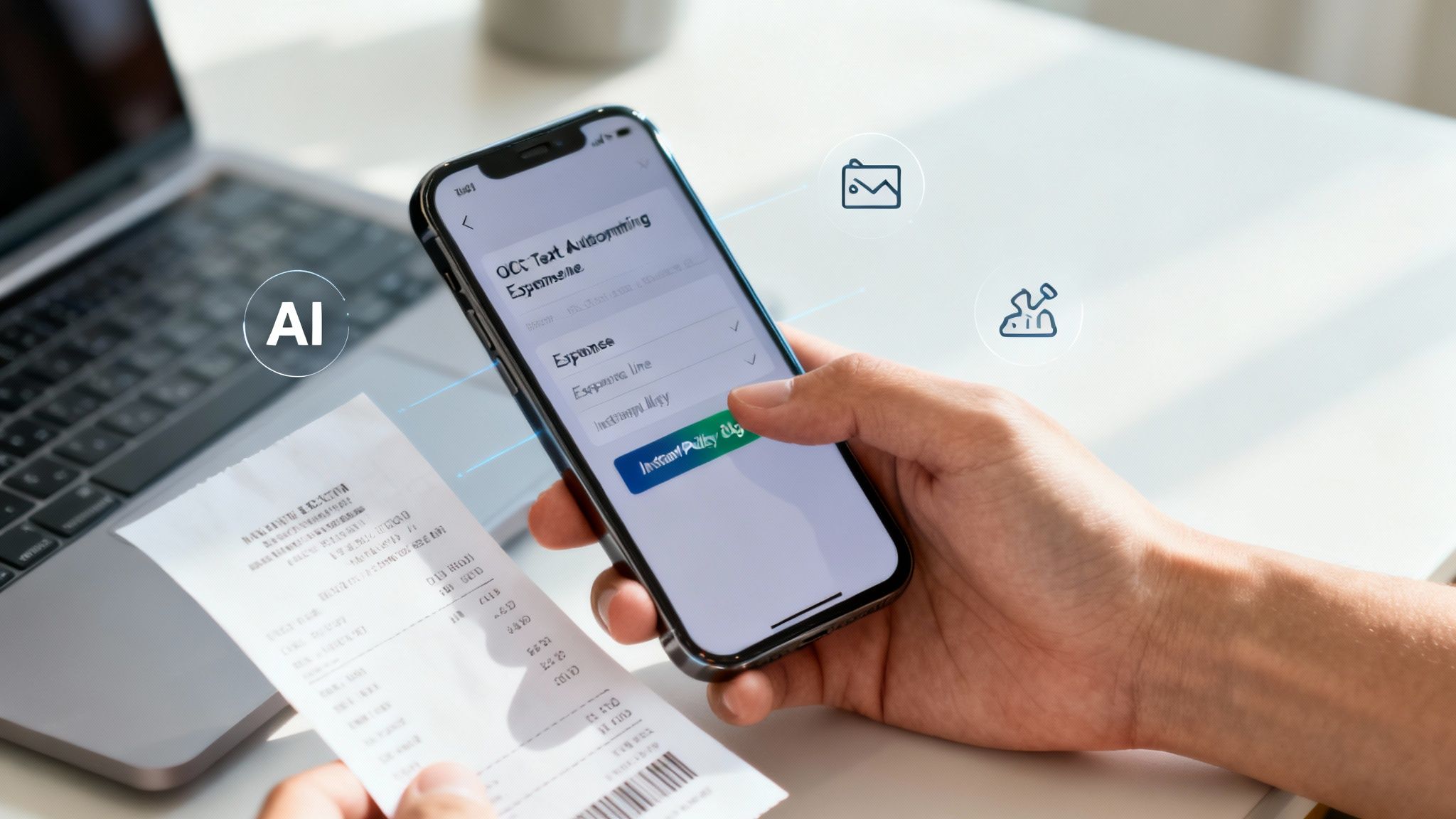
Let's be honest, the days of stuffing crumpled receipts into an envelope should be long gone. Modern solutions use Artificial Intelligence (AI) and Optical Character Recognition (OCR) to digitize receipts in a snap. An employee just takes a photo of a receipt with their phone, and the tech handles the rest.
The app instantly reads and pulls the key info—vendor, date, total, even the tax—and creates a line item. This all but kills manual data entry, a notorious source of errors and headaches. For example, a receipt from a taxi ride is captured, categorized as 'Ground Transportation', and attached to the correct project code, all before the employee even leaves the car. Capturing and processing receipts is so central to modern expense management, and you can explore some of the best receipt scanning apps for businesses to see how advanced this tech has become.
This isn't just about saving time; it's about data integrity. With clean, machine-read information, your finance team gets a much more accurate picture of company spending, making reconciliation and reporting a breeze.
Integrated Booking and Approval Workflows
A genuinely great solution brings every single step—from booking to approval—onto one platform. This integration is the secret to maintaining control and visibility.
- Integrated Travel Booking: Employees can search and book flights, hotels, and cars right inside the platform. Actionable Insight: This means every booking is instantly logged and checked against company policy. For example, the system can automatically display preferred airline partners at the top of the search results, subtly guiding employees to make cost-effective choices.
- Automated Approval Workflows: Once an expense report is submitted, it’s automatically sent to the right manager based on rules you’ve already set. A manager gets a notification on their phone and can approve or deny a report for their direct team member with one click while waiting for a coffee, which dramatically speeds up reimbursements.
This seamless flow means nothing gets lost in the cracks between different systems. In fact, research shows that companies using a single, integrated platform can process expense reports twice as fast and see spending drop by an average of 21%. It connects the dots from pre-trip planning to post-trip accounting.
Advanced Analytics and Reporting
All that data you're collecting? It culminates in some seriously powerful analytics. A modern expense platform becomes a central command for all your travel spend, serving it up on easy-to-read, real-time dashboards.
In a few clicks, finance leaders can see:
- Top Spending Categories: Pinpoint exactly where the travel budget is going. For example, you might discover your team is spending 40% more on ride-sharing services than on rental cars, prompting a review of your ground transportation policy.
- Policy Violation Trends: See which departments or individuals are consistently spending outside the lines.
- Vendor Spend Analysis: Track how much you're spending with specific airlines or hotels to negotiate better deals.
This kind of data-driven insight lets you move from just tracking expenses to strategically managing them. It gives you the power to forecast future budgets with real accuracy and make smart decisions that directly boost the bottom line.
Uncovering The True ROI Of Expense Management
So, what’s the real return on investment for a modern expense platform? If you're only thinking about saving a few hours on paperwork, you're missing the bigger picture. The true value is a powerful mix of hard cost savings, huge productivity boosts, and the kind of strategic financial insights that can completely reshape your bottom line.
The money-saving part starts right away with direct, tangible wins from automated policy enforcement. Think about it: a system that automatically steers your employees toward preferred hotel partners isn't just a gentle suggestion. It's a built-in mechanism for capturing negotiated corporate discounts on every single booking. When you stop out-of-policy spending before it even happens, you're not just fixing mistakes later—you're plugging financial leaks at the source.
More Than Just Hard Costs
It’s no secret that business travel costs are climbing, forcing companies to get serious about managing expenses. Airfares and hotels are leading the pack. Global hotel rates for business trips jumped 2.5% from $158 to $162 between 2023 and 2024, and they're projected to hit $165. Meanwhile, U.S. business travelers are getting hit with the highest international flight bills, averaging a steep $2,675 per ticket. You can dive deeper into these trends with recent business travel statistics on engine.com. Any platform that can lock in significant hotel discounts is a direct counterpunch to these rising costs.
But beyond the obvious savings, you have the massive indirect gains that come from reclaimed productivity. Every hour an employee isn't wrestling with a clunky spreadsheet or hunting down a lost receipt is an hour they can pour back into generating revenue. This freed-up time is one of the biggest—and most frequently overlooked—parts of the ROI calculation.
Imagine your top sales executive spending three hours piecing together an expense report. If their time is worth $100 an hour, that's $300 of high-value time down the drain. An expense solution that slashes that process to just 15 minutes? That just saved the company $275 on that one report alone.
The Strategic Value of Data
This is where things get really interesting. Maybe the most powerful piece of the ROI puzzle comes from rich data analytics. A central platform turns thousands of individual expense lines into a clear, actionable financial map of your company's spending. This gives your finance team a whole new level of strategic power:
- Better Vendor Negotiations: When you can see that your company spent $200,000 with a single hotel chain last year, you walk into negotiations with the data to demand a 15% corporate discount.
- Pinpoint Budget Forecasting: Forget guesswork. Real-time spending data lets you forecast future travel budgets with incredible accuracy, preventing those nasty end-of-quarter surprises.
- Identifying Wasteful Spending: Dashboards can instantly flag trends in out-of-policy spending, whether it's by department or project, so managers can step in and fix the problem before it gets out of hand.
This is the big shift: moving from just reactively tracking expenses to proactively shaping financial strategy. It’s where the real value of travel expense management solutions shines. You’re no longer just processing receipts. You’re making smart, data-driven decisions that directly fortify your company’s financial health. The return isn't just in the money saved on one hotel stay, but in the sustained, intelligent control you gain over your entire travel budget. It’s about connecting the dots between an efficient system and a healthier, more predictable bottom line.
How To Choose And Implement The Right Solution
Picking and launching a new software platform can feel like a massive undertaking, but it doesn't have to be a headache. The key is a smart, deliberate approach that breaks the whole process into manageable chunks. Get this right, and you'll find a solution that not only fits your needs but that your team actually wants to use.
The first step is simply understanding what you really need today and what you'll need tomorrow. A system built for a 500-person global enterprise is complete overkill for a 20-person startup. Your goal is to find that sweet spot where features, ease-of-use, and scalability all intersect.
Key Evaluation Criteria To Consider
Before you even book a single demo, you need a checklist of your absolute non-negotiables. This simple step keeps you from getting distracted by flashy bells and whistles that don't solve your core problems. Asking the right questions upfront is the secret to finding the best travel expense management solutions.
Start with the big stuff:
- Integration Capabilities: Does it offer a direct, two-way sync with your accounting software (e.g., QuickBooks, Xero, NetSuite)? Actionable Tip: Ask the vendor for a live demo of the sync process to see exactly how journal entries and reimbursements are posted.
- Mobile App Usability: Hand the app to your least tech-savvy team member. Can they figure it out? If submitting an expense on the road is a confusing mess, nobody is going to use it.
- Scalability: Will this solution grow with you? Think about what happens if you double your traveling sales team next year. You don't want to be forced into another software search in 18 months.
- Policy Customization: Can you build your company’s real-world travel rules directly into the system? For instance, can you set different spending limits for different departments or seniority levels?
The real test of any solution is simple: does it make life easier for everyone involved? From the traveler snapping a receipt photo at the airport to the finance person running reports, if the platform adds more friction than it removes, it’s the wrong fit.
This is the path from a smart policy to a real return on your investment.
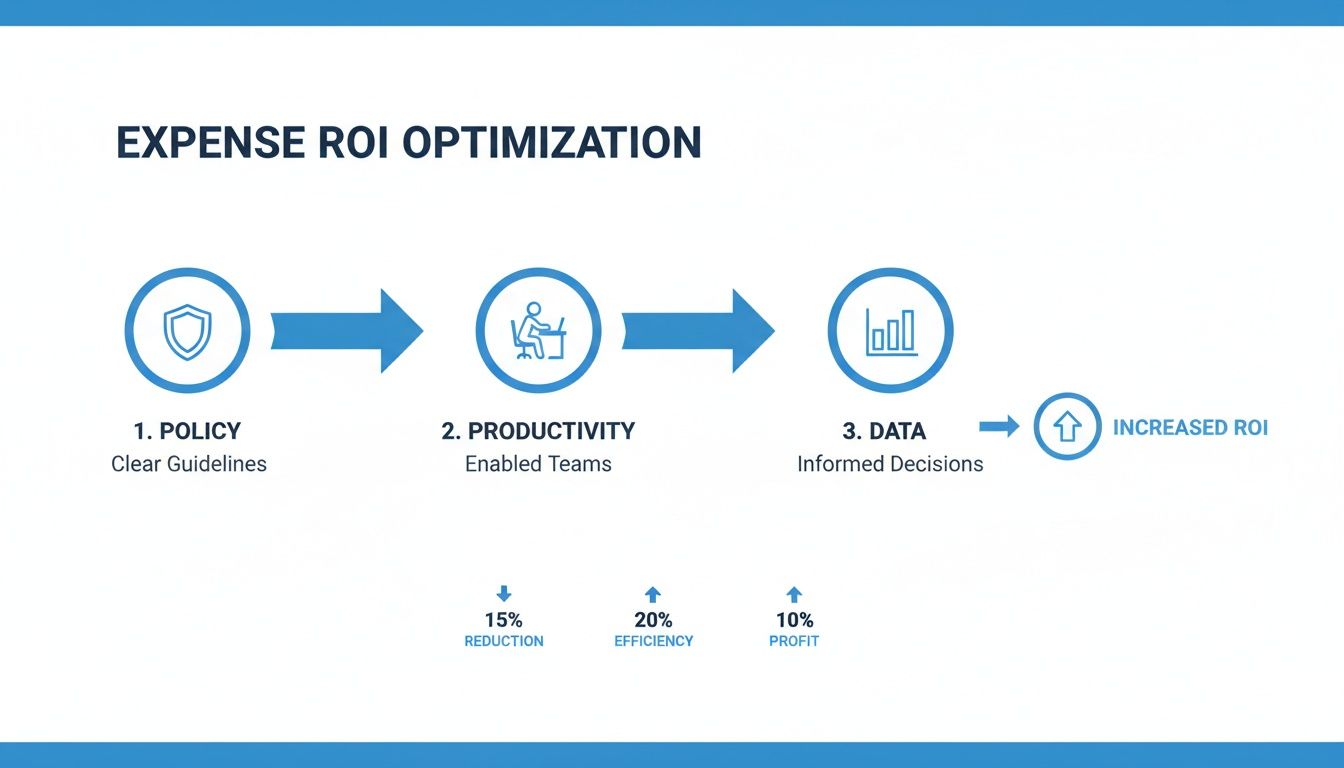
As you can see, a clear, enforced policy frees up your people and gives you clean data—the two ingredients for a better ROI.
A Practical Implementation Plan
Once you've picked your partner, a clear, step-by-step rollout plan is your best friend. A rushed launch is a recipe for confusion, frustration, and a tool that nobody uses, which completely wastes the investment.
-
Define What Success Looks Like (And Get Everyone on Board). What are you trying to achieve? Is it cutting the time it takes to process an expense report from 5 days to 24 hours? Or maybe hitting 95% policy compliance? Pin down those numbers and get the key people from finance, IT, and leadership bought into the vision.
-
Build Your Policy into the Machine. This is where the magic happens. You’ll work with your new vendor to turn your written travel policy document into a set of automated rules inside the software. Practical Example: Set up a rule that automatically flags any expense submitted without a receipt, saving your finance team from chasing it down manually.
-
Run a Small Pilot Program. Before you roll it out to the entire company, test it with a small, hand-picked group of 5-10 frequent travelers. This "beta test" is invaluable for catching weird glitches and getting honest feedback that helps you refine the setup before a full launch.
-
Train Your People and Find Your Champions. Don’t just fire off an email and hope for the best. Run hands-on training sessions that show employees exactly how this new tool makes their lives easier (think faster reimbursements). And those enthusiastic people from your pilot program? Make them your internal "champions" who can help their coworkers get up to speed.
When you follow this path, you're doing more than just buying software. You're thoughtfully weaving a new system into your company that will save time, control costs, and give you the financial clarity you need to make smarter moves.
How Different Teams Use Expense Management Tools
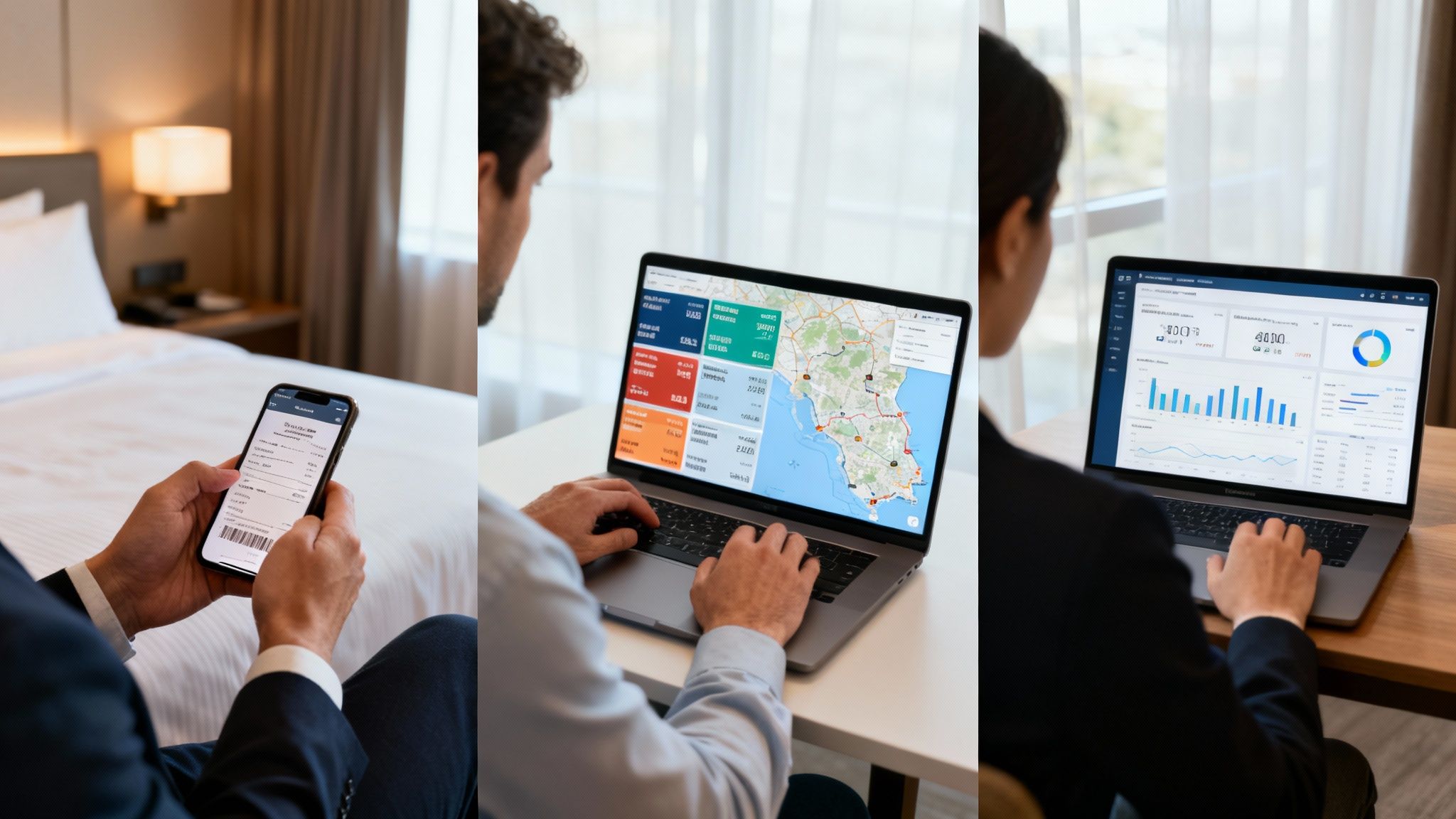
The real magic of a travel expense management solution happens when you see how it works in the hands of different people. This isn't some one-size-fits-all tool; it’s a system with specific features that solve very different, very real problems for everyone involved—from the traveler on the go to the CFO.
To really get a feel for it, let's walk through three common scenarios. These little stories show how a single platform can take a messy, disconnected process and turn it into something smooth and logical for the whole company.
The Sales Executive On The Road
Let’s start with Sarah, a star sales executive who’s on the road half the month meeting clients. Before, every trip ended with the task she dreaded most: a full day of wrestling with a wallet full of crumpled receipts, punching numbers into a spreadsheet, and chasing down approvals. Getting her money back often took weeks, which was a real strain on her personal cash flow.
Now, with a modern expense tool, her whole world has changed.
- Real-Time Submissions: When Sarah pays for a client dinner, she snaps a picture of the receipt right there at the table. The app scans it, pulls the vendor, date, and amount, and instantly creates the expense entry. No more hoarding paper.
- On-the-Go Reporting: Back at her hotel, she spends five minutes looking over the day's auto-populated expenses. She adds a quick note about the client meeting and submits the entire report with one tap on her phone.
- Rapid Reimbursement: Her manager gets an instant notification and can approve the report from his own phone. Because of that, the reimbursement hits her bank account before she’s even unpacked her suitcase.
For Sarah, the system just erased hours of mind-numbing admin work and the stress of waiting for her money. She can now put 100% of her energy into closing deals.
The Project Team Deploying On-Site
Now, picture David. He’s a project manager leading a team of five engineers on a month-long installation at a client’s site. His neck is on the line to keep all their travel spending under a very strict project budget. In the old days, he was flying blind, only finding out they’d blown the budget weeks after the damage was done.
The right solution gives him the command center he needs. From one dashboard, David can:
- Monitor Team Spending in Real-Time: He sees every flight, hotel, and meal purchase as it happens, not weeks later when the credit card statement comes in.
- Approve Expenses Instantly: An engineer needs to buy a specific tool to keep things moving. David gets an alert, approves it on the spot, and the project doesn't miss a beat.
- Prevent Budget Creep: He might notice the team's daily food costs are trending a little high. He can have a quick chat with them right then and there, making small course corrections to stay on track.
This kind of oversight flips budget management on its head. It’s no longer about looking back at what went wrong; it's about proactively steering the ship. David can now manage the project’s finances with confidence and avoid those nasty, end-of-month surprises.
The Finance Department Driving Strategy
Finally, let’s look at the finance team. Their job is so much bigger than just cutting checks. They’re tasked with finding savings, ensuring compliance, and guiding the company’s financial strategy. Trying to stitch together insights from hundreds of individual spreadsheets was a Herculean task—it could take days just to build one useful report.
An analytics dashboard changes the entire game. In just a few minutes, the finance team can:
- Identify Spending Trends: They can instantly see that spending with a specific airline shot up by 30% last quarter. Armed with that data, they can go negotiate a much better corporate rate.
- Pinpoint Cost-Saving Opportunities: The system might flag that one department is notorious for booking last-minute, expensive flights. Finance can then work with that manager to encourage better travel planning and save a bundle.
- Generate Comprehensive Reports: The CEO needs a full breakdown of Q3 travel spending for the board meeting? It’s generated with a few clicks, not a week of manual number-crunching.
For the finance department, the platform is no longer just an accounting tool. It's a strategic weapon that uncovers savings, enforces policy, and delivers the hard data they need to make smart decisions.
Pairing Expense Control With Strategic Booking
Let’s be honest. A solid travel expense management solution is great for keeping your team in line and enforcing spending policies. But it’s only managing money that’s already being spent. If you want to achieve real financial efficiency, you need a one-two punch: pair that strict expense control with a strategic, cost-slashing booking strategy.
Think of it like this. Your expense management software is the guardian at the gate. It does an excellent job of enforcing your $250 per night hotel policy, turning away anything that costs more. But a strategic booking platform? That’s the savvy negotiator who finds a five-star hotel for $180 in the first place, fundamentally lowering the cost before it even gets to the gate.
When you bring these two together, you create a travel program that doesn’t just control spending—it actively crushes it from the very first click.
Control vs. Savings: The Winning Combination
The difference between control and savings seems small, but it’s everything. One prevents you from losing money, while the other actively makes you money by saving it upfront.
- Expense Control (Your Defense): This is your expense management software. It’s your defensive line, ensuring compliance, automating approvals, and giving you a clear view of where every dollar goes. It stops policy violations and rogue spending in their tracks.
- Strategic Booking (Your Offense): This is where a platform like Approved Experiences Traveler comes in, giving your team access to wholesale and deeply discounted rates the public never sees. You’re no longer just defending your budget; you’re on the attack, locking in lower prices on the exact same high-quality hotels and car rentals.
When you book smarter from the start, the costs hitting your expense system are already dramatically lower. The system still does its job tracking everything and ensuring compliance, but the financial baseline it’s working from is so much healthier.
This two-pronged approach flips your travel program from a reactive cost center into a proactive, value-generating machine. You get the peace of mind from tight policy enforcement while unlocking real, tangible savings on every single trip.
How Strategic Booking Reduces the Burden
By driving down the initial cost of travel, you create a far more efficient ecosystem. Imagine an employee who can easily book an incredible, in-policy hotel for 30% less than their budget. It’s a win for everyone.
The traveler gets a better experience without the stress of "budget hunting," and the company sees immediate bottom-line savings. This means your expense management platform spends less time flagging over-budget reports and more time providing clean, insightful data on your now-optimized spending. This combination doesn't just manage expenses—it minimizes them before they even exist.
A Few Common Questions
Diving into the world of travel expense management solutions always brings up a few practical questions. It's smart to get straight answers before you commit. Here, we'll tackle some of the most common things people ask, from how pricing works to how long it takes to get started.
What’s The Typical Pricing Model For These Solutions?
Most platforms run on a subscription model, usually charging a fee per user, per month. It's a straightforward approach that lets you scale up or down as your team changes—you only pay for the people actually using the system.
That’s not the whole story, though. Some providers have different tiers, where the pricier plans unlock more powerful features like sophisticated analytics or custom integrations. Others might bill you based on the number of expense reports you process, which can be a great deal if your team only travels occasionally. The key is to ask for a detailed pricing sheet so there are no surprises down the road.
How Long Does Implementation Usually Take?
Getting a new system off the ground can take anywhere from a few days to a few weeks. It really just depends on how complex your company's needs are.
A small business with simple travel rules might be up and running in less than a week. On the other hand, a large enterprise with intricate approval chains and a custom ERP system to connect with is probably looking at a 4-6 week project. The biggest time sinks are always configuring policies, moving old data over, and training your team.
If there's one mistake I see people make, it's rushing the setup. Take the time to dial in your travel policies and run a small pilot program first. It’ll save you a mountain of headaches and lead to a much smoother company-wide launch.
How Secure Is Our Financial Data On These Platforms?
This is a big one, and rightly so. Reputable providers make data security their absolute top priority. They use layers upon layers of protection to guard everything from employee bank accounts to corporate card numbers.
When you're vetting a solution, make sure they have:
- End-to-end encryption to shield your data whether it's being sent or just sitting on a server.
- Compliance with major industry standards like SOC 2 and GDPR.
- Regular security audits from independent experts to find and fix any weak spots.
These aren't just buzzwords; they're critical defenses against fraud and data breaches. Any provider worth their salt invests heavily in keeping your financial information locked down tight.
Ready to pair powerful expense control with a strategic booking platform that actively saves you money? See how Approved Experiences Traveler can slash your lodging and transportation costs upfront, making your entire travel program more efficient and affordable. Explore your savings.
Want the wider view?
Ten categories. One report. Every quarter. The Approved List tracks what's rising and what's fading: data-backed signals, not opinions.
Free to join · Delivered by email