

Resources
Articles
Notes, guides, and editorial standards from the Approved Experiences team. Written for members, in the same voice we use everywhere else.
Resources
Notes, guides, and editorial standards from the Approved Experiences team. Written for members, in the same voice we use everywhere else.
Discover how corporate travel management software can transform your business by cutting costs, simplifying bookings, and ensuring traveler safety. Start here.

Think of corporate travel management software as the central nervous system for your company's entire travel program. Gone are the days of employees booking flights on one site, hotels on another, and then wrestling with a messy pile of receipts for an expense report. This software pulls everything into a single, organized system for booking, managing, and tracking every business trip.
Imagine a major airport trying to operate without an air traffic control tower. It would be pure chaos—planes taking off and landing with no coordination, leading to delays, confusion, and serious safety risks. Yet, many companies run their travel programs exactly like this: decentralized, inefficient, and bleeding money. Corporate travel management software is that mission-critical control tower.
It gives you a clear, unified view of all the moving pieces, solving the deep-rooted problem of disjointed travel planning. Before we get into the nuts and bolts of the software itself, it’s helpful to understand the bigger picture of modern corporate travel. By bringing everything together, these platforms turn a fragmented, frustrating process into a smooth and efficient operation.
It’s easy to mistake this software for just another travel booking website, but that's a huge oversimplification. While booking is a core part of what it does, its real value comes from the automation, control, and data it provides. It’s less of a booking tool and more of a strategic business asset.
The market demand for this kind of control is exploding. The global corporate travel management software market was valued at USD 1.19 billion in 2024 and is projected to hit USD 2.09 billion by 2033. This growth is a direct response to the need for better tools to manage the more than 4.2 billion business trips taken worldwide each year.
A solid platform does much more than just book a flight. It helps you:
This software isn't just about managing trips; it’s about managing your company's entire travel strategy. It provides the framework you need to control costs, keep your travelers safe, and make smart, data-driven decisions.
Think of corporate travel management software as the central nervous system for your entire travel program. It’s far more than a simple booking website; it’s a sophisticated set of tools designed to bring control, clarity, and cost-savings to what can otherwise be a chaotic process. Once you understand what these platforms are truly capable of, you start to see how they can fundamentally change the way your business travels.
Each feature is a piece of a larger puzzle, working together to automate the grunt work, keep everyone following the rules, and give you the data you need to make smarter decisions.
Let's dive into the essential features that make these platforms tick, using real-world examples to show how they solve everyday business problems.
At its core, a good CTM platform acts as your 24/7 travel policy guardian. Instead of catching policy violations weeks later in an expense report, you can build your company's rules directly into the booking tool itself. This stops out-of-policy spending before a single dollar is spent.
Actionable Insight: Set up a simple "soft warning" rule. For instance, if an employee books a flight that's $50 more expensive than the cheapest logical option, the system can display a message asking for a brief justification. This small step encourages cost-conscious behavior without being overly restrictive.
One of the biggest headaches with unmanaged travel is that employees book everywhere—on airline websites, consumer travel sites, you name it. This makes it impossible to get a clear picture of what you’re spending or to negotiate better rates. CTM software brings all of that into one place.
Everyone books from a single, unified dashboard. The platform gives them access to a huge inventory of flights, hotels, and rental cars, but it’s curated to your needs. This often includes special corporate rates and perks you simply can't find on public sites.
There’s an old saying: you can't manage what you don't measure. This is where reporting and analytics features become a game-changer. All your company’s travel data is pulled into easy-to-read dashboards, giving you a bird's-eye view of your travel program.
Actionable Insight: Use the dashboard to run a quarterly "Top 10 Routes" report. If you see dozens of trips between your Chicago and Dallas offices, you now have concrete data to take to a specific airline and negotiate a volume discount on that route, potentially saving thousands.
This kind of data is powerful. It’s what you use to negotiate better deals with airlines, spot savings opportunities, and fine-tune your travel policy based on how your teams actually travel.
Beyond just saving money, modern CTM software plays a crucial role in keeping your travelers safe. This is what the industry calls Duty of Care. Features like real-time traveler tracking mean you can see where your employees are in the world at any given moment. If there’s an emergency—a natural disaster, a transit strike, or a security threat—you can locate them instantly and provide the help they need.
Finally, a seamless link to your expense system ties everything together. When a traveler submits a hotel receipt through their phone, the data is automatically captured and synced with your company’s accounting software, like QuickBooks or NetSuite. This simple connection gets rid of hours of manual data entry, cuts down on errors, and gets employees reimbursed faster—a win for both the finance team and the traveler.
To put it all together, here's a quick breakdown of these essential features and the value they bring to the table.
| Feature | What It Does | Practical Business Benefit |
|---|---|---|
| Policy Controls | Embeds your company’s travel rules directly into the booking process. | Prevents out-of-policy spending before it happens, ensuring 100% compliance. |
| Centralized Booking | Provides a single platform for all employees to book flights, hotels, and cars. | Consolidates spending data, enabling better supplier negotiations, and simplifies the process for travelers. |
| Reporting & Analytics | Aggregates all travel data into visual dashboards for easy analysis. | Offers real-time visibility into spending, helping you identify savings opportunities and manage budgets effectively. |
| Duty of Care | Includes traveler tracking and communication tools to ensure employee safety. | Fulfills your legal and moral obligation to protect employees, allowing you to respond quickly during emergencies. |
| Approval Workflows | Automates the process of getting manager approval for specific bookings. | Speeds up the booking process while maintaining managerial oversight where it’s needed most. |
| Expense Sync | Integrates directly with your accounting and expense management software. | Eliminates manual data entry, reduces errors, and accelerates the reimbursement cycle for employees. |
These core components are what transform a CTM platform from a simple tool into a strategic asset for managing one of your company's most significant variable expenses.
Picking the right corporate travel management software isn't about finding a magic bullet. What works for a lean startup will be completely wrong for a multinational corporation. The best choice is always rooted in your company’s specific needs—how often your team travels, your company culture, and your operational workflow.
For small businesses, the name of the game is usually simplicity and the ability to grow. You need a tool that people can pick up and use without weeks of training, coupled with a straightforward pricing plan. Large enterprises have a different set of challenges. They need deep customization options, global support for travelers in different time zones, and rock-solid security to protect company and employee data.
To avoid getting overwhelmed by sales pitches and feature lists, it helps to follow a structured process. This approach helps you look inward at your own needs first, then outward at what vendors are offering, ensuring you don’t miss anything important before you sign a contract.
As you narrow down your options, think about how each platform helps you build and enforce an effective travel and expense policy. This is the backbone of controlling costs and ensuring compliance. For a deeper dive, our guide on corporate travel policy best practices can offer more detailed strategies.
Key Takeaway: The right software is the one that solves your biggest headaches with the least amount of friction for your travelers. Prioritize practical solutions over flashy features you’ll never actually use.
This choice is becoming increasingly critical, especially for small and mid-sized businesses (SMEs). In fact, SMEs now represent 42% of the market, with over 1.2 million companies adopting these tools in 2023. The payoff is real: they've cut travel costs by an average of 25%. It's no surprise that 78% of them prefer subscription models for their predictable costs. These numbers show just how much the right platform can impact your bottom line.
So, you've invested in a new corporate travel management platform. That’s a big step. But the real work begins now: proving it was worth the money. It's not about making vague claims of "efficiency"; it's about building a rock-solid case for your return on investment (ROI). The trick is to look beyond just the obvious financial wins and capture the equally powerful operational improvements.
The best way to get a complete picture is to separate your savings into two buckets: direct and indirect. One shows up immediately on your balance sheet, while the other fuels productivity across the board.
Let's start with the easy stuff—the direct savings. These are the tangible, hard-dollar reductions you can point to on a spreadsheet. They come from two main sources: getting access to better rates and finally being able to enforce smarter booking habits company-wide.
Actionable Insight: Create a simple ROI dashboard. In one column, list your software subscription cost. In the other columns, track tangible savings like "Savings from Corporate Hotel Rates," "Unused Ticket Credits Applied," and "Avoided Out-of-Policy Spend." This gives you a live, at-a-glance view of your ROI.
Indirect savings are just as valuable, but they’re measured in time and efficiency, not just dollars. This is about giving your people back their lost hours and cutting out the administrative headaches that slow everyone down. These gains won’t show up as a line item on a budget, but their financial impact is undeniable.
Actionable Insight: To quantify this, survey your travelers and managers. Ask: "How much time did you spend on booking and expenses before vs. now?" If an employee saves 4 hours a month and their hourly loaded cost is $50, that's a $200 monthly productivity gain per person.
When you put the direct financial wins next to these massive productivity gains, the business case for your software becomes impossible to ignore. This kind of measurement is a core pillar of effective travel expense management solutions, which are vital for your company's long-term financial health. The right platform doesn't just cut your travel spend; it gives your entire organization its most valuable resource back—time.
Your corporate travel management software is fantastic at what it does—it keeps everyone in line with policy, handles approvals, and tracks every dollar spent. It’s the backbone of a well-run program. But what if you could bolt on an engine for serious, exclusive savings?
This is exactly what a hybrid approach does. You combine the strict governance of your CTM platform with the deep discounts of a wholesale travel membership. Think of it as having your cake and eating it, too.
Your CTM platform remains the gatekeeper. It's where trips get approved and policies are enforced. The magic happens after approval. For things like hotels and rental cars, employees can then book through a separate membership platform that accesses wholesale rates—the kind of prices that are completely hidden from the public.
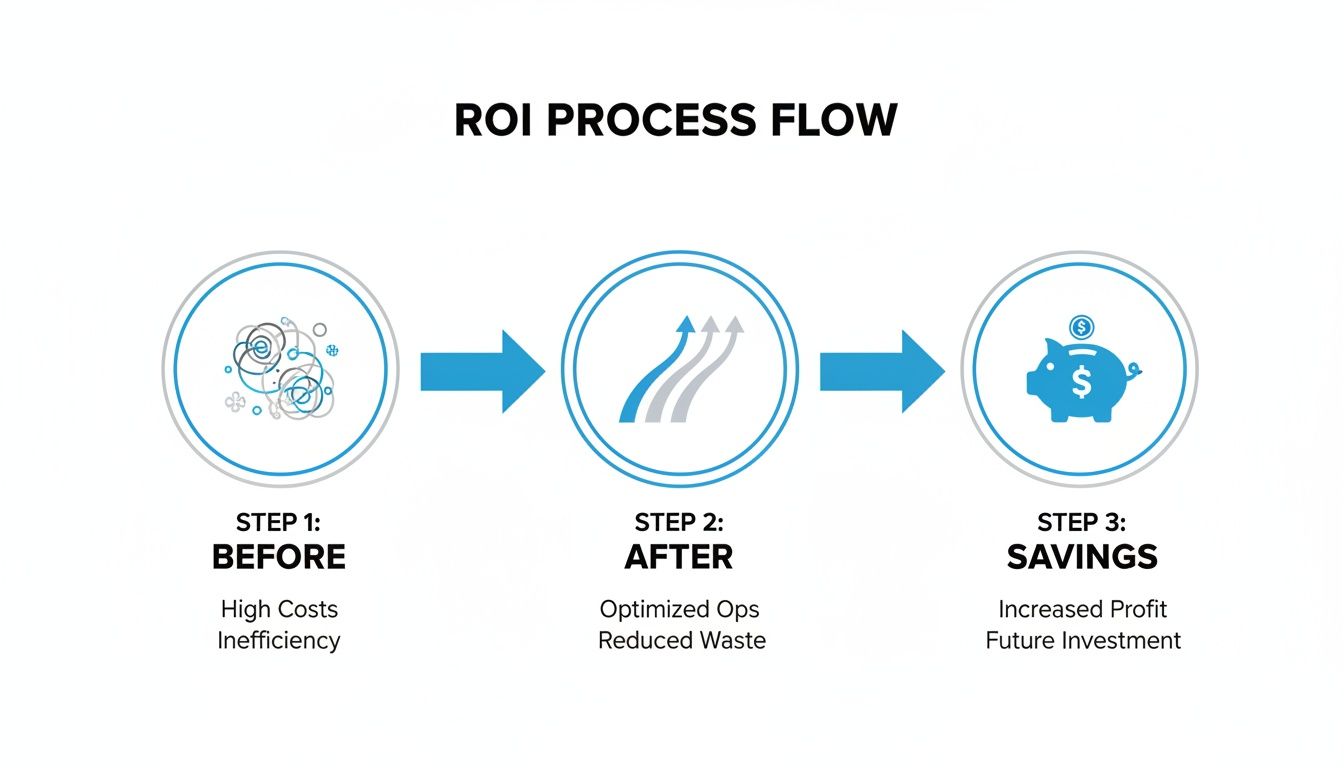
The process isn't complicated. In fact, it's a simple workflow that takes your travel program from a disorganized, expensive mess and turns it into a well-oiled machine that actively saves the company money.
Let's walk through a quick, practical example. Imagine one of your employees needs to fly to London for a big client meeting.
Step 1: Get the Green Light. The employee first submits their trip request through your standard CTM software. The plan includes a hotel budget of $400 per night, which is comfortably within company policy. Their manager sees the request and approves it instantly within the system.
Step 2: Book Smarter, Not Harder. Here’s where the hybrid model shines. Instead of booking a hotel from the CTM's standard inventory, the employee logs into a wholesale platform like Approved Experiences Traveler. They quickly find a 5-star hotel that usually goes for $550 a night. But with the membership, the price is just $275. That’s a massive 50% savings.
Step 3: Save Money and Stay Compliant. The employee books the deeply discounted room. They’ve just saved the company $125 per night compared to their approved budget, all while staying in a better hotel. The receipt is simply uploaded back into the CTM system for easy expense tracking, keeping everything compliant.
This hybrid strategy marries the best of both worlds. You get the airtight control and visibility from your CTM software, but you also empower your team to find savings that traditional corporate booking tools just can't touch. Your travel program stops being just another cost center and starts becoming a smart, strategic way to save money.
Alright, so you see the value in corporate travel management software, but you still have some practical questions. That’s completely normal. Let's dig into some of the most common things business leaders ask before they take the plunge.
This is the big one, isn't it? Everyone's busy, and nobody has time for a drawn-out implementation. The honest answer is: it depends.
If you’re a smaller company with a straightforward travel policy, you could be up and running in just a few days. For example, a 50-person startup might only need to set up user profiles, define a single travel policy (e.g., "economy flights only, hotels under $250"), and connect to QuickBooks. This can often be done in a single afternoon.
Now, for a large, global enterprise with different rules for different teams and complex approval chains, it's a different story. A full rollout might take several weeks. You'll need more coordination to migrate data and train everyone. The secret here is to find a provider with a great onboarding team that will walk you through everything, step-by-step.
Actionable Tip: Before you start, create a simple one-page document outlining your travel policy and approval workflow (e.g., "Trips over $2,000 require director-level approval"). Having this ready will dramatically speed up the configuration process.
Absolutely. In fact, this is where modern CTM software really shines. These platforms were built with a global workforce in mind and are designed to untangle the knots of international travel.
Here's a practical example of what you can expect:
That’s a common myth, but it’s just not true anymore. While massive corporations were the first to jump on board, the market is now full of flexible, scalable tools perfect for businesses of any size. Honestly, small and medium-sized businesses often feel the positive impact the fastest.
Think about it from a small business perspective:
Many software providers now offer really flexible pricing, like pay-per-user or small transaction fees. This makes these powerful tools totally accessible, even if you don't have a massive travel budget.
Ready to gain control over your corporate travel program while unlocking exclusive savings? With Approved Experiences Traveler, you can integrate wholesale rates into your managed travel strategy, ensuring every trip is both compliant and cost-effective. Discover how our platform can transform your business travel today.
From this collection
From this collection

corporate travel policy best practices
Explore corporate travel policy best practices to cut costs, boost compliance, and improve traveler experience with practical steps.