

Resources
Articles
Notes, guides, and editorial standards from the Approved Experiences team. Written for members, in the same voice we use everywhere else.
Resources
Notes, guides, and editorial standards from the Approved Experiences team. Written for members, in the same voice we use everywhere else.
Learn how to negotiate hotel rates with insider strategies and proven scripts. Unlock deeper discounts and valuable perks on your next hotel stay.

Most people never even think to negotiate their hotel rate, but a quick phone call can often shave 10-30% off your stay. The trick isn't being a master haggler; it's about doing a little homework before you dial. When you can build a solid case based on the hotel's slow periods and what their competitors are charging, you're not just asking for a discount—you're making a smart business proposition.
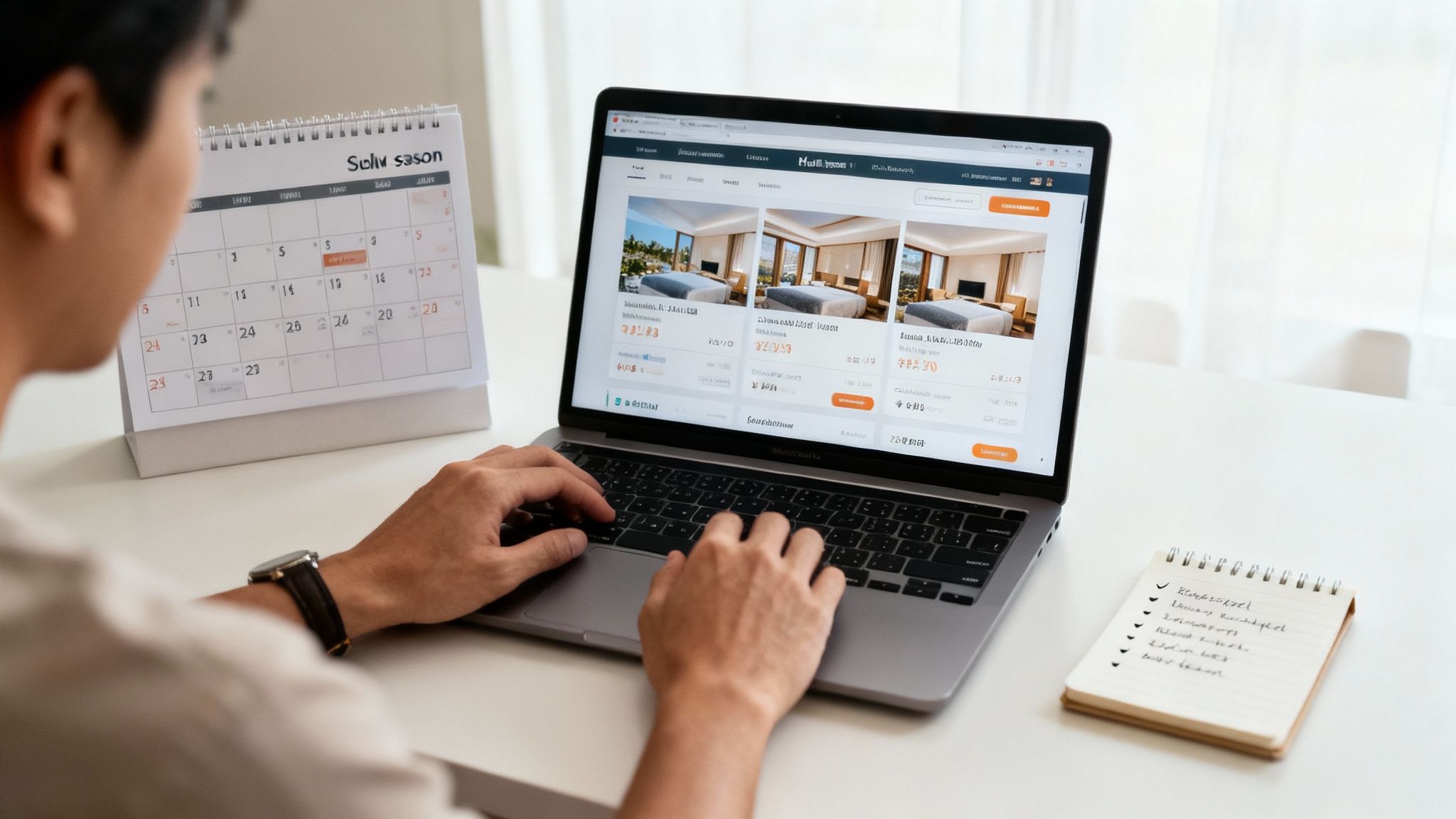
A successful negotiation is won before you ever speak to a soul. It all comes down to gathering a bit of intel to understand the hotel's position. This prep work is what gives you the confidence to ask for a better deal.
Without it, you’re just another person asking for a handout. With it, you're presenting a logical, data-backed case they'll find hard to ignore. This initial phase is all about finding that sweet spot where a hotel is likely to have empty rooms and figuring out what a fair, discounted price actually looks like.
Your biggest advantage is targeting a hotel during its downtime. It's simple supply and demand. When occupancy is high, they have zero reason to budge on price. But when rooms are sitting empty, they’re much more motivated to fill them, even at a lower rate.
Here's a practical, step-by-step approach to finding these windows:
Practical Example: You want to visit Orlando in October. You find the city’s event calendar and see a massive tech conference is happening from the 15th to the 18th. By simply shifting your travel dates to the following week (October 22-25), you avoid peak demand and instantly gain negotiating power.
The most powerful position in any negotiation is being armed with information. Knowing a hotel’s occupancy trends and competitor pricing transforms your request from a hopeful plea into a compelling proposal.
Okay, so you've found a likely slow period. Now you need a realistic number in mind. Just asking for a random discount rarely works. You need to benchmark what the market is actually offering.
Here's your 5-minute research plan:
Now, you're not just asking for a discount; you have a specific, data-backed target.

Alright, you've done your homework. Now it's time to turn all that intel into actual savings. This is the part where you have to pick up the phone.
Emails are too easy to ignore or reply to with a generic "no." A real conversation connects you with a person who can make a decision on the spot.
Actionable Insight: Do not call the 1-800 central reservations number. Search for the hotel's local phone number. When you call, say, "Could I please speak with the front desk manager or someone in in-house reservations?" The people on-site know their exact occupancy and have the authority to cut a deal to fill a room.
Your tone here is everything. Think of it less like a confrontation and more like a friendly, collaborative chat. You're not demanding a discount; you're just seeing if you can find a price that works for both of you. A huge part of this is learning how to ask better questions to get the information and results you want without being pushy.
A polite, informed, and friendly approach will always get you further. Here are a few simple conversational starters you can adapt to pretty much any situation.
This little table is your cheat sheet. These are some simple, conversational ways to kick off the negotiation, depending on what leverage you have.
| Your Goal | What to Say |
|---|---|
| Price Match a Competitor | "Hi, I’m looking to book a room for [dates] and your rate is [Hotel’s Rate]. I did see a similar room at [Competitor Hotel] for [Lower Rate]. I'd love to stay with you; is there any way you can get closer to that price?” |
| Be 'Ready to Book' | "I've been watching your rates for my stay on [dates], and they're just a little over my budget. I'm actually ready to book right now with my credit card if we could get the rate closer to [Your Target Rate]." |
| Leverage a Longer Stay | "I'm planning a longer trip from [start date] to [end date] for a total of five nights. I was hoping there might be a better nightly rate available for a multi-night stay." |
| Mention a Special Occasion | "My partner and I are celebrating our anniversary and were hoping to stay with you from [dates]. Is there any special rate or package you can offer to help us celebrate?" |
Remember, these are just starting points. The key is to be genuine and respectful.
The real goal is to show you're a serious, informed traveler who is ready to give them your credit card right now. This makes it clear that a small discount on their end means guaranteed money in their pocket.
Actionable Insight: Timing is key. The best time to call is during the slower parts of the day, like between 10 AM and 11 AM or 2 PM and 4 PM on a weekday. Absolutely avoid calling during the morning check-out rush or the evening check-in chaos. You want to talk to someone who is calm and unhurried, not someone who is just trying to get you off the phone.
Knowing a hotel is probably slow is one thing. Backing it up with hard data? That’s a completely different league.
This is how you go from just another traveler hoping for a deal to an informed insider who understands the hotel’s business. When you show them you’ve done your homework, you give them a solid, business-focused reason to say "yes" to a better rate.
Instead of just blindly asking for a discount, you can frame the conversation around what’s actually happening in their market. This simple shift in approach puts you in a much, much stronger position.
Think about the difference a little research makes. Imagine calling a hotel and opening with something like this:
"Hi, I was looking to book a stay for next month and saw that the city's latest tourism report mentioned a dip in occupancy for that time. With that in mind, are you running any special incentives for direct bookings?"
A single sentence like that completely changes the game. It immediately signals that you’re not just guessing—you’re referencing specific market conditions that directly hit their bottom line. A hotel is far more likely to take you seriously when you understand their world. This is the core strategy for learning how to negotiate hotel rates like a pro.
Let's look at a recent real-world example. In Q3 2025, the average nightly hotel rate globally jumped 4.18% to $191. Sounds good for them, right? But at the same time, booking volumes dropped by almost 6% worldwide.
The trend was even sharper in the U.S., where reservations plunged by 7.86%. This data, highlighted in a HotelHub analysis, shows hotels are under some serious pressure to fill those empty rooms. For anyone who knows these numbers, that spells opportunity.
You don't need a subscription to an expensive industry journal to find this stuff. A bit of clever digging is usually all it takes.
When a hotel manager hears you bring up specific market data, they know you're not just another person fishing for a cheap rate. You’re actually presenting a logical argument for why giving you a better deal is a smart move for them. You’ve just turned a simple request into a well-reasoned business proposal.
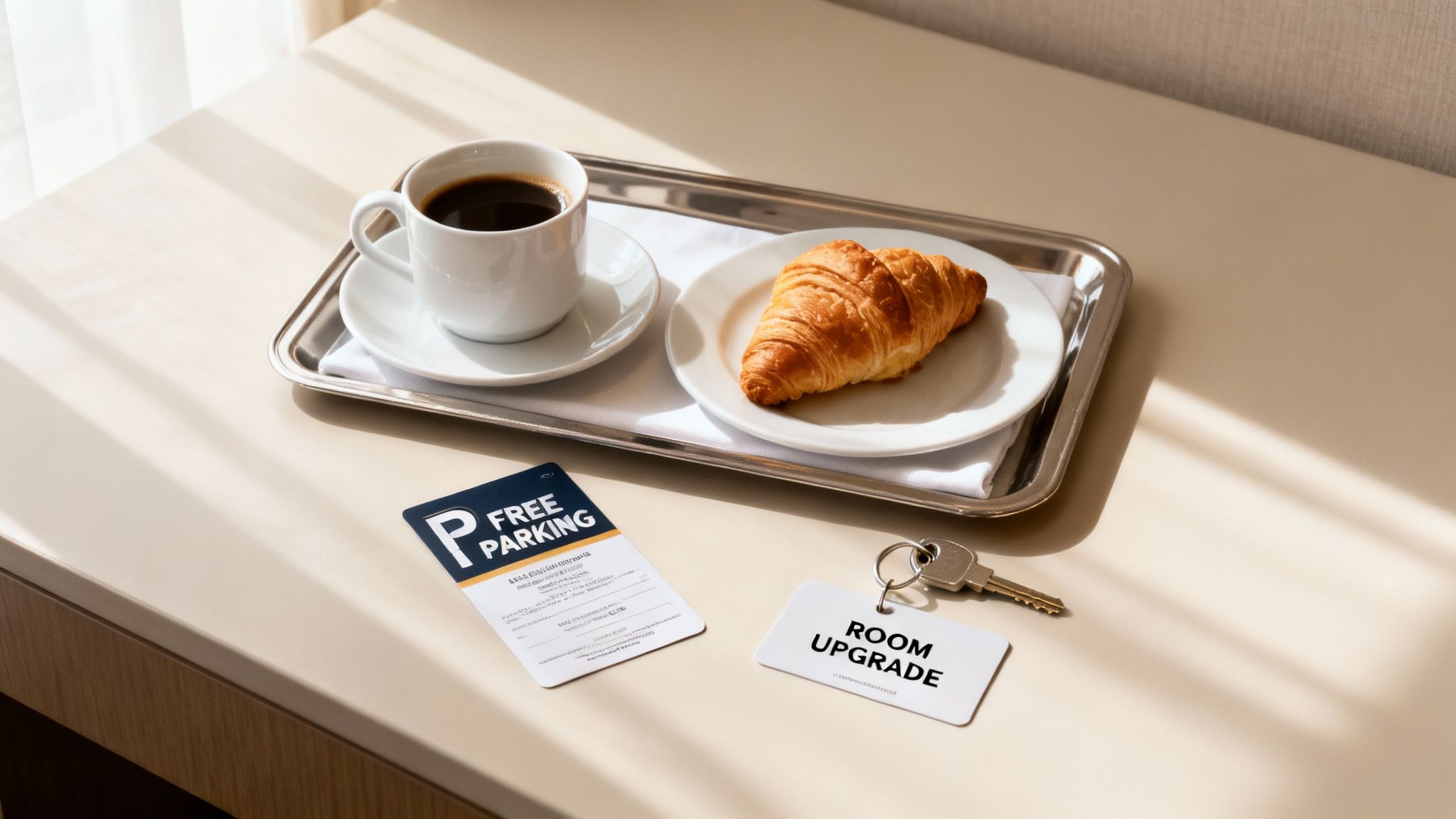 So, you've made your case, but the hotel just won't budge on the nightly rate. Don't throw in the towel just yet—the negotiation is far from over. When the price is firm, it’s time to pivot.
This is where you shift from saving on the rate to adding value. Frankly, this is where you can often score wins that are worth even more than a few bucks off the room. By changing the conversation to perks and amenities, you give the hotel an easy way to say "yes" without messing with their headline price.
When a hotel can't drop the rate, they can almost always offer something else. The real trick is to ask for specific, high-value items that cost them very little to provide but save you a ton of cash. Think about all those little extras that nickel-and-dime you over a multi-day stay.
Your goal here is to politely transition the conversation. A great way I've found to do this is by first acknowledging their position on the price before making your next move.
Try a line like this: "I understand the rate is firm, but to help me finalize my booking today, would it be possible to include breakfast and parking?" This shows you're reasonable and ready to commit, which makes them way more likely to play ball.
Don't just ask for "something extra." Go in with a specific list of amenities that would make a real difference to your wallet. Some of the best things to ask for are the ones with the biggest price tags.
Here are a few of my go-to requests, with their potential value:
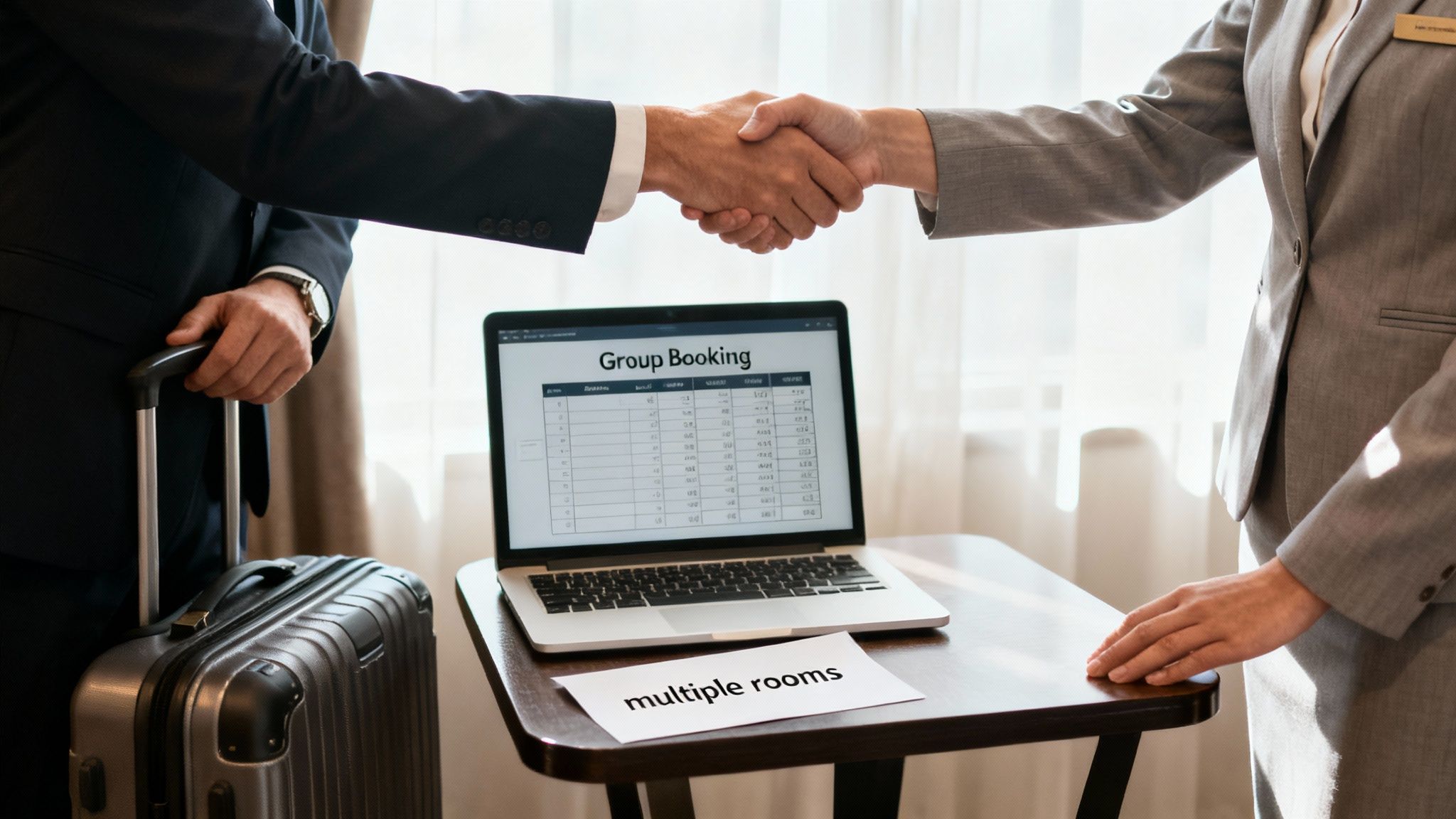
If you're booking rooms for a group or traveling often for work, your status shifts. You're no longer just another guest; you're a high-value client, and your ability to negotiate rates goes way up. The secret is to stop thinking like a tourist haggling over a single night's price and start thinking about the total business you represent.
Actionable Insight: For any group booking (even just 3-4 rooms for a family reunion), ask to speak directly with the "Sales Manager" or "Group Sales Coordinator." This is their job.
Here's how that sounds in the real world: "Hi, I'm putting together a corporate retreat and need to book five of your rooms for three nights. That comes out to 15 room nights. What kind of group rate can you put together for a booking of this size?"
That one sentence completely changes the dynamic. You've immediately signaled that you're a serious source of guaranteed income, and that gets their attention.
When you walk in the door representing a group or a company, you’re bringing a lot more than just room bookings. You're offering predictable revenue—the lifeblood of any hotel. For anyone in this position, learning a few core strategies for negotiating with suppliers will give you a solid playbook for getting much better terms.
Think beyond the room rate. You need to articulate all the value you bring to the table:
Here's an insider tip that will give you confidence: It's standard practice for corporate hotel deals to land a 10-30% discount off the regular rates. You're not asking for something crazy; you're asking for what's normal in the industry.
Right now, with hotel rate hikes staying relatively modest, properties are focused on one thing: filling rooms. This gives you serious leverage. By getting past the front desk and building a relationship with the sales or group manager, you can get access to unpublished rates that are kept specifically for high-value clients like you.
Of course, even with the best game plan, you're bound to have some questions. Let's tackle the common ones that pop up when you're learning the ropes of hotel negotiation. Getting these cleared up can give you that final bit of confidence you need before picking up the phone.
This is all about a balancing act between having a guaranteed room and snagging the best deal.
Booking one to three months out is a surprisingly good window, especially if you're planning a longer stay. Hotels love locking in that guaranteed occupancy early, which makes them much more willing to hear you out on a reasonable offer.
On the flip side, you can sometimes find incredible last-minute discounts by calling on the day of your arrival. If a hotel has empty rooms, they're losing money. Actionable Insight: This works best in cities with a high density of hotels where you have multiple options. Call around 4 PM, after most last-minute cancellations have come in but before the front desk gets busy with evening check-ins. It’s a high-risk, high-reward move.
You absolutely can, but you have to be smart about it. Calling the corporate 1-800 number is a dead end; those agents work with fixed rates and have zero wiggle room.
The trick is to call the specific hotel directly and ask for the front desk manager. This is the person who has the power to make a deal. They can often knock a bit off the price, offer a free room upgrade, or get rid of a pesky fee to get your booking. It's a win for them, too, since they avoid paying the 15-25% commission that online travel agencies charge.
The key is to bypass the big, impersonal system. The local manager has occupancy numbers they need to hit. They're often given the power to make small adjustments to fill a room that would otherwise just sit empty.
A "no" on the price isn't a dead end—it's just a pivot point.
If the manager can't budge on the nightly rate, shift your focus to the perks. Try asking something like, "I understand the rate is firm, but would it be possible to include breakfast for our stay or waive the daily parking fee?" These little extras can add up to serious savings.
If they still can't help, just thank them for their time. You can always try your luck again later with a different person at the desk. A little polite persistence can sometimes make all the difference.
Ready to stop negotiating and start saving automatically? Approved Experiences Traveler gives you exclusive access to wholesale hotel prices you can't find anywhere else. Unlock up to 70% off on over a million hotels worldwide and make luxury travel surprisingly affordable. Learn more at the Approved Experiences website.
From this collection
From this collection
vacation rental discounts
Learn how to find and secure amazing vacation rental discounts with expert strategies on timing, negotiation, and exclusive travel memberships.

best family vacations
Discover the best family vacations for 2026. Our guide covers trips for all ages & budgets, with tips on how to save big on hotels, cruises, and more.

how do standby flights work
Want to learn how do standby flights work? This guide explains the process, airline policies, fees, and tips to help you catch that earlier flight.