All Articles
The Journal
How to Plan Group Travel: A Practical Guide to Seamless Trips
January 20, 202623 min readgroup trip planninggroup travel tips
How to Plan Group Travel: A guide that shows how to plan group travel through budgeting, booking tips, and logistics for a smooth, memorable trip.

I’ve seen countless group trip ideas die in the group chat. It starts with a flurry of excitement—"Let's go to Italy!"—and fizzles out into a mess of conflicting schedules, budgets, and opinions. The secret to actually getting on the plane isn't magic; it's about laying a solid foundation before anyone even looks at a booking site.
Moving from a vague idea to a real-deal plan is all about getting everyone on the same page early. Skip this, and you're planning a trip that only half the group will truly love. For example, if half the group envisions a backpacking adventure while the other half expects luxury resorts, you're headed for conflict. The goal is to build a shared vision from the get-go.
This initial phase is a simple, three-part process that nips potential problems in the bud.
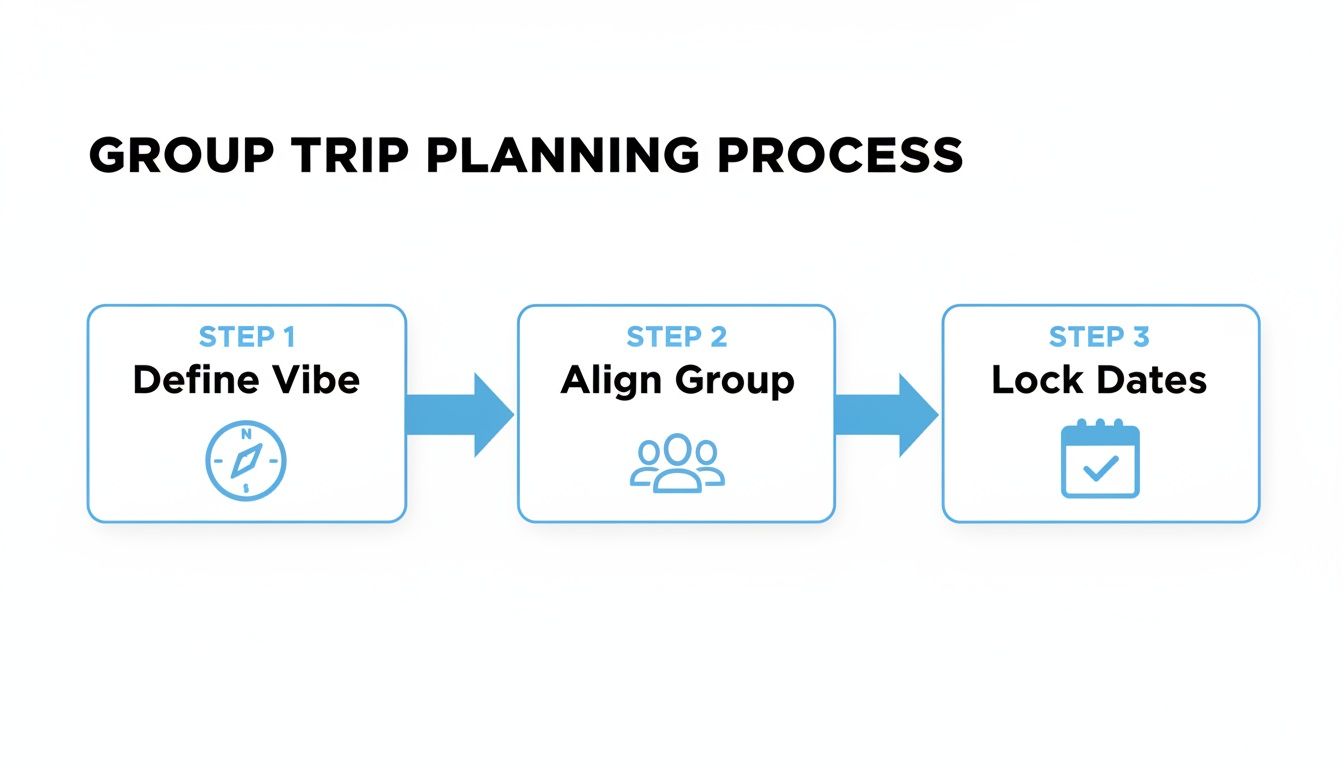
Get these three things right, and the rest of the planning becomes infinitely smoother.
To help you get started, here's a quick checklist that covers the essential groundwork for any successful group trip.
Group Trip Foundation Checklist
| Planning Stage | Key Action | Why It's Critical | Recommended Tool |
|---|---|---|---|
| The Vibe Check | Define the trip's core purpose (e.g., relax, party, explore). | Aligns expectations and ensures everyone is on board with the travel style. | Shared Google Doc or group chat poll. |
| Leadership | Appoint one person as the "trip captain" or point person. | Prevents "too many cooks" syndrome and keeps the planning process moving. | A simple group vote. |
| Scheduling | Find the best travel dates for the majority of the group. | This is the #1 reason trips fail. Lock this down first. | Doodle or a simple poll. |
| Destination Shortlist | Research 3-5 options that fit the vibe and potential dates. | Avoids overwhelming the group with endless choices. | The trip captain handles this research. |
This table acts as your starting line. Nail these points, and you've built a strong foundation to plan from.
Define the Vibe and Appoint a Leader
Before you even whisper the word "destination," you need to agree on the trip’s purpose. Is this a toes-in-the-sand, all-inclusive beach retreat in Cancun or a whirlwind tour of European capitals like Paris and Rome? A kid-friendly adventure to Costa Rica or a friends' getaway to Las Vegas centered around nightlife? Getting clarity on the "vibe" first makes every other decision a hundred times easier.
My go-to move here is to nominate a "trip captain." This isn’t a dictator; it’s a facilitator. Their job is to gather everyone’s input, present a few solid options, and set deadlines for decisions. For example, they might say, "Please vote on your top destination choice by Friday at 5 PM." This simple step single-handedly stops the dreaded "analysis paralysis" that kills momentum.
This role is especially critical for larger groups where logistics can get complicated fast. If you're coordinating a big crew for a ski trip, a good bus hire and driver guide for effortless group travel can be a lifesaver, offering insights on how to transport 15 people and their gear from the airport to the mountain.
Align on Dates and Destination
Let's be real: scheduling is almost always the biggest headache. Group travel is booming—the market is projected to skyrocket from $369.8 billion to $689.85 billion by 2035. But with more people traveling, coordination gets tougher. An estimated 30% of group trips fall apart because of scheduling conflicts alone.
The pro move? Use a tool like Doodle or a simple Google Form to poll everyone on their availability. Create a poll with several potential week-long slots (e.g., June 1-8, June 15-22, July 6-13). Don't aim for perfection; find a window that works for at least 80% of the group and lock it in.
Once you have your dates, you can tackle the destination.
- Create a shortlist. Instead of asking a wide-open "Where should we go?", the trip captain should present three to five options that fit the vibe and budget. For a "relaxing beach" vibe, the options might be Tulum, Mexico; Maui, Hawaii; or a Greek island.
- Give the details. For each spot, include estimated flight and hotel costs, a few key activities (e.g., "Tulum: Mayan ruins, cenotes, beach clubs"), and the general atmosphere.
- Vote with a deadline. Put it to a vote and give everyone 48 hours. Majority rules. This isn't about rushing; it's about respecting everyone's time and building momentum.
By making firm, collective decisions early on, you set the trip up for success from day one.
Creating a Realistic Group Travel Budget
Let’s be honest: money talk can be the most cringe-worthy part of planning a group trip. But getting it right from the very beginning is the single most important thing you can do to keep the peace. A clear, realistic financial plan isn't just a nice-to-have; it's non-negotiable.
Without a solid budget, you're setting the stage for misunderstandings, resentment, and a trip that’s remembered for all the wrong reasons.
First things first, you have to move from vague ideas to actual numbers. Before anyone even thinks about that stunning villa or that must-do tour, the group needs to agree on a comfortable, per-person spending range. We're not talking about a final, exact number yet—just a ballpark figure that works for everyone's wallet.

Establish a Budget Baseline
A simple, anonymous poll is your best friend here. Drop one in your group chat using a tool like SurveyMonkey or even Google Forms and ask everyone to privately share their ideal total budget for the trip—everything from flights and lodging to food and fun. For example, offer ranges like "$1000-$1500," "$1500-$2000," and "$2000+." This little trick respects everyone's privacy while giving the trip captain a clear picture of the group's financial comfort zone.
From there, you can average out the responses and set a working budget that leans toward the lower end. This ensures no one feels pressured to spend more than they're comfortable with. For more great ideas, check out these tips on planning a family vacation—many of the budget-friendly strategies work for any kind of group.
Once you have that magic number, it's time to break it down. While every trip is different, a solid starting point for allocating funds is the 40/30/20/10 rule.
- 40% for Accommodation: For a $2,000 budget, this is $800.
- 30% for Transportation: That's $600 for flights, cars, etc.
- 20% for Activities & Tours: This leaves $400 for your "fun fund."
- 10% for Food & Drinks: That’s $200 for meals and drinks.
This isn't gospel, but it's a fantastic framework. It helps you quickly reality-check a destination. If the only available lodging in your chosen spot eats up 60% of your budget right off the bat, you know it’s time to either adjust the plan or look elsewhere.
Managing Shared Costs and Payments
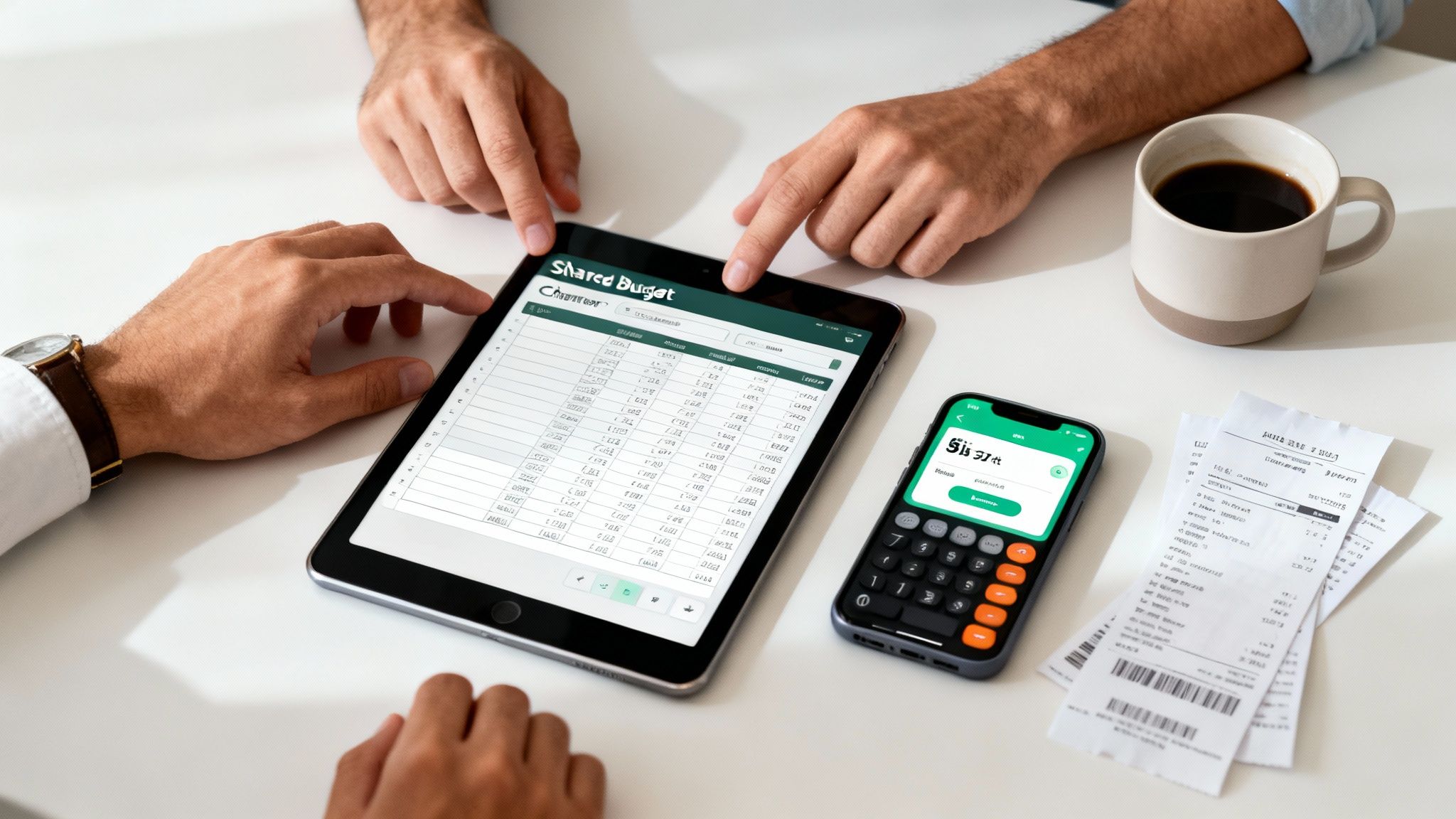
Guesswork is the enemy of a happy group budget. The absolute best way to keep things transparent is with a master spreadsheet that everyone can see. Fire up Google Sheets and create a shared doc that tracks every single group expense in real-time.
List every cost you can think of, from the accommodation deposit to the final night's dinner. Create columns for the total cost, the per-person share, who paid, and the payment status for each traveler. This central hub kills confusion and keeps everyone accountable.
Proactive money management is the key. Instead of chasing people down for cash after the fact, set up a central fund before the big expenses hit. For example, if the Airbnb deposit is $800 for 8 people, ask everyone to Venmo the trip captain their $100 share before the booking is made. Trust me, this is a game-changer for reducing financial friction.
Set up a dedicated pot for the trip. You can create a group on Venmo or Zelle, or even open a temporary joint bank account for a really big trip. Everyone chips in their share for major bookings upfront, which makes life a thousand times easier for the person hitting "confirm."
Leverage Group Power and Track Everything
A smart budget is the foundation of any great group trip. Don't forget that as a group, you have serious booking power. For example, when booking a boat tour, ask the company if they offer a discount for a group of 10 or more. Making bulk reservations can often slice 20-50% off the cost of tours and accommodations.
For all the day-to-day costs that inevitably pop up—groceries, taxis, museum tickets—a shared expense-tracking app is non-negotiable.
- Splitwise: This is the gold standard. Create a group, add expenses as you go, and tag who was involved. For instance, if four people go for coffee, one person pays, and they log a "$20 coffee" expense, splitting it only between those four. The app keeps a running tally of who owes whom, making the final settlement completely painless.
- Settle Up: Another great option, especially for international travel, as it handles multiple currencies with ease.
Using these tools means no one gets stuck with a massive bill, and you get to skip the awkward "so, who paid for what again?" conversation on the last day. This transparent, organized approach ensures money stuff never gets in the way of making great memories.
Booking Accommodations and Flights Like a Pro
With your destination, dates, and budget locked in, the fun part starts—booking the big-ticket items. This is when the trip starts to feel real. It’s also where a few smart moves can save your group hundreds, if not thousands, of dollars.
Shifting from planning to booking takes a strategic mindset, especially when you’re coordinating for a whole crew. Over 72% of all reservations are now made online, but just clicking "book" isn't enough. Bad timing can lead to 15-20% higher costs from last-minute changes, so try to lock in flights and lodging at least 6-9 months out for major trips. Getting ahead of the game is your best defense against surging prices and slim pickings. You can learn more about these trends by checking out the complete travel industry report.
Choosing the Right Home Base
Here's the classic group travel dilemma: do you book a block of hotel rooms or rent one giant vacation home? Honestly, the answer almost always comes down to your group's dynamic and the trip's "vibe." There's no single right answer, just the right fit for your people.
A sprawling vacation rental is often perfect for something like a multi-generational family reunion. You get a central kitchen and a big living area—both essential for shared meals and late-night chats. On top of that, the cost per person is often way lower than individual hotel rooms.
On the other hand, if you're traveling with a group of friends or several couples, the privacy and perks of a hotel might be a better call. Everyone gets their own space (and their own bathroom), and you have access to a front desk, daily housekeeping, and maybe a pool or gym.
Think of it this way: A vacation rental is all about togetherness and bonding. A hotel offers independence and personal space. For a bachelor party, a big Airbnb with a pool is perfect. For a work conference, individual hotel rooms make more sense. Figure out which one is the priority for your group before you even start looking.
To help you decide, here’s a quick breakdown of the most common options and who they’re best for.
Group Accommodation Options Compared
| Accommodation Type | Best For | Pros | Cons |
|---|---|---|---|
| Vacation Rental/Villa | Families, close-knit friends, long stays, budget-conscious groups. | Shared common areas, kitchen access for cooking, often lower cost per person, more privacy. | Fewer amenities (no front desk/room service), shared bathrooms can be an issue, one person on the hook for booking. |
| Hotel Room Block | Couples, corporate groups, short trips, groups wanting amenities. | Individual privacy, daily housekeeping, on-site services (concierge, pool, gym). | Higher cost per person, limited common space for gathering, less of a "shared experience" feel. |
| Boutique Hotel/Inn | Smaller groups, special occasions, travelers seeking unique charm. | Personalized service, unique atmosphere, often includes breakfast, can feel more intimate. | Fewer rooms available, may lack amenities of larger hotels, can be pricier. |
| All-Inclusive Resort | Groups seeking a hassle-free vacation with predictable costs. | All food, drinks, and many activities included; simplifies budgeting; lots of on-site options. | Can be expensive, may feel isolating from local culture, quality of food/drinks can vary. |
Choosing the right type of lodging sets the entire tone for the trip, so weigh these pros and cons with your group before making a final call.
Finding the Best Deals on Stays
Once you know what you're looking for, it's time to hunt for a deal. Standard booking sites are a good place to start your research, but the real savings are often found elsewhere, especially for group travel. This is where a little insider knowledge really pays off.
One of the most powerful strategies is to look into membership-based travel platforms. A service like Approved Experiences Traveler gives you access to wholesale pricing that the general public never sees. This can unlock savings of up to 70% on hotels and vacation homes—a massive win when you're booking multiple rooms or a large property.
Beyond that, here are a couple of pro moves:
- Book a Room Block: If you're set on a hotel and need more than five rooms, don't book them one-by-one online. Call the hotel's sales department and ask for a group rate or a "courtesy room block." This usually comes with a solid discount and more flexible cancellation terms.
- Go Directly to the Source: Found a vacation rental you love on a big platform? Do a quick search to see if the property management company has its own website. Booking direct can often save you from the hefty service fees the big sites tack on.
Coordinating Flights and Ground Transport
Booking flights for a group can feel like herding cats. Prices are all over the place, and coordinating arrivals from different cities adds another layer of chaos. The key here is to be organized and decisive.
First, make one person the "flight researcher" who presents the top two or three choices to the group. A tool like Google Flights is great for tracking prices and setting up alerts. Once the group votes on a flight, have everyone book within a 24-hour window to lock in the same price.
But don't stop at the flights. Think about what happens when you land. Renting a 12-passenger van sounds like a great idea until you realize there's no room for luggage. Always, always check the vehicle's luggage capacity—you might actually need two minivans instead of one giant van.
For a truly seamless experience, especially with a large group or a complex trip, consider using a concierge service. Platforms that offer this perk can handle everything from booking your flights and arranging coordinated airport transfers to hiring a private chef for your villa. It’s the difference between a logistical headache and a stress-free arrival.
Crafting an Itinerary Everyone Will Love
This is where the magic happens. The itinerary is the bridge between a folder full of bookings and a real, living, breathing shared experience. A well-crafted itinerary is a balancing act—it needs just enough structure to make sure you see the good stuff but leaves plenty of room for those spontaneous moments that often become the best memories.
Get this balance wrong, and a dream trip can quickly feel like a forced march.
The absolute biggest mistake I see in group travel planning is the tendency to overschedule. Packing every single second with a mandatory activity is a recipe for disaster. It completely ignores the reality that everyone has different energy levels, interests, and ideas of what a "vacation" actually means. The point isn't to force togetherness 24/7; it's to create opportunities for great shared moments while letting everyone have the space to do their own thing.
Embrace the Anchor and Float Method
For years, I've relied on what I call the "anchor and float" method. It's a game-changer for keeping a diverse group happy, from the person who wants to see every museum to the one who just wants to find the best beach bar. It guarantees you get those key experiences together without anyone feeling like they're being dragged around.
Here’s the breakdown:
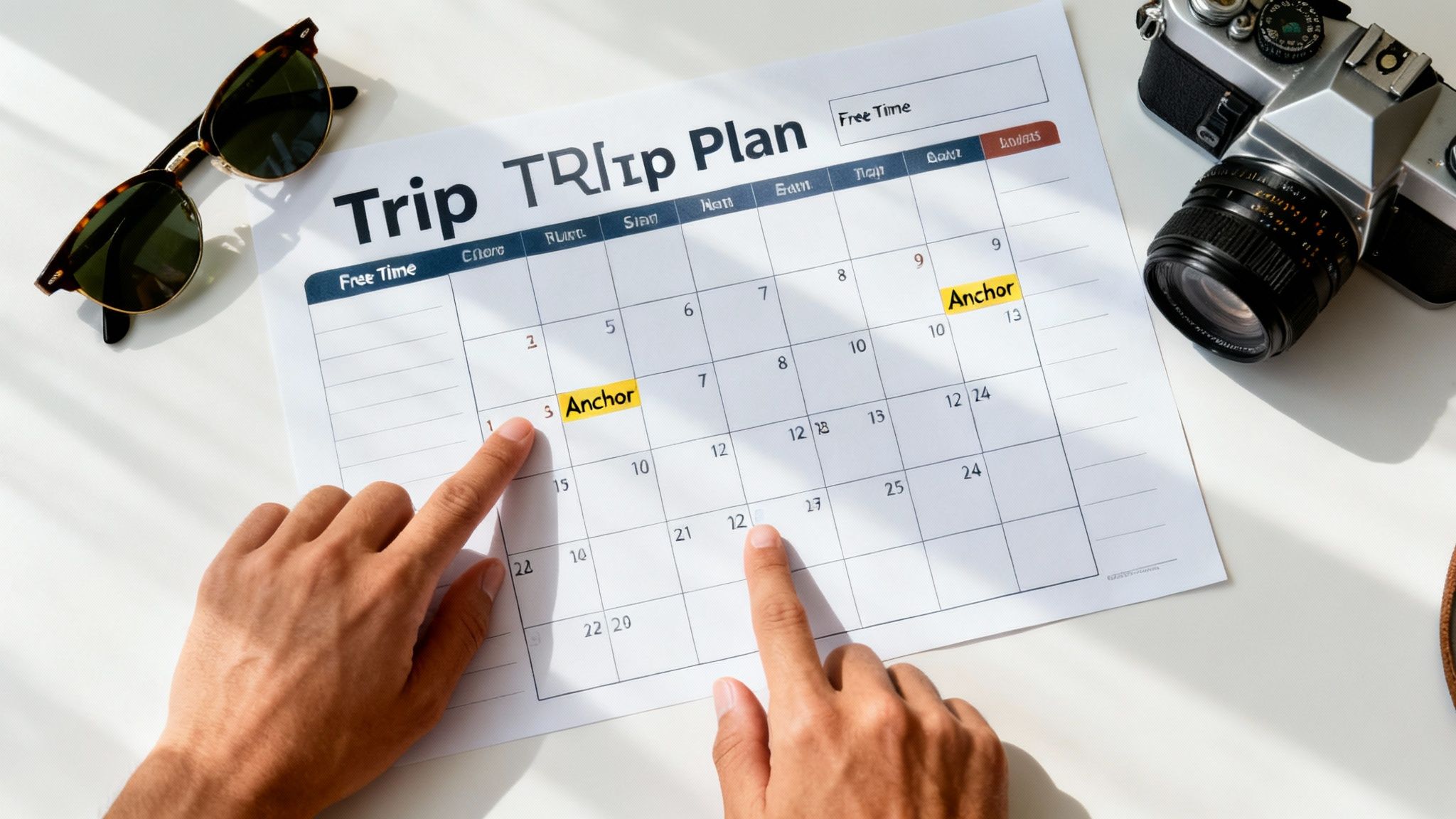
- Anchors: These are the big rocks of your trip. Think one, maybe two, non-negotiable activities each day that the whole group does together. These are pre-booked, locked-in plans like a specific museum tour or a group dinner reservation.
- Floats: This is all the unstructured time around the anchors. It's the breathing room where individuals or smaller groups can peel off and follow their own whims.
Let's put it into practice. A day in Rome could look like this:
- Anchor (Morning): We’ve got a pre-booked group tour of the Colosseum from 9 AM to 12 PM. Everyone’s going.
- Float (Afternoon): Three hours of free time. Half the group might want to go shopping near the Spanish Steps, a couple of others could wander over to the Pantheon, and someone else might just want to grab a spritz at a random café and people-watch.
- Anchor (Evening): We all meet back up for our group dinner reservation in Trastevere at 7 PM.
This approach gives the day a solid framework but empowers everyone to make part of the trip their own. It’s the secret to group harmony.
Use Collaborative Tools for Clarity
Once the ideas start flowing, you need one central hub to keep it all organized. A messy itinerary buried in a 100-message group chat is how you end up with missed reservations and frustrated people. You need a single source of truth that everyone can pull up on their phone.
An itinerary isn't a stone tablet; it's a living document. Using a collaborative tool means updates are seen by everyone in real-time. For instance, if a dinner reservation changes from 7 PM to 7:30 PM, the trip leader can update it in one place, and everyone instantly has the correct information. This kills the chaos of constantly sending out revised PDFs.
You don't need anything fancy. A few simple tools work wonders:
- Google Docs or Sheets: A dead-simple table with columns for Day, Date, Time, Activity, Address, and Notes is often all you need. Share the link with "editor" access and let people add suggestions or plug in their details.
- TripIt: This app is brilliant for consolidating travel confirmations. Just forward your flight, hotel, and rental car emails to it, and it automatically builds a master itinerary. The TripIt Pro version is great for sharing and collaborating with your whole crew.
No matter what you use, make sure it includes the crucial details: addresses, confirmation numbers, and links to websites. It keeps all that vital info in one place, right at your fingertips.
Prioritize Downtime and Flexibility
Seriously, don't forget this part. Some of the best moments on any trip happen in the gaps—the unplanned discovery of a hidden alley, a conversation that goes on for hours over coffee, or just an afternoon relaxing by the pool. If your schedule is packed to the gills, you squeeze out any chance for that magic to happen.
Make it a point to schedule at least one "do-nothing" morning or afternoon. For a week-long trip, block off Wednesday afternoon as "Free Time / Pool Time." It gives the introverts in your group a chance to recharge their batteries and lets everyone recover from a packed day of sightseeing. A vacation is supposed to be a break, after all. By intentionally building in flexibility, you create a relaxed vibe where the best parts of traveling together—connection and shared discovery—can actually happen.
Keeping Everyone Informed and Prepared
You’ve locked in the big stuff—flights, accommodation, the main events. But honestly, the trip's real success now hinges on something far more delicate: communication. This is where a perfectly planned group trip can either run like a well-oiled machine or completely unravel into a mess of missed updates and last-minute panic.
Think about it. Without one central place for information, critical details get swallowed by endless group texts, random email threads, and one-off conversations. Suddenly, one person misses the flight time change, another forgets to upload their passport copy, and you’re stuck putting out fires that were totally preventable. Your role just shifted from planner to information director.
Establish a Central Communication Hub
First thing's first: get all trip talk out of scattered DMs and into one designated home. This creates a single source of truth that everyone can refer back to, which is absolutely essential when you're juggling multiple people and moving parts. I like to set up a two-part system: one spot for real-time chat and another for the permanent, important documents.
For the day-to-day stuff, a dedicated group chat is non-negotiable.
- WhatsApp or Telegram: These are perfect for quick questions ("Does the hotel have a hair dryer?"), alerts about flight delays, or sharing a cool restaurant you just found. The key is to keep the conversation flowing so everyone gets updates instantly.
- Set Ground Rules: It's smart to gently establish that this chat is for trip-related info only. A good way to frame it is, "Let's keep this chat for logistics so nobody misses important updates. We can start a separate chat for all the fun stuff and memes!"
For the documents that absolutely cannot get lost, a shared digital folder is your best friend. A shared Google Drive or Dropbox folder gives you a secure, accessible place to store everything from flight confirmations and hotel booking details to tour tickets and scanned copies of passports and visas.
A centralized document hub isn't just about being organized; it’s a safety net. If someone loses their phone or wallet, having digital access to their passport and booking numbers can be an absolute lifesaver. Before the trip, ask everyone to upload a photo of their passport's main page to a private, shared folder.
Delegate Roles to Share the Load
Even if you’re the designated "trip captain," you shouldn't be doing all the heavy lifting. Trust me on this. Delegating specific roles not only lightens your load but also gets everyone invested in the trip's success. It’s a game-changer for group dynamics and preventing planner burnout.
When you assign roles, you turn passive passengers into an active, collaborative crew.
- Finance Tracker: This person is in charge of the shared budget spreadsheet. They collect funds for group dinners or activities and use an app like Splitwise to keep a running tally of who owes what. It’s a godsend for avoiding awkward money talks later.
- Reservations Lead: They become the point person for all bookings. Before a group dinner, they're the one who calls to confirm the 7 PM reservation for 10 people. They’ll have all the confirmation numbers handy and manage any communication.
- Activities Coordinator: This is the fun job. This person researches optional activities, finds great local spots to eat, and handles making reservations for group dinners or excursions. For example, they might find three different snorkeling tours and present them to the group to vote on.
The Final Pre-Departure Huddle
About a week before you take off, get everyone on a quick video call. This pre-trip huddle is your last chance to sync up, squash any lingering questions, and just get everyone excited. It’s a small step that makes for a much smoother start to the actual trip.
Use this call to run through a final checklist.
- Review the Itinerary: Go over the day-one plan in detail—flight times, where you're meeting at the airport ("We'll meet at Gate B4 after security"), and how you’re getting from the airport to the hotel ("Our shuttle is confirmed for 3 PM under my name").
- Confirm Documents: Give one last reminder for everyone to double-check that their passport is valid and to pack any necessary visas, tickets, and travel insurance info.
- Answer Last-Minute Questions: Open the floor for any final queries about packing ("Should I bring a rain jacket?"), currency, or local customs.
This final touchpoint is what turns a group of individuals into a prepared, cohesive travel team. It replaces any pre-trip anxiety with pure anticipation, ensuring everyone shows up to the airport on the same page and ready for an incredible trip.
Your Group Travel Questions Answered
Even with the most meticulous plans, questions always pop up. Let's be honest, navigating the personalities and practicalities of group travel is a skill, and anticipating the common hurdles is half the battle.
Here are the straight-up answers to the challenges I see planners face time and time again. Think of this as the final piece of your planning puzzle—getting these details right is what separates a good trip from a truly great one.
How Do You Handle Travelers with Different Budgets?
This is the classic group travel dilemma, but it absolutely doesn't have to be a trip-killer. The solution comes down to two things: transparency and flexibility, right from the start.
Instead of locking into one rigid number, establish a realistic spending range during your initial budget talk. You'll then base all the mandatory shared costs—lodging, essential transport—on the lower end of that range. This move alone ensures the core trip is affordable for everyone.
From there, you build in optional activities that let people choose their own adventure.
- Offer tiered activities: For a trip to Italy, plan an optional high-end dinner with a wine pairing for those who want to splurge, but also have a fantastic, budget-friendly pizza-making class on the agenda.
- Be clear about costs: When you propose something, state the price. "The winery tour is $75 per person, and the guided hike is free. Let me know which you'd prefer by Friday." It’s that simple.
- Use payment apps strategically: Shared expense apps like Splitwise are a lifesaver here. They make it painless for individuals to opt in or out of specific expenses without making the group finances a tangled mess.
This approach gives everyone the freedom to customize their trip without feeling pressured or left out.
What Is the Ideal Group Size for a Trip?
There's no magic number here. The "perfect" group size is all about your destination and the vibe you're going for.
A small crew of four to six people is incredibly nimble. You can snag last-minute dinner reservations, pile into a single taxi, and make decisions on the fly. This size is ideal for a city break in a place like Lisbon or Tokyo.
A medium group of eight to twelve often hits the sweet spot for value. This is typically the magic number to unlock group discounts on tours and activities. It's also the perfect size for renting a sprawling villa in Tuscany that feels lively but never overcrowded.
Large groups of fifteen or more are amazing for those big milestone celebrations—think 40th birthdays or anniversaries. But they demand a more structured approach, a designated leader, and serious advance planning for everything from restaurant bookings to chartering a bus.
Before you even send the first invite, do a quick reality check on your destination. Planning to take 15 people to a tiny, remote island with limited transport? That's a recipe for disaster. Can the local restaurants, tour operators, and transport options comfortably handle the number of people you have in mind? A little research upfront saves major headaches later.
How Far in Advance Should You Plan a Group Trip?
The rule is simple: the bigger the trip and the larger the group, the more lead time you need.
For a major international journey, like a safari in Africa or a tour of Southeast Asia, you need to start the planning process nine to twelve months out. This isn't just about getting organized; it’s a strategic move. A long runway gives you the best shot at locking in reasonable airfare and your first-choice accommodation before prices skyrocket.
More importantly, it gives everyone in your group plenty of time to save up, get time off work approved, and handle any necessary documents like passports or visas.
For a simpler domestic trip, like a long weekend getaway to Nashville or Austin, a four- to six-month planning window usually works just fine. Just remember to prioritize booking flights and lodging first—those are always the most volatile costs.
What’s the Best Way to Make Group Decisions?
Endless debate is the enemy of progress. The most effective way to sidestep "analysis paralysis" is to structure the decision-making process from the get-go.
First, empower your "trip captain" or a small planning committee to do the initial legwork. Their job isn't to present twenty different hotels; it's to vet the options and narrow it down to the top two or three that actually fit the group's budget and style.
Then, you present these curated choices to the group for a simple vote.
- Create a quick poll in your group chat (WhatsApp, Facebook, whatever you're using).
- Give the essential details for each choice (e.g., "Option A: Hotel downtown, $150/night, pool. Option B: Airbnb by the beach, $120/night, full kitchen.").
- Set a firm deadline for everyone to vote—usually 24-48 hours.
This method works because it feels democratic—everyone gets a say—but it's structured enough to force a decision and keep things moving.
Planning your next group getaway shouldn't be a headache. With Approved Experiences Traveler, you can unlock exclusive wholesale pricing on over a million hotels and vacation homes worldwide, making luxury travel more affordable for your entire crew. Discover how our members save up to 70% and gain access to curated benefits that turn a good trip into an unforgettable one. Explore membership options and start saving today.
Want the wider view?
Ten categories. One report. Every quarter. The Approved List tracks what's rising and what's fading: data-backed signals, not opinions.
Free to join · Delivered by email