←All Articles
The Journal
10-Step Travel Planning List for Busy Professionals
October 5, 202621 min readtravel checklistbusiness travel
Use this travel planning list to delegate logistics, protect your calendar, and reclaim hours before, during, and after every trip.

Travel planning already consumes the equivalent of two full work days, or 16 hours, for the average traveler, according to Priceline's 2024 travel planning research. For Gen Z and Millennials, the figure rises to more than 20 hours, while 22% of U.S. adults identify itinerary creation as one of the most frustrating parts of planning. A trip isn't just a sequence of bookings. It's an operational workload competing with client work, family coordination, and recovery time.
A reliable travel planning list should protect calendar capacity, establish decision rules, delegate research and coordination, and include a recovery plan for delays and cancellations. It should also make it easier to work remotely while traveling without rebuilding your workday around fragmented travel details.
Approved Lux can act as a force multiplier through a 24/7/365 Assistant team with Triple-channel access by phone call, SMS text, or email. The practical question isn't whether someone can find a flight. It's how much follow-up, comparison, confirmation, and exception handling can leave your personal workload.
Use this sequence: lock dates and constraints first, build logistics next, consolidate the information, then prepare for day-of changes. The result is a repeatable operating system for travel, not another oversized packing list.
1. Map Your Travel Dates and Block Calendar Time Including Buffer Days
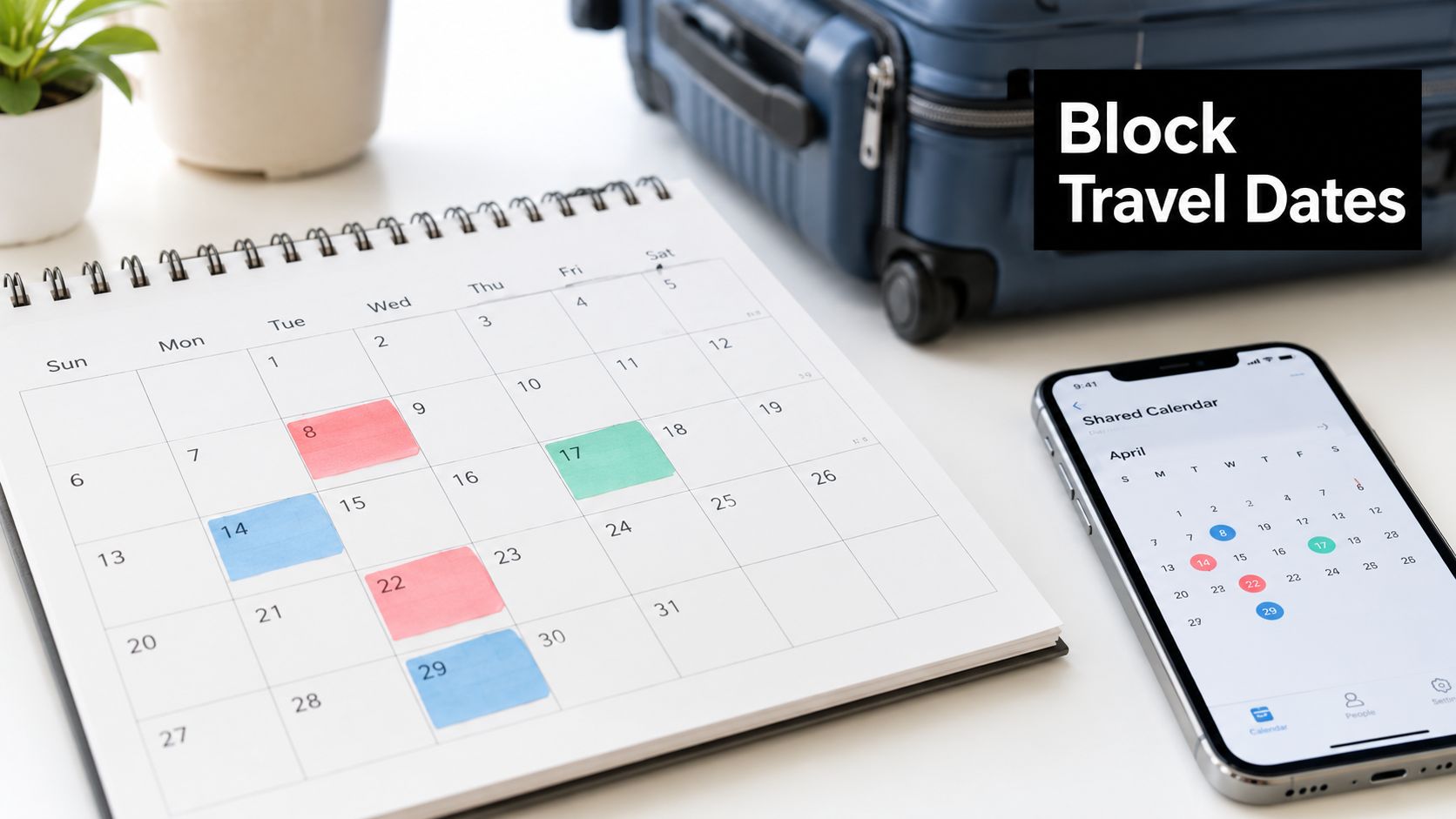
Start with the calendar, not the booking site. Confirm firm departure and return dates, then reserve the surrounding time needed for preparation, travel fatigue, inbox recovery, and household reset. If those blocks aren't visible, other people will treat them as available.
A founder traveling to three client meetings across five days might reserve Monday evening for packing and briefing preparation, then protect Friday afternoon and Saturday for email catch-up instead of forcing a Friday evening departure. A dual-career parent can block the weekend before a family trip for mail holds, pet care, and household preparation, then keep the Monday after travel clear for laundry and inbox recovery.
Practical rule: A return flight doesn't mark the end of the trip. It marks the start of the recovery workload.
Use a simple visual system. Red can represent hard travel dates, while yellow marks preparation and recovery buffers. Share the calendar with your Approved Lux Assistant team through Triple-channel access, so the team can see the constraints around the trip rather than treating the itinerary as isolated bookings.
Create a repeatable calendar pattern
Set reminders for two weeks, one week, and three days before departure, each with a different purpose. The first reminder should surface unresolved documents and bookings. The second should confirm logistics and ownership. The final reminder should identify only last-minute changes, not reopen decisions you've already made.
For recurring client visits, quarterly board meetings, or monthly site trips, create a calendar template that repeats and updates with the new dates. A management consultant with a heavy annual travel schedule benefits from blocking the night before each trip for a luggage check and the morning after for desk triage. That small operating rule prevents every return from becoming an emergency.
2. Define Your Travel Budget and Spend Parameters Upfront
Budget decisions should happen before research becomes emotionally expensive. Set a total trip limit, accommodation range, flight preference, ground transport standard, and meal allowance before anyone starts comparing options. This gives your Assistant team authority to act without sending every reasonable choice back for approval.
A solo practitioner might set a hotel ceiling of $250 per night and a meal allowance of $80 per day, allowing the Assistant team to filter options without asking for approval on every property. A family using Lux Circle might assign $8,000 to the full vacation, with separate accommodation and food limits. A founder could approve a defined trip budget for flights, hotel, and transport while reserving a separate amount for a client dinner that requires explicit sign-off if it exceeds the agreed limit.
These are operating parameters, not predictions. The useful part is deciding in advance where the team can move quickly and where you want to stay involved.
For a practical framework, use this travel budget planning guide to separate predictable costs from flexible ones.
Give each category a decision rule
- Accommodation: Specify a nightly ceiling, preferred neighborhoods, hotel chains, and requirements such as a workspace or quiet room.
- Flights: State approved carriers, cabin preferences, acceptable connection rules, and whether flexible fares are worth the premium.
- Ground transport: Decide when to use rail, rideshare, a rental car, or a car service.
- Meals: Set a daily allowance, then separate routine meals from hosted client dinners.
- Incidentals: Reserve room for baggage, transfers, tips, and schedule changes.
A useful approval rule might be, “Book anything under the agreed nightly limit. Text me with options above it.” Send these parameters by email or SMS and keep them in the shared trip record. Standing budgets are especially valuable for recurring travel because they eliminate the same negotiation every month.
The trade-off is flexibility versus control. A rigid budget can force poor choices when availability changes. A vague budget creates approval loops. The best travel planning list defines the boundary and names the person who can make the exception.
3. Compile Destination Intelligence on Climate Events Documentation and Local Logistics
A destination isn't ready for booking until you understand the conditions that will shape the booking. Check climate, major events, public holidays, documentation, currency, connectivity, transport, neighborhood layout, and local operating norms. This research determines whether a rental car is useful, whether a hotel location will create daily friction, and whether your documents need attention before the itinerary is finalized.
For example, a consultant traveling to Tokyo in March may find that seasonal demand affects availability and that public transport is more practical than a rental car. A founder visiting London in August may discover that school holidays change attraction demand, while a parent planning a Mexico trip may need to examine seasonal weather, insurance, and resort availability before selecting dates.
Avoid treating a guidebook as the final authority. Tourism boards can clarify official logistics, local news can surface disruptions, and recent city forums can reveal transport or neighborhood conditions that older guides miss.
Use a destination intelligence brief
Keep the research short enough to use:
- Climate: Temperature, rain, snow, storms, and clothing implications.
- Events: Conferences, festivals, holidays, and events that affect availability.
- Documentation: Passport validity, visa requirements, entry forms, and copies.
- Connectivity: SIM or eSIM options, Wi-Fi expectations, and offline access.
- Transport: Public transit, rideshare coverage, car rental practicality, and airport distance.
- Neighborhoods: Walkability, meeting proximity, family suitability, and evening logistics.
Forward this brief to your Assistant team by email. The team can then use it when comparing hotels, scheduling transfers, and selecting restaurants. For a business trip, identify the actual meeting district rather than researching the city in general. A financial district, technology hub, and residential neighborhood can produce very different travel times and dining options.
The trade-off is research depth. Endless browsing creates more decisions instead of better ones. Capture only information that changes a booking, a timing decision, a document deadline, or a contingency plan.
4. Identify and Pre-Book All Flights Hotels and Ground Transport
Booking creates the trip's operating structure. Flight times determine hotel nights, transfers, meeting windows, and activity availability. The traveler should decide acceptable departure times, preferred locations, loyalty priorities, and flexibility. An Assistant team can compare options, hold suitable reservations, track terms, and send the final choices for approval.
Use a six to eight weeks planning window for business travel when possible. For peak-season leisure travel, begin eight to twelve weeks ahead. These are workflow targets, not promises of a particular fare. Earlier action can protect family-room layouts, preferred hotel locations, and suitable vehicle types, while flexible terms reduce the cost of changing plans.
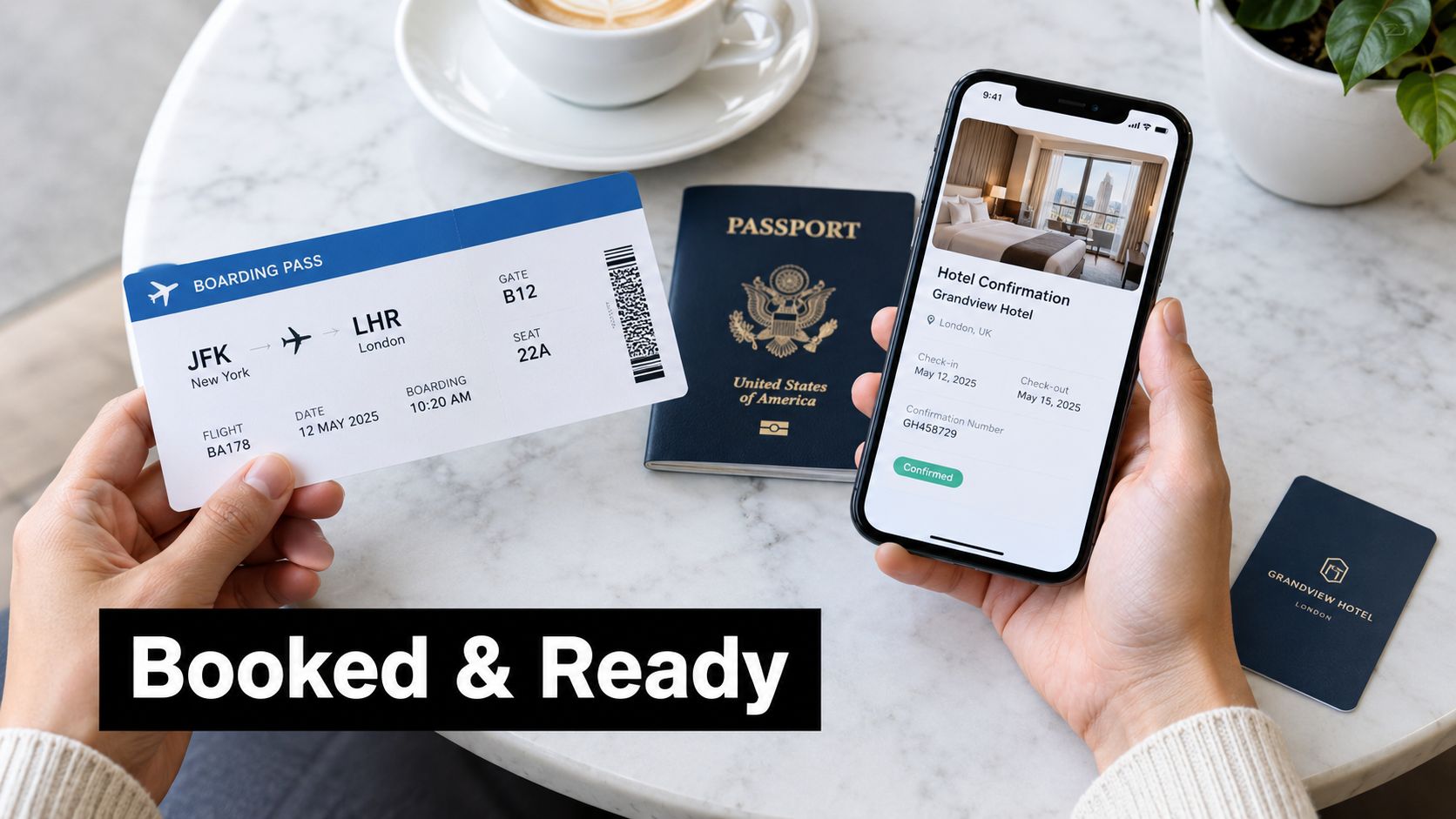
A founder with client meetings ten weeks away might approve flexible tickets and a familiar hotel program, then delegate the comparisons and confirmations. A family can settle accommodation and rental-car capacity before adding activities. A frequent consultant can ask Approved Lux to batch-book upcoming flights and hotels against approved carrier, chain, location, and cancellation preferences. The team should record the time reclaimed from research and repeat booking work, then refine the process for the next trip.
Choose terms that protect the schedule
- Flight flexibility: Select changeable conditions when meeting dates may move.
- Hotel terms: Direct bookings or loyalty programs can simplify changes and preserve benefits.
- Rate review: Recheck reservations while cancellation terms still permit penalty-free changes.
- Transport timing: Reserve cars with the main bookings when vehicle supply or airport timing affects the plan.
- Recordkeeping: Send confirmation numbers and reservation codes to the Assistant team by email or SMS.
Build disruption handling into the booking record. Store the preferred replacement flight, hotel contact, cancellation deadline, and transfer fallback beside each reservation. If a flight moves, the team can check downstream bookings before approving changes instead of treating each item separately.
Set a review reminder two weeks before departure. Confirm departure times, passenger names, cancellation windows, and schedule changes. For route-specific context, consult these Big Island flight tips. A reservation is ready for use only when its surrounding terms and contingencies are visible.
5. Build Your Core Itinerary and Day-by-Day Schedule
A good itinerary creates a backbone, not a minute-by-minute cage. Put arrival and departure details, fixed meetings, activities, meals, transport, and protected free time into one sequence. This exposes conflicts before they become expensive or embarrassing.
A solo attorney traveling to Chicago for three client meetings could schedule an evening arrival, two meetings the next day, a defined lunch block, a lighter following morning, and a Sunday return. That structure gives the Assistant team clear windows for meeting confirmations, restaurant reservations, and transport. A founder on an investor road show might repeat a rhythm of morning calls, a midday meal, afternoon meetings, and evening dinners across three cities.
For a family road trip, a daily pattern such as breakfast, a morning activity, lunch, a travel or rest block, dinner, and wind-down time can be more useful than a long list of attractions. It leaves the family with choices while making reservations and driving time manageable.
Protect capacity inside the itinerary
Include 15 to 30 minute buffers between meetings when movement, note-taking, or decompression is involved. Keep arrival and departure days lighter when crossing time zones. Mark free blocks explicitly, such as “Tuesday afternoon protected” or “Saturday evening open,” so your Assistant team knows whether to add an activity or preserve the space.
Use the best travel planning tools to support the system, but don't confuse a tool with a decision rule. The tool stores the plan. The traveler decides which meetings matter, which activities are optional, and how much recovery time is acceptable.
Send the draft itinerary to clients and colleagues early enough for them to confirm their availability. Then send the finalized version to the Assistant team with local times, time zones, addresses, and special instructions. The Assistant team can coordinate the moving parts while you retain control of the decisions only you can make.
6. Research Vet and Pre-Book Restaurants and Dining Experiences
Dining should support the trip's purpose. A client dinner needs a quiet table, reliable timing, and an atmosphere where conversation is possible. A family meal needs practical seating, a manageable menu, and a location that doesn't create another transport problem. A solo traveler may want one planned meal and several flexible options.
A management consultant can ask Approved Lux to research restaurants near the meeting location, record dress code and address details, and identify a few suitable dishes before the dinner. A parent can select earlier family reservations, review menus in advance, and keep one evening deliberately casual. A solo practitioner might book one client-appropriate lunch, one enjoyable dinner, and leave another meal open for local flexibility.
Match the reservation to the schedule
Use Google Maps, Resy, OpenTable, Michelin Guide, and recent reviews as filters rather than final judgment. Recent reviews can reveal noise, inconsistent service, or a changed format, but ratings alone won't tell you whether a venue fits a confidential conversation or a tired family.
Give the Assistant team the context behind each booking:
- Business meal: Quiet table, location near the meeting, and enough time for conversation.
- Family meal: Children's menu, high chairs, dietary requirements, and tolerance for noise.
- Personal dinner: Preferred cuisine, dress expectations, and willingness to travel.
- Flexible option: A casual backup that doesn't require advance commitment.
Popular restaurants in major cities may require advance planning, while smaller destinations can offer more flexibility. Don't fill every evening. Keeping one or two unbooked casual options preserves spontaneity and provides room when a meeting runs late.
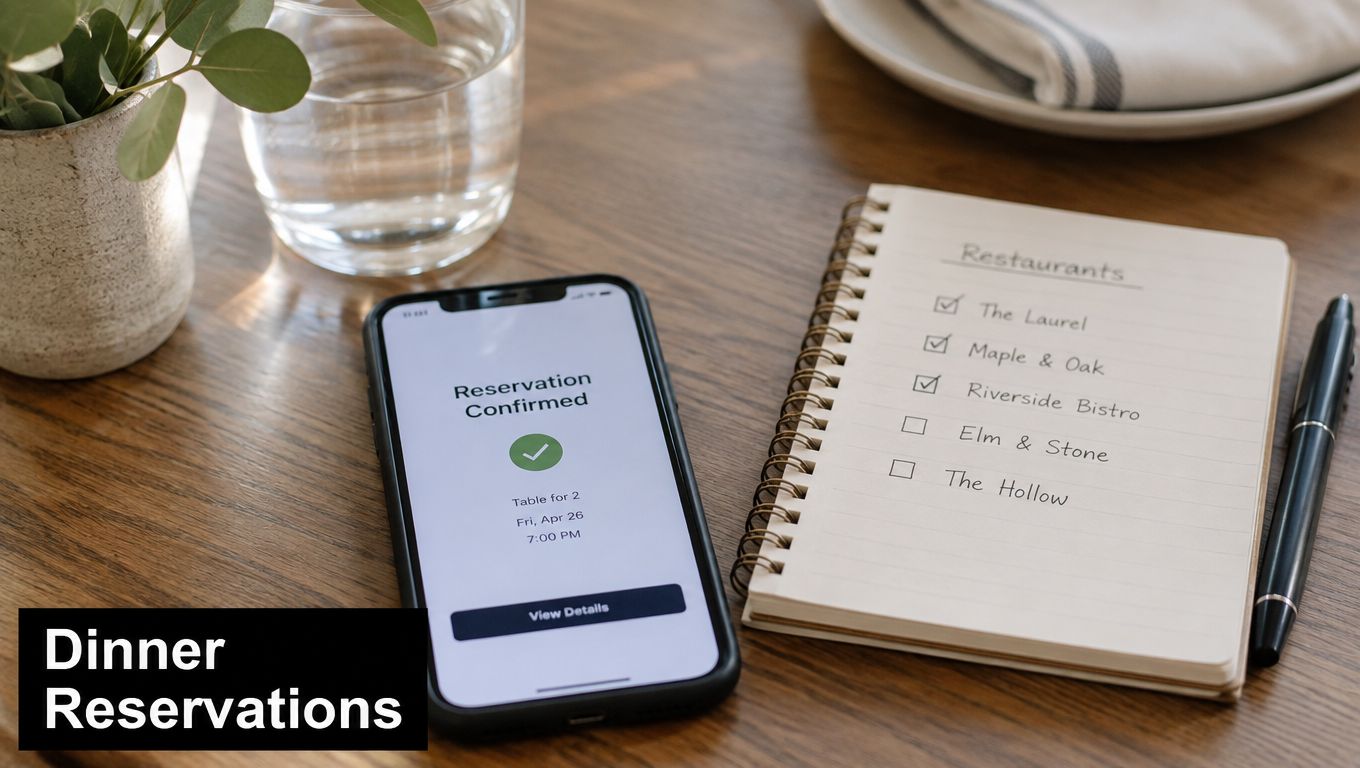
Ask Approved Lux to include the reservation time, address, dress code, parking or arrival information, and a short briefing in the itinerary. That turns “find somewhere to eat” into a completed operational task rather than another decision waiting at the end of a long day.
7. Arrange All Ground Transportation for the Full Trip
Treat ground transportation as one connected plan, not a series of separate rides. Map each movement from home to the airport, airport to hotel, hotel to meetings, inter-city transfers, and the return to the departure point. Confirm pickup times, meeting points, payment ownership, and a backup for every high-stakes transfer. The right choice depends on the trip, not on selecting the most expensive vehicle.
Build realistic arrival buffers into the plan. If a flight lands at 6:15 p.m., the pickup should account for baggage collection, walking time, and airport congestion. The Assistant team can monitor the flight, update the driver, and adjust the next reservation when a delay changes the evening. This prevents one late arrival from forcing the traveler to rebuild the entire schedule.
Use the trip shape to set the transport rule:
- Solo city travel: Rideshare or public transit can reduce parking and rental administration.
- Multi-city work: A rental car or prearranged car service may provide more predictable travel between meetings.
- Family travel: Confirm vehicle capacity, luggage space, car seats, boosters, and a pickup point that everyone can find.
- Client travel: A clear arrival plan and dependable timing usually matter more than a small price difference.
A founder visiting three cities might combine airport rideshare, prearranged transport between client meetings, and a rental car for a site visit. A family road trip may need one rental car, airport transfers, and confirmed child seats. A traveler with limited mobility may choose a car service even where public transportation is available.
Send every meeting address to the Assistant team so travel time reflects the actual itinerary rather than a generic city estimate. Review ground transportation services when comparing structured options.
A shared rideshare account can simplify family coordination. Separate payment methods may work better when business and personal expenses must remain distinct. Approved Lux can assign the bookings, track changes, and keep those ownership decisions visible, reclaiming decision time without removing the traveler's control.
8. Organize Documents Confirmations and Pre-Trip Information into a Unified Itinerary Package
Build one itinerary package that answers, “What do I need right now?” without an email search. Include flights, hotels, vehicles, restaurants, meeting addresses, emergency contacts, insurance details, and relevant local information in a single location.
Choose the format around the trip and the traveler. A consultant can use a searchable Google Doc with one heading per day, listing departure times, hotels, meeting addresses, contacts, meals, and evening plans. A family may need a printed packet containing flight and hotel details, daily schedules, reservations, and emergency information. A solo professional can keep an offline notebook in Evernote or a comparable tool.
Use these fields as the package's operating structure, whether they appear as headings, tables, or a day-by-day view:
- Trip header: Dates, destination, traveler names, and primary contact.
- Daily schedule: Local time, addresses, travel windows, and buffers.
- Confirmations: Booking codes, vendor phone numbers, and cancellation terms.
- Local intelligence: Transport notes, currency, weather considerations, and neighborhood details.
- Emergency section: Insurance information, relevant contacts, and offline instructions.
Store the file in a cloud document that works on a phone and remains available offline. Share it with travel companions, a spouse who is not traveling, and the Approved Lux Assistant team. Print a backup for family travel where connectivity may be unreliable. For business trips, add client names and arrival contacts so a delayed traveler can communicate quickly.
Give the team one source of truth. Approved Lux can update confirmations and keep the package current, while the traveler retains decisions that require personal judgment. That prevents repeated searches for a hotel address, duplicate restaurant forwards, and airport-side interruptions. The measurable benefit is time reclaimed through fewer messages and faster access to the right detail.
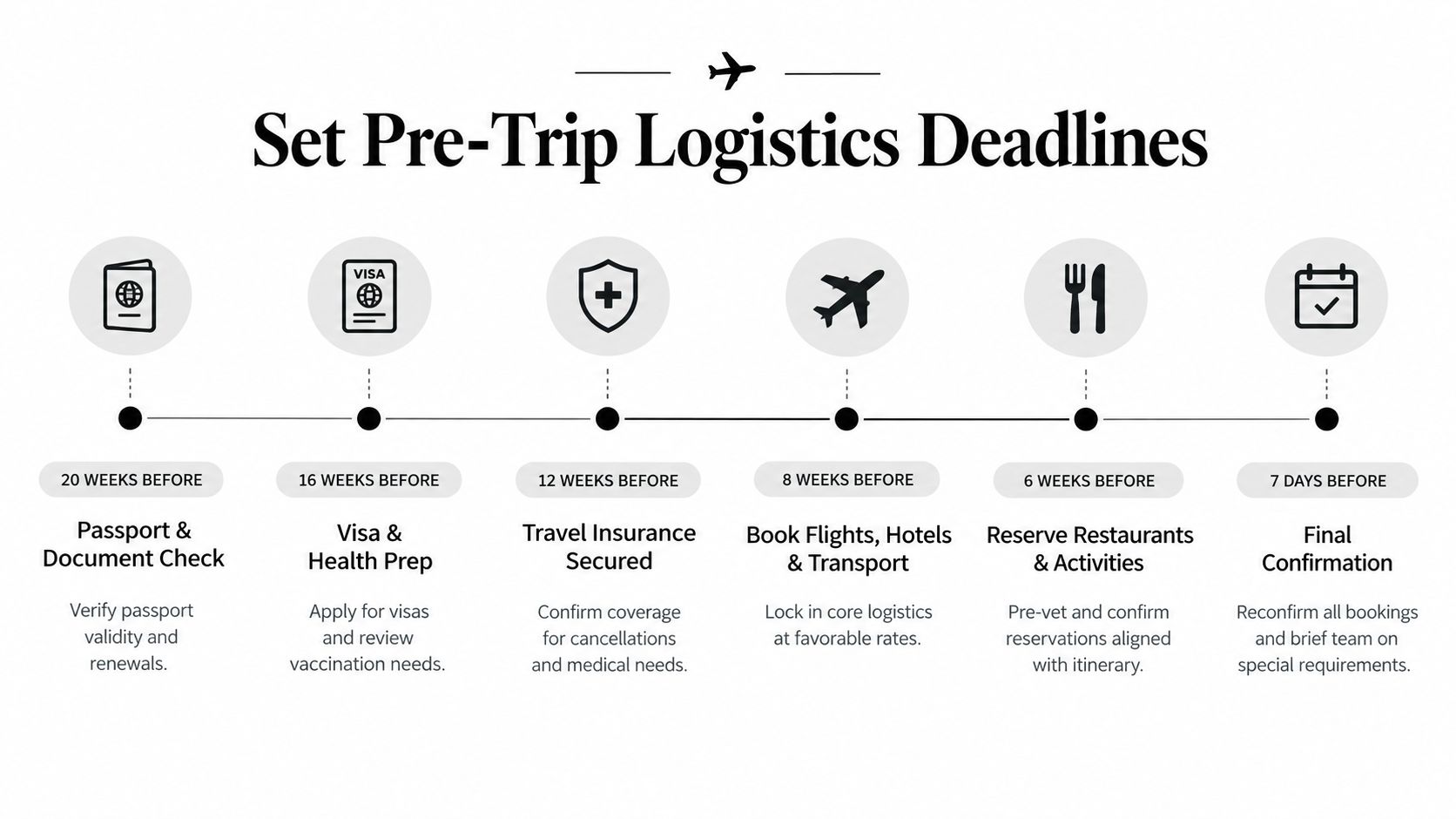
9. Set Pre-Trip Logistics Deadlines and Brief Your Team and Approved Lux on Special Requirements
A trip can be fully booked and still fail because a critical requirement was left until the last week. Put deadlines beside every dependency, then assign ownership. Passports, visas, insurance, deposits, meals, accessibility, childcare, pet care, and workplace coverage should all have a visible status.
For an international trip, a traveler might check passport validity at 20 weeks, begin a visa process at 16 weeks if needed, review insurance at 12 weeks, complete core bookings at eight weeks, make restaurant and activity decisions at six weeks, and confirm flights seven days before departure. These milestones create a control system. They aren't a substitute for checking the actual requirements of the destination.
Brief the people who must act
A family traveling across generations may need a ground-floor room, an aisle seat, early boarding, and clearly documented dietary restrictions. A founder may need workplace coverage, meeting documents, and a colleague assigned to urgent decisions while away. A parent may need childcare, pet care, school communication, and household access arranged before departure.
Put special requirements in a shared brief rather than scattering them across messages. Approved Lux can coordinate research, confirmations, and follow-ups, while the traveler remains responsible for decisions and personal requirements that need direct confirmation.
The same brief should identify high-risk items early:
- Documents: Passport renewals, visas, entry forms, and copies.
- Health logistics: Prescriptions, permitted medications, and access arrangements.
- Work coverage: Delegated approvals, inbox ownership, and escalation rules.
- Household coverage: Childcare, pet care, mail, and service appointments.
- Vendor requirements: Dietary needs, accessibility, room placement, and seating.
The best deadline is one that gives someone enough time to fix a problem. A reminder that arrives after the cancellation window or appointment deadline isn't project management. It's notification of failure.
10. Coordinate Travel Insurance Health and Emergency Plans
Disruption planning belongs in the travel planning list because ordinary bookings don't explain what happens when the trip changes. Review insurance terms, medical access, emergency contacts, evacuation provisions, cancellation conditions, and local care options before departure.
A family traveling during a period of seasonal storm risk may review coverage for cancellation, medical evacuation, and lost baggage. A business traveler heading to a remote region may store the policy number, claims process, and nearby medical facilities in the itinerary package. A solo traveler can verify international access to telemedicine and save local hospital and emergency contact details offline.
For travelers comparing coverage for a Spanish trip, this resource on visa-compliant insurance for Spain can be a starting point. It shouldn't replace checking the actual policy terms and destination requirements.
Build a disruption protocol
The U.S. Department of Transportation explains that airlines aren't required to compensate passengers for domestic delays or cancellations, so travelers should prepare to advocate for themselves and ask airline staff about meals, phone calls, hotels, or other available support. DOT passenger guidance should be part of the reference material for anyone whose schedule or budget can't absorb an unmanaged disruption.
Pack a change of clothes, chargers, and snacks in carry-on luggage, and consider the possibility of an extra day or two if a return is canceled, as recommended by New York consumer travel guidance. Keep receipts and document communications. The 24-hour airline cancellation rule may also provide a useful planning window for eligible direct bookings made at least seven days before departure, subject to the rule's conditions.
Approved Lux can help research alternatives, contact vendors, coordinate changes, and keep the traveler informed through Triple-channel access. The traveler still makes decisions about safety, coverage, and spending. The Assistant team reduces the operational noise around those decisions.
10-Item Travel Planning Checklist Comparison
| Item | Implementation Complexity 🔄 | Resource Requirements ⚡ | Expected Outcomes ⭐ | Ideal Use Cases 📊 | Key Advantages & Tips 💡 |
|---|---|---|---|---|---|
| Map Your Travel Dates and Block Calendar Time (Including Buffer Days) | 🔄 Low, simple scheduling, needs discipline | ⚡ Low, calendar tools; small setup time (recurrent) | ⭐⭐⭐⭐, prevents conflicts, anchors logistics | 📊 Frequent business travel, parents, consultants | 💡 Color-code blocks; share calendar; set reminders |
| Define Your Travel Budget and Spend Parameters Upfront | 🔄 Medium, requires honest preferences and thresholds | ⚡ Moderate, time to set categories; saves 4–6 hrs/trip | ⭐⭐⭐⭐, speeds booking, prevents overspend | 📊 Frequent travelers, founders, family vacations | 💡 Break into categories; set approval thresholds |
| Compile Destination Intelligence: Climate, Events, Visa/Documentation, Local Logistics | 🔄 Medium, destination research and synthesis | ⚡ Moderate, ~1–2 hrs research (3–4 hrs reclaimed) | ⭐⭐⭐⭐, avoids surprises; smarter packing & bookings | 📊 International trips, event-season travel, first-time destinations | 💡 Use a template (climate/events/logistics); check local sources |
| Identify and Pre-Book All Flights, Hotels, and Ground Transport | 🔄 High, multi-channel booking & monitoring | ⚡ High, 6–8 hrs saved per trip; needs OTAs/loyalty access | ⭐⭐⭐⭐⭐, cost savings, availability, itinerary anchors | 📊 Peak-season leisure, business travel, group trips | 💡 Book early (6–12 wks), monitor rate drops, prefer direct/loyalty |
| Build Your Core Itinerary and Day-by-Day Schedule | 🔄 Medium, coordination with meetings/vendors | ⚡ Moderate, ~3–4 hrs to structure and share | ⭐⭐⭐⭐, reduces daily decisions and conflicts | 📊 Roadshows, client-heavy trips, family itineraries | 💡 Use buffers (15–30m); share with clients/assistant |
| Research, Vet, and Pre-Book Restaurants and Dining Experiences | 🔄 Medium, vetting and timing alignment | ⚡ Moderate, 2–3 hrs research/bookings | ⭐⭐⭐⭐, removes dining decision fatigue; ensures suitable venues | 📊 Business dinners, family meals, leisure dining | 💡 Book 1–4 wks in advance; note dress code & signature dishes |
| Arrange All Ground Transportation (Airport Transfers, Inter‑City Travel, Car Rental or Ride‑Share) | 🔄 Medium, timing and vendor coordination | ⚡ Moderate, 2–3 hrs; requires vendor contacts/payment setup | ⭐⭐⭐⭐, reduces arrival-day scrambling; ensures punctuality | 📊 Airport-heavy trips, multi-city travel, families | 💡 Book pickups 30–45m after landing; pre-share driver contact |
| Organize Documents, Confirmations, and Pre‑Trip Information into a Unified Itinerary Package | 🔄 Low–Medium, consolidation and formatting | ⚡ Moderate, 2–3 hrs to compile; cloud + offline copies | ⭐⭐⭐⭐, one-stop access; offline backup; faster references | 📊 Business travel, family trips, low-connectivity destinations | 💡 Use cloud doc + printed backup; include contact numbers |
| Set Pre‑Trip Logistics Deadlines and Brief Your Team (and Approved Lux) on Special Requirements | 🔄 Medium, timeline creation and communication | ⚡ Moderate, upfront planning; ongoing follow-ups | ⭐⭐⭐⭐, prevents missed visas/deadlines; reduces last-minute crises | 📊 International travel, multi-person trips, special-needs trips | 💡 Create shared timeline; document special requirements early |
| Coordinate Travel Insurance, Health & Emergency Plans | 🔄 Low–Medium, policy selection and documentation | ⚡ Low, 1–2 hrs research; store policy details in itinerary | ⭐⭐⭐⭐, mitigates financial & health risk; faster emergency response | 📊 Remote regions, high-risk activities, family travel | 💡 Compare coverages; keep digital & printed policy cards |
Make the Next Trip Lighter on Your Calendar
A travel planning list works when it becomes a cadence. Start with dates and budget. Then delegate destination research, bookings, restaurant coordination, transport, confirmations, and follow-up. Before departure, review the unified itinerary and special requirements. During travel, use the disruption protocol instead of improvising from a crowded inbox.
The value isn't limited to booking speed. Priceline found that trip planning and booking consume 16 hours on average, with younger travelers spending more than 20 hours. McKinsey's travel research also found that 77% of surveyed travelers described research as focused on finding deals or saving money, while only 17% said they'd used a travel agent to book a trip in the prior year. That combination points to a planning process full of comparison, follow-up, and repeated decisions.
The planning runway can extend across months. One industry summary describes 71 days from first considering a trip to booking it, followed by another 73 days between booking and travel, with the process divided between inspiration and research. Whether your own trip is shorter or longer, the operating lesson is the same. Travel has a long tail of administrative work, and that work competes with professional and family responsibilities.
A practical estimate for the ten tasks above is roughly 23 to 36 hours across a trip where comparable estimates are available. The final figure varies by destination, number of travelers, number of cities, documentation requirements, and disruption risk. Count the time spent researching, comparing, booking, confirming, forwarding, rescheduling, and answering follow-up questions. The reclaimed value comes from eliminating fragmented ownership, not from pretending every task takes the same amount of time.
That matters for people already carrying a substantial administrative load. Brightpearl's survey of 2,000 adults reported 8 hours and 48 minutes per week on personal administration and 21 hours and 36 minutes on job-related administration. Travel doesn't exist outside that workload. It adds another temporary project to an already crowded operating week.
Approved Lux is designed as a force multiplier for that problem. A 24/7/365 US-based Assistant team can handle flight and hotel research, booking changes, ground transport, restaurant reservations, itinerary construction, scheduling, vendor research, inbox support, and follow-up. Triple-channel access means you can call, text, or email, with each channel monitored at equal priority. Proactive Preference Learning lets the team build working context around your routines and decision standards over time.
The model is operational, not aspirational. Approved Lux functions as a flexible capacity layer, a chief-of-staff style resource, or a first hire without overhead for someone who isn't ready to employ a full-time Assistant. Human judgment remains available through a US-based team, rather than sending every exception into a chatbot or ticket queue. That distinction becomes especially useful at midnight, during a cancellation, or when three separate vendors need coordinated changes.
Lux Solo costs $99.99 per month for one person. Lux Circle costs $299.00 per month and covers up to four people, which can fit a dual-career household sharing travel, family, and household logistics. Readers who need both Approved Lux and travel benefits should consider Lux Traveler at $1,799 per year, rather than purchasing separate memberships. Review the current options on the Approved Lux website before choosing a plan, since product details may change.
The next trip doesn't need more inspiration. It needs fewer open loops. Put the dates and constraints on the calendar, establish the approval rules, assign the logistics, review one itinerary package, and keep a disruption plan ready. That cadence protects attention before departure, reduces follow-up during the trip, and makes recovery after arrival less disruptive.
Approved Lux Personal Assistant provides 24/7/365 access to a US-based Assistant team for travel research, bookings, itinerary coordination, changes, and related logistics through phone call, SMS text, or email. If you want to delegate the operational work behind your next trip, visit Approved Lux Personal Assistant and choose the support structure that fits your workload.
Want the wider view?
Ten categories. One report. Every quarter. The Approved List tracks what's rising and what's fading: data-backed signals, not opinions.
Free to join · Delivered by email