

Resources
Articles
Notes, guides, and editorial standards from the Approved Experiences team. Written for members, in the same voice we use everywhere else.
Resources
Notes, guides, and editorial standards from the Approved Experiences team. Written for members, in the same voice we use everywhere else.
Discover how to save money on cruises using smart booking windows, cabin and port selection, bundled packages and memberships to boost savings on every voyage.

Saving money on cruises can be a game-changer—and it’s often more accessible than most travelers realize. By timing your booking just right, picking a cabin that balances comfort and cost, and tapping into bundled perks and membership specials, you can easily shave hundreds off your fare. Ready to see how a few simple tweaks can stretch your cruise budget further? Here’s a practical example: A family booked a Caribbean getaway during wave season and saved over $450 on a seven-night cruise—money they used for shore excursions.
Whether you’re new to cruising or you’ve got countless voyages under your belt, a handful of smart moves can unlock serious value. Below, you’ll find the core levers—booking windows, cabin selections, prepaid bundles, alternative ports and membership perks—laid out in one handy list.
Here’s a quick comparison to help you pin down the best timing and projected savings for each tactic:
| Tactic | Best Timing | Savings Potential |
|---|---|---|
| Early or Last-Minute Booking | 6–12 Months Or 60 Days Out | 25%–30% Off Fare |
| Cabin Tier Upgrade In Shoulder | Off-Peak Seasons | 10%–15% Value Add |
| Prepaid Onboard Bundles | At Initial Booking | 10%–30% Onboard Savings |
| Alternate Port or Midweek Sail | Off-Peak Weeks | 20%–50% All-In Savings |
| AET Membership Discounts | Anytime For Members | Up To 40% Off Fares |
Use this table to pinpoint the ideal window and mix of tactics for your next voyage.
“I saved $350 by rebooking my Mediterranean cruise 90 days out—dropping my deposit from 20% down to just 8%,” shares Dana, a travel advisor.
In January 2024, Dana and her friend Alex locked in a seven-night Caribbean sailing nine months before departure. They pounced on a limited-time flash sale to swap an interior cabin for an ocean-view stateroom.
That move slashed their fare by 28%, trimming over $420 off a $1,500 booking. It’s a prime example of how combining early booking with strategic cabin upgrades can deliver the sweetest deals.
Screenshot below shows a fare tracker chart highlighting seasonal dips and spikes.
Notice the clear mid-May dip and late-October surge. Pinpointing these moments lets you lock in your rate for maximum savings.
With these real-world tactics in hand, you’re ready to plot a cruise that fits your budget—and maybe even leaves some cash for that shore-excursion you’ve been eyeing.
Action Steps:
When it comes to snagging the lowest cruise fares, timing really is everything. One couple scored a 25% discount by booking a Caribbean voyage nine months in advance. Another cruiser grabbed a cabin at half price just days before a Mediterranean sailing.
Key takeaway: Monitor price cycles to catch deep discounts when inventory spikes.
One of my go-to moves is setting up custom fare alerts. Sites like CruiseWatch and Hopper notify you whenever rates shift by a set percentage. You can also lock in deals with a reduced deposit, keeping your options open until final payment.
Industry data from 2019–2025 shows clear patterns around capacity and demand swings. Major discounts appear roughly 6–12 months before a cruise and again 60–90 days ahead of departure. That creates a 25–30% price gap versus land vacations, up from 10–15% before the pandemic read more about cruise pricing trends.
Cruises often run promotions after wave season announcements and during shoulder seasons.
By mid-2025, net revenue per passenger was 17% higher than in 2019, prompting scattered deals to fill cabins. Keep your alerts active across both early-bird and last-minute windows.
Here’s an infographic illustrating the timeline of cruise savings peaks across booking windows.
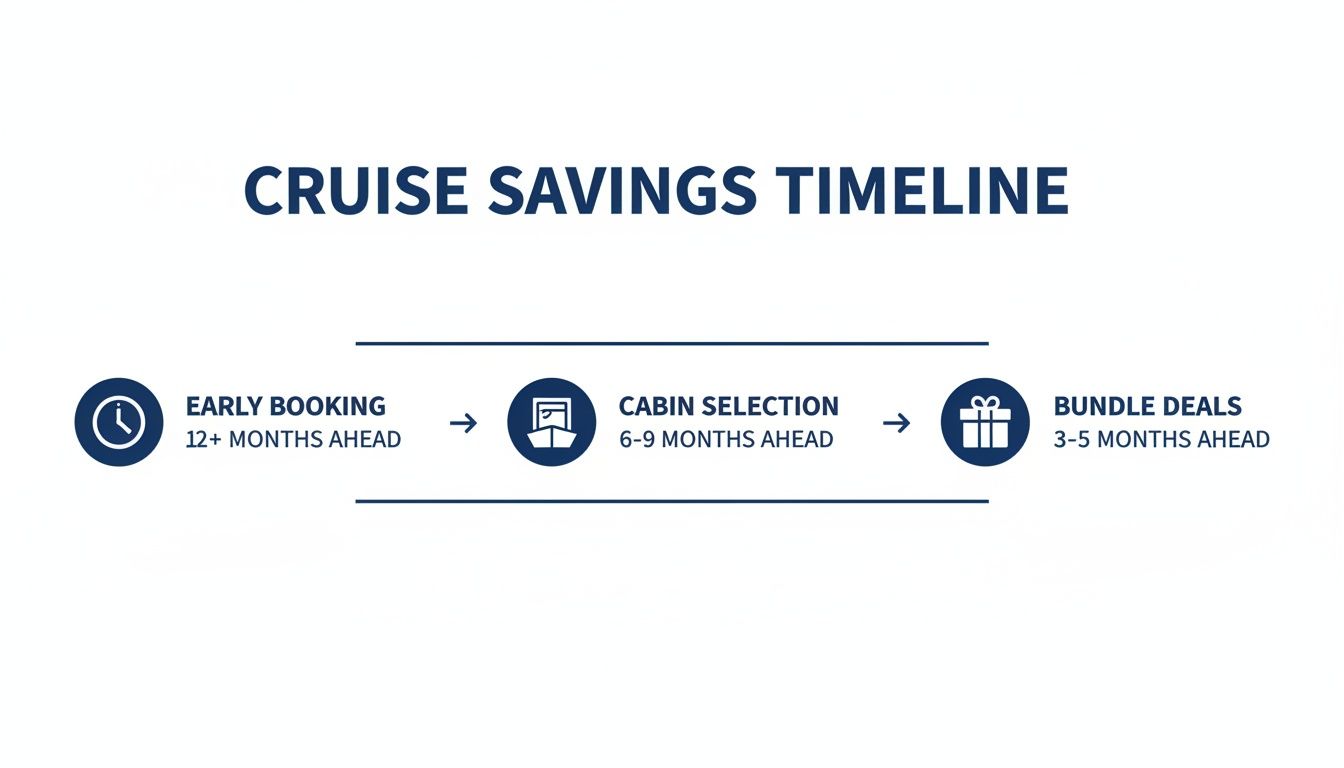
The timeline highlights three critical phases: early booking, cabin release, and bundled promotions. Use the clock, cabin, and gift icons to plan your alert schedule for layered discounts.
Automated alerts are just the start of a thorough booking routine. Refresh search filters daily across a few aggregators. Shifting your departure port by even 50 miles can unlock new rates.
Consistency wins: spend five minutes each morning checking alerts.
Once you spot a deal, reach out to a travel agent for unpublished group and loyalty rates. Show them the lowest online quote and ask for a match or a better perk. Blending tech-driven alerts with human negotiation is a powerful one-two punch.
Pairing early booking with last-minute checks widens your savings window. Imagine snagging 22% off 11 months out, then rebooking 65 days before departure for an extra $200 discount.
Pro Tip: Review refund terms before rebooking so you protect your deposit.
This dual approach helped a friend save $275 on a Panama Canal itinerary by staying flexible and vigilant. Adopt these tactics before every cruise to make significant savings routine.
Action Steps:
Imagine shaving hundreds off your cruise budget before you even step on board. That’s exactly what happened when a family traded a winter departure from Miami for a nearby port—and slashed their airfare plus hotel expenses by 40%. Once you tally door-to-door costs instead of eyeballing the cruise fare alone, those savings really add up.
Moreover, U.S. resort rates have climbed 24–34% since 2019, with some Caribbean rooms spiking 54–59%, while cruise fares rose only 17–24% over the same period. This gap presents a prime chance to reposition your sailings and pocket bigger overall savings. Learn more about these disparities on FinancialPost.
• Compare total costs including airfare, overnight stays and transfers
• Evaluate midweek versus weekend embarkation for lower local hotel rates
• Consider shoulder-season itineraries where demand is still moderate
Mapping every expense brings clarity. Start by listing all your port options, then research round-trip flights and factor in one or two pre-cruise nights plus transfer fees.
• Airfare range: $150–$400 per person for peak ports
• Hotel rates: $150–$300 per night in hub cities
• Shuttle or taxi: $30–$60 average for airport-to-dock transfers
By adding these line items, you’ll often find that a secondary port—though a short drive away—can trim your all-in costs by 20–50%, outpacing any small uptick in cruise fare.
Key takeaway Choose the port that offers the lowest combined travel expenses not just the cheapest cruise rate.
When you line these figures side by side, a port 50 miles away might mean a quick transfer but deliver double the lodging savings. It’s a simple math exercise that can redefine how you save on cruises by tightening up your pre-departure logistics.
A modest cabin tweak can pay off in comfort without straining your wallet. Upgrading from an interior stateroom to an ocean-view midship deck often runs just 5–10% more—and unlocks perks like natural light and priority boarding. That small bump in fare can translate into a far more enjoyable sailing.
| Cabin Type | Price Increase | Perks Added |
|---|---|---|
| Interior | Base fare | Standard amenities |
| Ocean View | +5–10% | Natural light, priority line |
| Balcony | +15–25% | Private outdoor space |
In one real-world case, a couple paid $75 more per person to upgrade to an ocean-view on a seven-night cruise. They loved the daylight and extra room for photos—yet their total trip spend still stayed 30% below similar sailings from major hubs.
“Upgrading saved me time and stress without blowing my budget,” says Jenna, who flew into an alternate port on a low-cost carrier and booked a clever cabin tweak to stretch her travel dollars.
Here’s how to make it work for you:
• Divide the incremental fare by the number of nights at sea to see cost per evening
• Check if your upgrade level includes perks like drink credits or onboard coupons
• Double-check refund policies before confirming any switch
Pairing an alternate embarkation with a small cabin upgrade lets you stretch your budget farther—comfortably and confidently.
A quick port scan within 75 miles saved one traveler $120 on airfare and hotel all by itself.
• Use search filters to compare multiple embarkation cities and cabin categories
• Sign up for early cabin release alerts and ask a travel advisor about unpublished rates
By mixing strategic port choices with modest stateroom tweaks, you’ll unlock some of the most powerful money-saving moves in any guide on how to save money on cruises.
Action Steps:
Picking the right prepaid package shouldn’t feel like decoding a secret language. Match your onboard habits to a bundled deal, and you can trim 10–30% off what you’d spend buying everything individually. It really comes down to doing a bit of number-crunching before you sail.
Travel advisor Jenna sums it up best:
“The right bundle can shave hundreds of dollars off your discretionary spend.”
Cruise lines—and savvy travel advisors—are pushing presold bundles more aggressively than ever. According to CLIA, onboard revenue components climbed about 3 percentage points in 2024–25, a clear sign that these deals are here to stay.
Before you click “buy,” add up what you’d spend onboard:
That retail total comes to $640. But if the bundled package (with onboard credit) is priced at $550, you’re already $90 ahead.
Most experienced cruisers:
In one Mediterranean voyage example, a couple paid $450 for dining and drink—when their a la carte tab would have been $620. That’s a 28% reduction in onboard spending.
That said, look for packages that let you refund unused credits 1:1 or roll them into future cruises. Frequent travelers know these flex terms can deliver extra value over time.
| Package Type | Bundle Price | A La Carte Price | Savings |
|---|---|---|---|
| Standard Drink Plus Wi-Fi | $550 | $640 | $90 |
| Dining And Drink Combo | $420 | $500 | $80 |
| Shore Excursions Bundle | $300 | $380 | $80 |
These figures highlight how a well-chosen bundle can deliver immediate savings—sometimes hundreds of dollars—compared to buying each item onboard.
On top of bundles, you can layer in loyalty perks and credit-card offers. Start by checking your cruise line status and its package upgrades. Then:
Martin, a frequent cruiser, reports:
“I stacked a 10% card rebate with my Silver-tier drink package and walked away with an extra $50 credit.”
For example, a 3% cash-back card on a $600 bundle nets you $18 back. Combine that with agent credits, and you’re slicing another $68 off your total spend.
Timing matters, too. Some travelers wait for flash sales; others lock in early-book bundles when travel credit is at its peak.
Before you commit, run through a quick checklist. Map out your daily patterns and project retail costs:
One friend discovered that purchasing the dining package onboard saved her more than prepaying. Another opted for a refundable option that let her upgrade to shipwide Wi-Fi after earning a last-minute credit.
A simple spreadsheet can track package costs, credits, and rebates—so you always spot the biggest wins.
Key Takeaway: Bundles shine when tailored to your personal patterns and bolstered by partner offers.
With this approach, extra expenses shift from surprise splurges to smart investments in your cruise experience. For more on these trends, check out Tourism Analytics.
Action Steps:
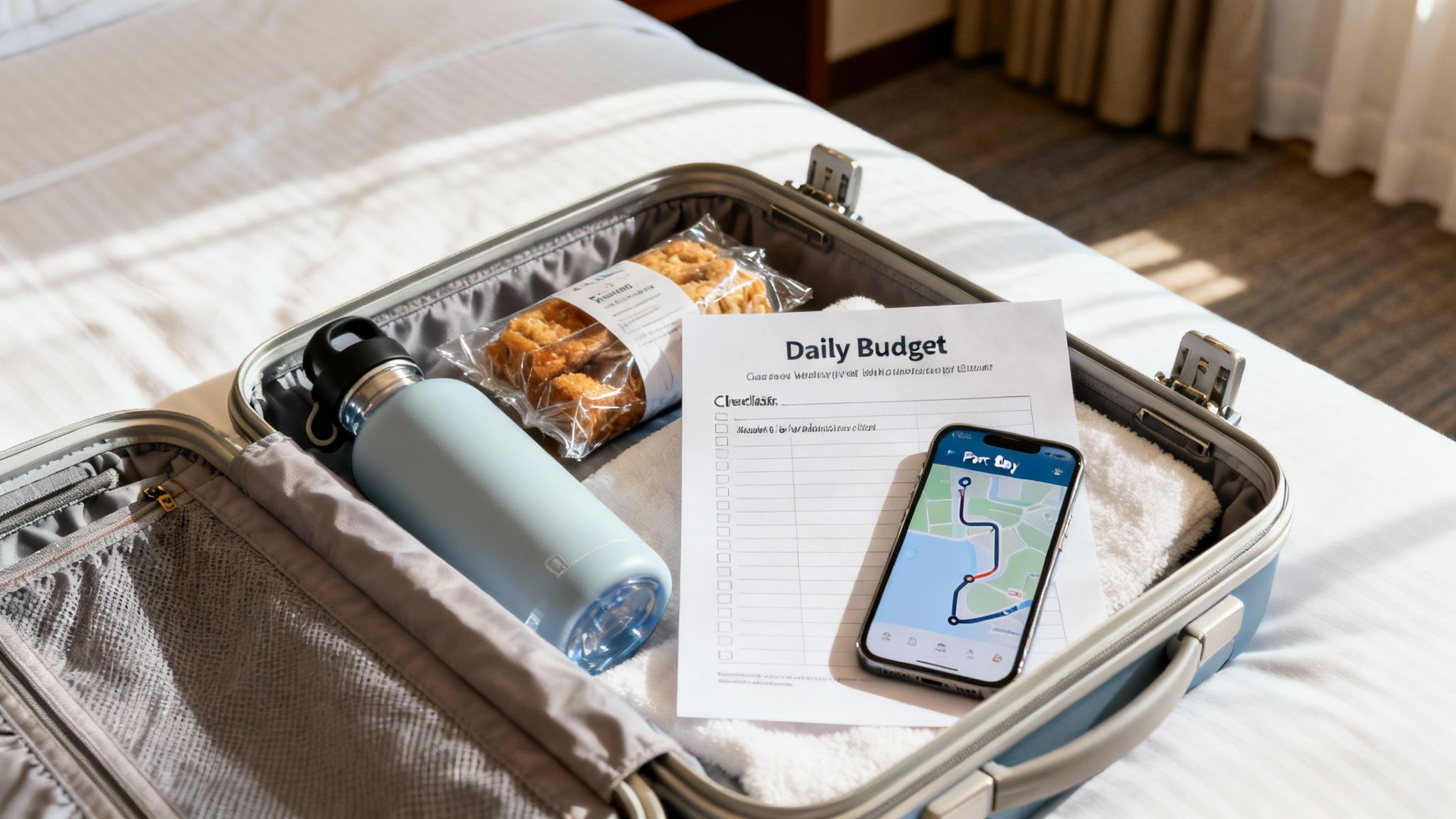
Impulse buys on ships can quietly tack on 10–20% more to your total. Those $6 snacks, souvenir trinkets and last-minute upgrades all add up before you even realize it. A little advance planning keeps that onboard bill under control.
Before you set sail, toss a reusable water bottle, favorite snacks and any toiletries you might need into your carry-on. Skipping overpriced mini-bar items and $5+ bottled water is an easy win. From there, a simple daily spending plan helps you stay on track.
A realistic budget stops overspending in its tracks. Allocate a fixed amount—say $25 per person—for extras each day, then stick to what you’ve set aside. If you treat yourself, you’ll know exactly where each dollar goes.
| Item | Daily Budget | Notes |
|---|---|---|
| Bottled Water | $0 | Fill up at water stations |
| Snacks | $10 | Nuts, granola bars |
| Drinks | $15 | Shared drink package |
| Spa Upgrade | $0 | Skip the daily add-ons |
| Souvenirs | $5 | One small keepsake |
When Jenna and Marco split a $60 drink package, they trimmed 30% off their bar tab by using a shared tracker on their phones. Over a week, these small tweaks can save more than $100—cash you can spend on something memorable ashore.
• Bring a refillable bottle plus a filtered straw to dodge $3–5 per water bottle.
• Stash compact snacks (think trail mix) to avoid $4–6 fees at the buffet.
• Check the daily newsletter for complimentary yoga, trivia and dance lessons.
• Swap a pricey shore tour for the ship’s self-guided walking map.
“I skipped the $40 dolphin excursion and joined the beach cleanup walk,” recalls Sarah.
She paid half as much and ended up learning about local marine life up close.
Independent guides often run 20–50% cheaper than ship excursions. Scanning port-city Facebook groups or WhatsApp chats can uncover private tours at $30–$50 per person versus $80–$120 onboard rates.
Public buses and ride-share apps can cut transport costs too. A one-way taxi that would set you back $15 could drop to $5 with the right app. In some towns, a day pass for $7 is cheaper than buying multiple tickets.
Negotiating at the dock often scores even better bargains. Ask about group rates, bundle stops or mention upcoming port calls for extra discounts.
Pro Tip: Splitting a 3-hour city tour saved our group $40 each—and kept the number under six people for a more personal experience.
Combine a daily budget, smart packing and shore-day haggling, and you’ll shave off hundreds from your cruise tab. One family of four I know cut $300+ on a seven-night voyage—and still came home with souvenirs. A little foresight goes a long way toward keeping your cruise both fun and affordable.
Action Steps:
When you join Approved Experiences Traveler, you step into a world of wholesale cruise fares and extra onboard credits. Picture trimming up to 40% off your ticket price while stacking Reward Credits on every booking. It’s that combination of deep discounts and ongoing rewards that sets this membership apart.
Blending these perks with savvy booking tactics—like choosing the right cabin class or bundling with flights—can shave hundreds of dollars off your next voyage. Below, you’ll find real enrollment tips and member anecdotes to help you get started.
Approved Experiences Traveler breaks down into three plans, each designed to outweigh its annual fee.
The Gold plan at $199/year covers wholesale cruise rates, 1% Reward Credits and standard support.
Upgrading to Platinum for $399/year brings 2% Reward Credits, 24/7 concierge access and occasional bonus credits.
For the most frequent cruisers, Diamond at $799/year unlocks 3% Reward Credits, private jet empty-leg alerts and white-glove trip planning.
| Tier | Annual Fee | Reward Credits | Notable Perks |
|---|---|---|---|
| Gold | $199 | 1% | Member rates, basic support |
| Platinum | $399 | 2% | 24/7 concierge, bonus credits |
| Diamond | $799 | 3% | Jet charter alerts, VIP trip planning |
• Choose your plan on the Approved Experiences Traveler website.
• Enter basic info and payment details.
• Confirm your email to open the member portal.
• Head to “Cruise Deals” and toggle on Member Rates.
• Apply filters for cabin upgrades, bundle offers and hidden promotions.
“My Diamond subscription returned its fee in a single cruise booking by shaving 35% off the fare,” shares Mark, a frequent cruiser.
Once you’re in, link your cruise loyalty accounts so you collect line-level points alongside Reward Credits—double dipping has never been easier.
Book early—around nine months before departure—to lock in member rates, then revisit your fare at the 60-day repricing window. This two-step play can push total savings north of 50% compared with standard retail.
Keep an eye on your portal for suite-upgrade alerts and transferable bundle deals before they hit the public page.
Don’t forget to charge your cruise to a cash-back or miles-earning credit card. A single week-long trip can easily save you an extra $500 once you stack credits and rebates.
At the end of the process, spend two minutes on a simple spreadsheet. Track:
This quick audit ensures you squeeze every dollar of value from your membership.
Tip: In many cases, your membership pays for itself in just one booking.
More than 12,000 members have already saved over $146 million with our 110% guarantee, earning at least 10% more in credits than their fee. Visit the Approved Experiences Traveler website to compare tiers, enroll in minutes and start stacking savings on every voyage.
Your next cruise could be the one that makes your membership more than worth it—join now and sail smarter.
Action Steps:
Many travelers ask how to shave dollars off their cruise fare without giving up creature comforts. This FAQ dives straight into the tactics that delivered results on real sailings.
Inside, you’ll find concise examples and mini case studies—strategies you can test on your next booking.
Expect fast, proven tips to shrink your total trip cost. These insights come directly from actual cruise reservations.
Timing your reservation can unlock hefty discounts. Book 6–12 months ahead and you’ll often secure 25% off your fare.
Then there’s the flip side: watch for last-minute bargains 60–90 days before departure. On underfilled sailings, rates often dip by 20%–35%.
One savvy traveler spotted a rate drop 75 days out and slashed $300 off a Caribbean voyage.
Keep an eye on both booking windows to land the minimum fare.
Prepaid bundles let you pay upfront for drinks, specialty dining and more—often at a discount versus buying a la carte.
Crunch the numbers: a $500 package might deliver $650 in onboard value.
| Bundle Type | Cost | Retail Value | Savings |
|---|---|---|---|
| Drink + Dining Combo | $500 | $650 | $150 |
Some cruise lines let you share credits between cabins, too. Factor in any free onboard credits, and you’ll stretch every dollar further.
Always review cancellation and transfer policies before checkout.
Match your bundle to your daily habits. That way, you won’t leave credits unused.
Opting for a smaller embarkation port can cut your airfare and pre-cruise stays dramatically.
One family saved 40% on hotels and transfers by sailing from a nearby secondary port instead of the main hub.
These steps reveal the real savings beyond just the ship’s price tag.
A travel membership can unlock wholesale rates up to 40% off, plus extra reward credits on every purchase.
We’ve seen a Gold member recoup $350 on just one cruise by combining member-only fares with bonus credits.
When you pair early bookings, smart cabin choices and bundled perks, the membership fee pays for itself.
And those ongoing reward credits? They turn into future discounts on your next voyage—or even other travel purchases.
Join Approved Experiences Traveler today to start saving on your next cruise.
Article created using Outrank
From this collection
From this collection

best cruise discount websites
Discover the 7 best cruise discount websites to save big on your next voyage. Get actionable tips & find exclusive deals on top cruise lines today!

how to find cheap flights
Learn how to find cheap flights with our expert guide. Discover actionable travel hacks, timing secrets, and tools to save hundreds on your next trip.

why are hotels so expensive
Explore why are hotels so expensive and uncover the real cost drivers behind your stay plus expert tips to save on your next trip.